15 Kitchen Pantry Organization Ideas That Survive Real Grocery Runs
Most pantry makeovers die at the first big grocery run. The jars were filled once, beautifully, and then real life arrived: an odd-shaped packet, a bulk bag that fits nowhere, a second tin of something already open. A pantry system survives when it is organised around how food actually flows — in through the shopping bag, out through daily cooking — not around how it photographs on day one. These 15 ideas build that kind of pantry, in a walk-in, a cupboard, or a single deep drawer.
Zone It Before You Buy Anything
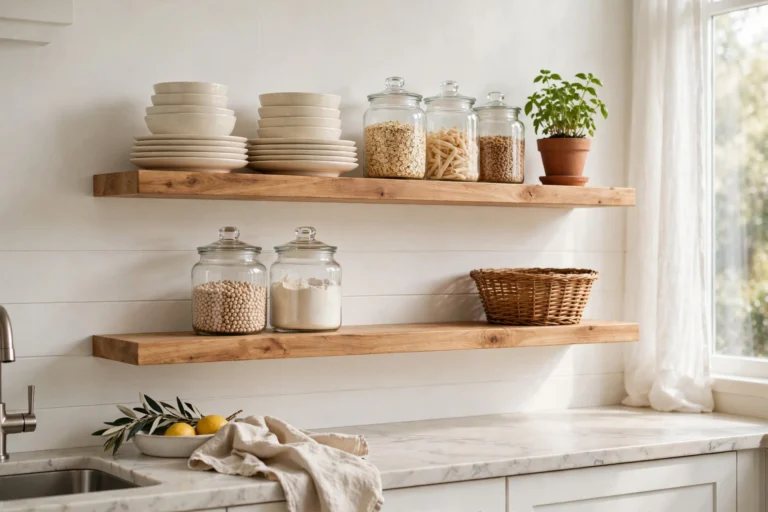
1. Give every shelf one job. Baking, breakfast, tins and jars, dry staples, snacks, back-stock. One job per shelf or shelf-section is the same single-category rule that keeps our kitchen open shelving ideas tidy — mixed shelves collapse into rummaging within a month.
2. Put the daily zone at eye level, the heavy zone at the bottom. Breakfast and everyday staples live between knee and shoulder height. Heavy tins, oils and bulk bags go low, where lifting is safe. Rarely used and back-stock items go high. If you reach for it weekly, it should never need a stool.
3. Keep a “use first” spot at the front. One small basket or tray, front and centre, for opened packets and anything nearing its date. Food waste in most homes is not bought too much — it is bought, buried, and found too late. The use-first tray is the fix.
Containers That Earn Their Place
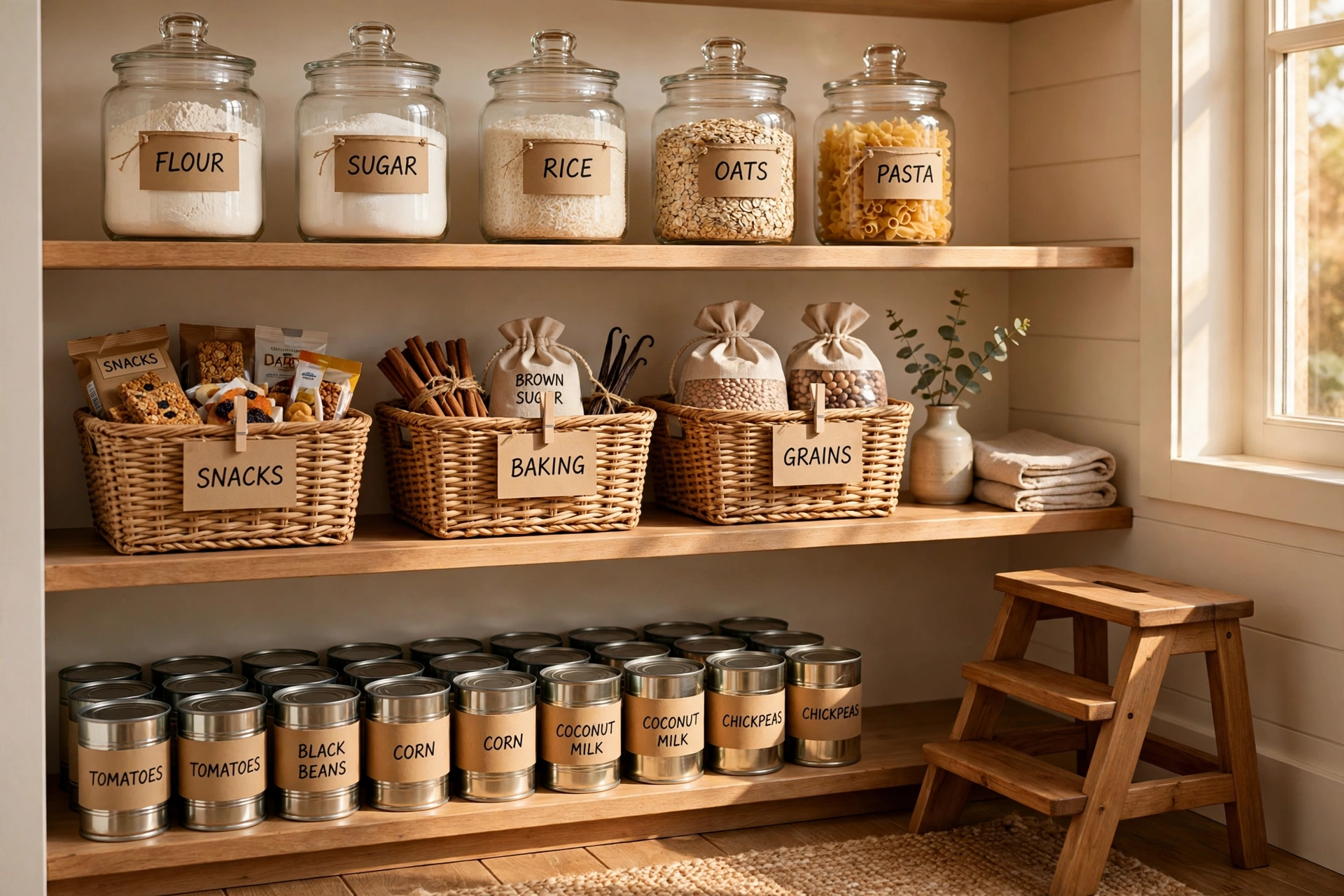
4. Decant only what you refill often. Flour, rice, pasta, oats, sugar — the staples you buy on repeat — belong in clear, matching jars you can read at a glance. Everything else stays in its original packaging in its zone. Decanting everything is the expensive, fragile version of organised.
5. Square jars waste less shelf than round ones. Round containers leave dead corners between them; square and rectangular jars sit flush and can free up a quarter of a shelf. Whatever shape you choose, one lid style across the set keeps the visual calm and the lids interchangeable.
6. Label with the refill date, not just the name. A strip of masking tape or a chalk label with the month and year you filled it turns every jar into its own stock rotation. New refill goes in only after the old is used or moved to the use-first tray — no endless topping-up of ageing flour.
Make the Space Work Harder
7. Add one riser or shelf step to deep shelves. A simple stepped riser turns the back row of tins from invisible to readable. Deep shelves without steps are where duplicates are born — you cannot buy what you can see you already own. More depth-taming tricks in our small kitchen storage ideas.
8. Baskets are for categories, not for hiding chaos. One basket per category — snacks, packets and sachets, baking extras — each small enough that its contents are visible in one look. A basket you have to dig through is just a prettier junk drawer.
9. Use the door. Slim racks or clear pockets on the inside of a pantry or cupboard door are the right size for spices, stock cubes, wraps and foils — the small flat things that vanish in big shelves. Weight stays modest and everything is visible the moment the door opens.
10. A turntable solves the corner problem. One lazy Susan in a deep corner or for oils and sauces ends the archaeology of reaching past ten bottles for the eleventh. One per pantry is usually enough; more than that and things start orbiting out of sight.
The Habits That Keep It Working
11. Shop from the pantry, not from memory. Two minutes before a grocery run: look at each zone, note what is actually low. The pantry list written from the shelves — not from the sofa — is what stops the third jar of the same spice.
12. New stock goes behind old stock, always. The supermarket rule, at home: refills and new tins to the back, existing ones forward. It takes seconds while unpacking and it is the entire secret to nothing expiring at the back of the shelf.
13. Keep one empty space on purpose. A system at 100% capacity breaks with the first bulk buy. One half-shelf or one empty basket left free absorbs offers, seasonal extras and party shops without a reorganisation. This is pantry breathing room, and it is a feature, not waste — the same principle behind the styling in our farmhouse kitchen decor ideas.
14. No pantry? Build one from a cupboard, a drawer, or a cart. A single deep drawer zoned with boxes becomes a pull-out pantry that is arguably better than shelves — everything visible from above. A slim rolling cart between fridge and counter holds a full breakfast-and-snacks zone in 20 cm of width.
15. Reset in ten minutes, monthly. Not a makeover — a maintenance pass: use-first tray checked, dates glanced at, one zone wiped, jars topped from back-stock. Ten minutes monthly is what separates a system from a project you did once.
The Order to Do Them In
Empty one shelf at a time, never the whole pantry at once. Zone first, containers second, labels last, and live with it through two real grocery runs before buying anything else for it. The runs will show you exactly which zone is too small and which container was a mistake — information no amount of planning photos can give you.
FAQs
What should I organise first in a pantry? The daily zone — breakfast and everyday staples at eye level. It is the shelf you touch most, so fixing it first delivers the biggest daily improvement and teaches you the zoning system before you apply it everywhere else.
Is decanting food into jars worth it? For the five or six staples you refill constantly, yes: you see quantities at a glance and shelves stay uniform. For everything else, original packaging in a zoned basket works better and costs nothing.
How do I stop buying duplicates of pantry items? Visibility plus one habit: stepped risers or shallow zones so nothing hides, and a two-minute pantry check before every shop, writing the list from the shelves themselves.