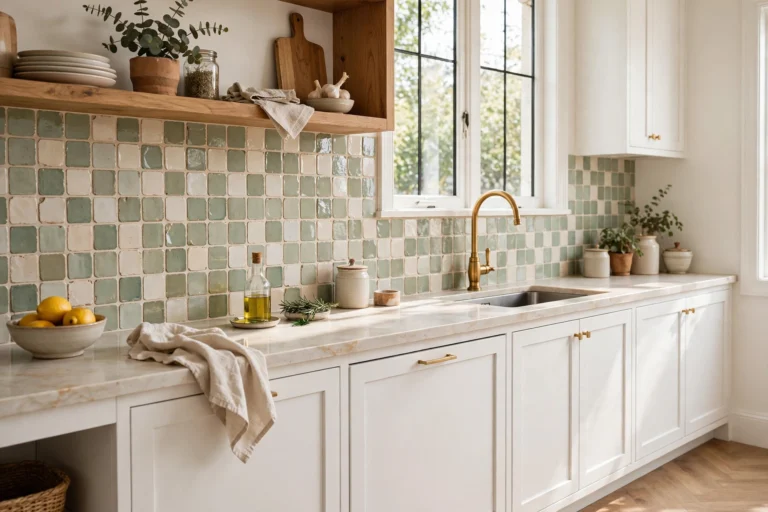
12 White Kitchen Cabinet Ideas That Never Look Flat
White cabinets are the safest kitchen choice, and that is exactly their danger: done plainly, they look flat, cold, and like every other kitchen. Done well, they look timeless, calm, and expensive. The difference is almost never the white itself. It is the door profile, the exact shade of white, the finish, and what you pay for the work.
This post stays on cabinets only. For the wider question of how to style a whole white kitchen — countertops, backsplash, lighting, and accents — read our white kitchen ideas hub post: https://homeventra.com/white-kitchen-ideas/ That post covers the room. This post covers the doors in front of you, the paint on them, and the money.
Door Profiles: The Decoration Is the Door
In a white kitchen, the door profile is the decoration. There is no color to carry the style, so the shape of the door does the work. Choose it deliberately, because changing it later means changing the doors, not repainting them.
Shaker. A Shaker door has a flat center panel with a raised frame around it. It is the most popular door for white kitchens, and for good reason: the frame creates shadow lines that stop white from looking blank, and it works in traditional, transitional, and farmhouse rooms. It is also the easiest profile to paint well, because the frame hides small brush marks. If you are unsure, choose Shaker.
Slab. A slab door is flat, with no frame and no detail at all. It suits a modern or contemporary room, where the lack of detail is the point. In a white kitchen, a slab door needs texture elsewhere — a wood worktop, a textured backsplash, or warm hardware — or the room can look like a laboratory. Slab doors are also the hardest to keep looking clean, because every fingerprint shows on a flat surface.
Inset. An inset door sits flush with the frame, instead of sitting on top of it. It is the most expensive build, and it reads as high-end and traditional. It also needs the most precise fitting, because a door that sits flush shows any gap. If you are buying new cabinets, inset is a luxury choice. If you are repainting existing cabinets, you almost certainly do not have inset doors, and you do not need them.
Beadboard. A beadboard door has vertical paneling on the front. It reads as coastal and farmhouse without any other cues. It is charming, but it is also the hardest profile to clean and to paint, because dust and paint collect in the grooves. Use it on a small run of cabinets, such as an island or a pantry, rather than on every door in the kitchen.
Glass front. A glass-front door is not a full door profile, but it is the best way to break up a long run of solid white doors. Use glass on two or three upper cabinets, and put your best dishes behind them. Glass fronts also force you to keep those cabinets tidy, which is a feature, not a bug.
A practical rule: pick one door profile for the whole kitchen, and use glass fronts as the only exception. Two different door profiles in the same kitchen look like a mistake, not a design choice.

Named White Paints: Stop Guessing
The live version of this post said “choose a warm white, not a blue white.” That is true, and it is also useless without names. Here are the whites that actually work on cabinets, with brand and shade names, so you can ask for them by name at the paint store.
Benjamin Moore Simply White (OC-117). A warm white with a hint of yellow. It is the most forgiving white on this list, and it suits wood floors and brass hardware. It is the white to choose if your kitchen gets little natural light.
Benjamin Moore White Dove (OC-17). A soft, warm white that is slightly grayer than Simply White. It is the most popular white for cabinets in the United States, and it works in almost any light. If you want one safe choice, this is it.
Benjamin Moore Chantilly Lace (OC-65). A clean, bright white with almost no undertone. It is whiter than the other two, and it suits modern kitchens with lots of natural light. In a north-facing kitchen, it can look cold, so test it first.
Sherwin-Williams Pure White (SW 7005). A clean white with a very slight warm undertone. It is a good match for white appliances and white countertops, because it does not turn yellow next to them.
Sherwin-Williams Alabaster (SW 7008). A warm, creamy white with a hint of beige. It is the warmest white on this list, and it suits farmhouse and traditional kitchens. It can look yellow in a very warm room, so test it on a large sample board first.
Sherwin-Williams Greek Villa (SW 7551). A warm white with a hint of gold. It is softer than Alabaster and works well with wood worktops and brass hardware.
Test every white on a large sample board, not on a small swatch, and move the board around the room across a full day. A white that looks perfect at noon can turn gray by 6 pm, especially in a north-facing kitchen. Paint the board, not the wall, and look at it next to your floor, your worktop, and your hardware, because white is never seen on its own.
One more warning, from the hub post and worth repeating here: do not mix random whites. Paint the cabinets one warm white and the walls a slightly different white, or use white uppers with a cream island. Two close whites create depth. Five random whites look like accidents.
What Painting White Cabinets Actually Costs
Painting is the cheapest way to get white cabinets, and it is also the easiest way to waste money if you do not know the prices. Here are the numbers, checked in November 2026.
Paint. Benjamin Moore Advance, the cabinet paint most professionals recommend for its leveling and hard finish, lists at $88.99 per gallon on Benjamin Moore’s own product page (checked November 2026). Sherwin-Williams Emerald Urethane Trim Enamel, the comparable product, lists at $130.49 to $132.49 per gallon in November 2026 listings. Both cover about 400 to 500 square feet per gallon for Advance, and about 350 to 400 square feet per gallon for Emerald Urethane. A typical kitchen needs one to two gallons for the doors and drawer fronts, plus primer. Primer costs about $40 to $50 per gallon.
Professional painting, per door. Most professionals charge $70 to $125 per door, $30 to $110 per drawer front, and $75 to $150 per cabinet box, depending on size, material, and paint type (Fixr, 2026). Other sources give $100 to $250 per door (Angi, 2026). The difference is mostly labor and location. A small kitchen with 10 to 15 doors costs $2,000 to $3,500 professionally. A medium kitchen with 20 to 30 doors costs $3,500 to $6,500. A large kitchen with 35 or more doors costs $6,500 to $10,000 or more. The national average for a professional cabinet repaint is about $4,000, with most homeowners paying $2,500 to $6,500 (Fixr, 2026).
DIY painting, per door. A DIY cabinet painting project typically costs $200 to $600 in materials for an average kitchen, covering paint, primer, brushes, rollers, sandpaper, cleaning supplies, and safety gear (Angi, 2026). That is $10 to $30 per door in materials, but it takes 20 to 40 hours of work, and the finish will not be as smooth as a professional spray finish unless you have a sprayer and practice. If you have never painted cabinets before, practice on a single door first, and do not start with the doors everyone sees.
Cost per door, at a glance:
| Job | Cost per door | Cost per drawer front | Notes |
|---|---|---|---|
| DIY, materials only | About $10 to $30 | About $5 to $15 | Paint, primer, sandpaper, brushes; 20 to 40 hours of work |
| Professional, per door | $70 to $125 (Fixr); $100 to $250 (Angi) | $30 to $110 | Labor is 60 to 85 percent of the total |
| Professional, small kitchen (10 to 15 doors) | $2,000 to $3,500 total | Included in total | Spray finish, prep included |
| Professional, medium kitchen (20 to 30 doors) | $3,500 to $6,500 total | Included in total | Spray finish, prep included |
The cheapest way to get white cabinets is to paint the ones you have. The most expensive way is to buy new white cabinets and then repaint them because you chose the wrong white. Test the color first. It is a $10 sample board against a $3,000 repaint.
Finish Durability: Satin, Semi-Gloss, or Matte?
The finish you choose matters more than the paint brand, because it decides how the cabinets look after a year of daily use.
Satin. Satin is the safest finish for white cabinets. It hides fingerprints and splashes better than high gloss, and it touches up more easily. It has a soft sheen that looks expensive without looking shiny. Choose satin if you have children, pets, or a busy kitchen.
Semi-gloss. Semi-gloss is harder and more washable than satin, and it shows fewer stains. It also shows more brush marks and imperfections in the wood, so it needs better prep work. Choose semi-gloss if you want the most durable finish and you are hiring a professional sprayer.
Matte or flat. Matte white looks modern and soft, but it is the hardest finish to clean. Grease and fingerprints show, and scrubbing can leave shiny patches. Avoid matte on cabinet doors that get touched every day, such as the doors nearest the cooker and sink.
High gloss. High gloss looks like a showroom, and it shows every fingerprint, every drip, and every imperfection in the door. It is beautiful in a photo and exhausting in real life. Avoid it unless you have a cleaner or you enjoy wiping doors.
For most kitchens, satin is the right answer. For a family kitchen, satin is the only answer I would give without hesitation. For a show kitchen that is rarely cooked in, semi-gloss is fine. For a kitchen you actually use, satin will look better in a year than gloss will.
Hardware and Worktops That Save White
Hardware is the fastest way to make white cabinets feel rich, and it is also the cheapest change you can make after painting. Brass, brushed gold, or warm copper handles warm white up instantly. Black handles give a sharper, modern contrast, but in a cold room they can make white feel colder. Brass is the safer warmth.
A wood worktop is white’s best friend. Wood brings the warmth white lacks, and it ages beautifully beside it. If a full wood worktop is too much upkeep, use wood on the island only and keep the rest of the worktop pale stone. For hardware styles and sizes, see our kitchen cabinet hardware ideas guide: https://homeventra.com/kitchen-cabinet-hardware-ideas/ For worktop materials and costs, see our kitchen worktop ideas guide: https://homeventra.com/kitchen-worktop-ideas/
Let the splashback carry the pattern. With plain white cabinets, the splashback can be bold: patterned tile, deep green, or handmade-look ceramic. One patterned surface against calm white looks designed. Pattern everywhere looks busy.
Keep the floor warmer than the cabinets. A warm wood or warm-toned floor grounds white cabinets. A cold gray floor can make the whole room feel washed out. If your floor is cool, warm the room with wood stools, a rug, and brass details instead.
Living With White Without the Stress
White cabinets do not fail because white is boring. They fail because nothing else in the room is doing any work, or because the finish cannot handle daily life.
Use open shelves to break up long white runs. A stretch of open wood shelves between white cabinets adds warmth, display space, and a place for color. It also stops a wall of white doors from feeling like a corridor of cupboards. For shelf styling that stays tidy, see our kitchen open shelving ideas guide: https://homeventra.com/kitchen-open-shelving-ideas/
Add one dark or wood accent, and only one. A dark island, a wood range hood, or black bar stools give white cabinets something to stand against. One accent makes white pop. Three competing accents make it look confused.
Light white cabinets warmly, or they will look cold. Cool, bright downlights make white cabinets feel like a laboratory. Warm white bulbs in the 2700K to 3000K range, under-cabinet strips, and one pendant over the island make the same cabinets glow in the evening.
Clean white cabinets with a soft cloth and warm, soapy water. Do not use abrasive cleaners, and do not use bleach on a regular basis, because it can yellow the finish over time. Touch up chips as soon as you see them, with a small brush and the same paint, because a chip that is left alone will peel.
White cabinets will still look timeless in ten years, not just on installation day, if you give them texture, warmth, one accent, warm light, and a finish that forgives daily life. The white itself is the easy part. The doors, the paint, and the money are the parts that decide whether it works.
Frequently Asked Questions
What is the best white paint for kitchen cabinets?
Benjamin Moore White Dove (OC-17) and Simply White (OC-117) are the most reliable choices across different light conditions, and Sherwin-Williams Alabaster (SW 7008) and Pure White (SW 7005) are the closest Sherwin-Williams equivalents. Test any white on a large sample board in your own kitchen before you commit.
How much does it cost to paint kitchen cabinets white?
A DIY job typically costs $200 to $600 in materials. A professional job costs $2,000 to $3,500 for a small kitchen, $3,500 to $6,500 for a medium kitchen, and $6,500 to $10,000 or more for a large kitchen. Per door, professionals charge $70 to $125 (Fixr) or $100 to $250 (Angi), depending on location and prep work.
What finish is best for white kitchen cabinets?
Satin is the safest finish for most kitchens. It hides fingerprints, touches up easily, and looks expensive without looking shiny. Semi-gloss is harder and more washable, but it shows brush marks. Avoid matte on doors that get touched every day, and avoid high gloss unless you enjoy wiping doors.
Do white kitchen cabinets show dirt?
Yes, but not as much as you would think. White cabinets hide dust better than dark cabinets. Crumbs and spills are visible, and they are easy to clean with a soft cloth and warm, soapy water. A satin finish hides marks better than a gloss finish.
Should I choose Shaker or slab doors for white cabinets?
Choose Shaker if you want the safest, most popular option, and if you want shadow lines that stop white from looking blank. Choose slab if your kitchen is modern and you want a minimal look, and you are willing to add texture elsewhere. Do not mix the two profiles in the same kitchen.
How do I keep white cabinets from looking cold?
Use a warm white, not a blue white. Add wood, brass hardware, and warm light in the 2700K to 3000K range. Keep the floor warmer than the cabinets, and add one dark or wood accent. For the full room styling, see our white kitchen ideas hub post: https://homeventra.com/white-kitchen-ideas/