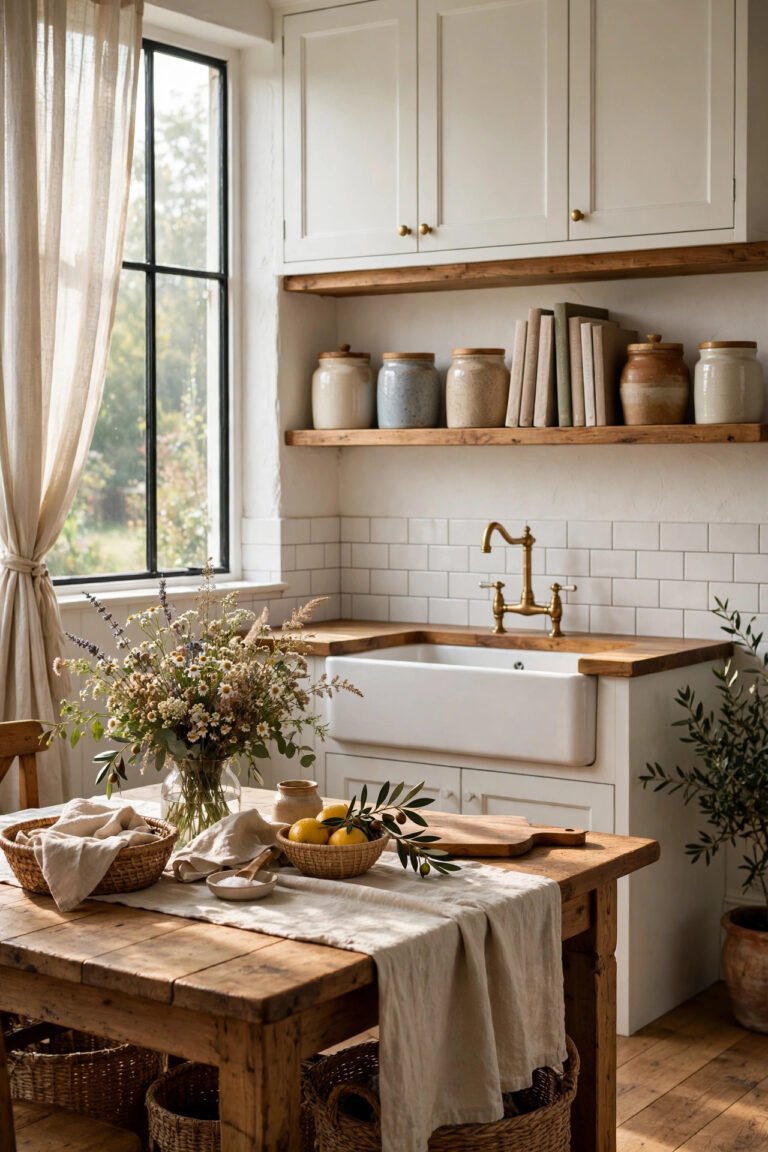
14 Kitchen Open Shelving Ideas That Stay Tidy in Real Life
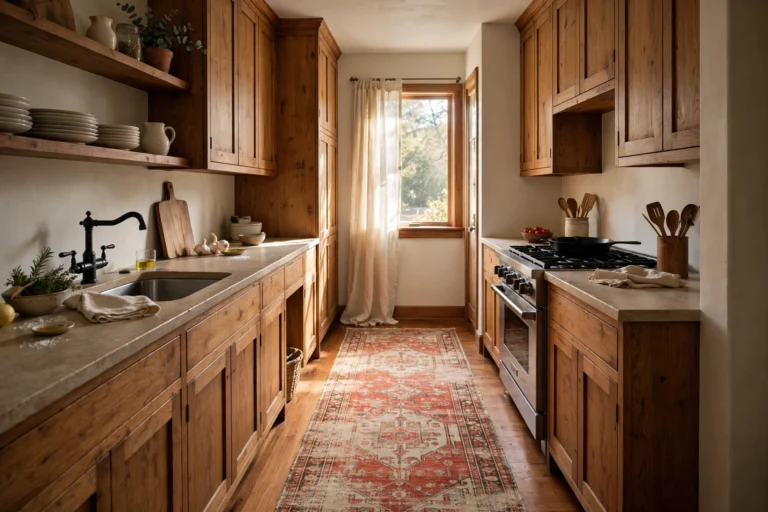
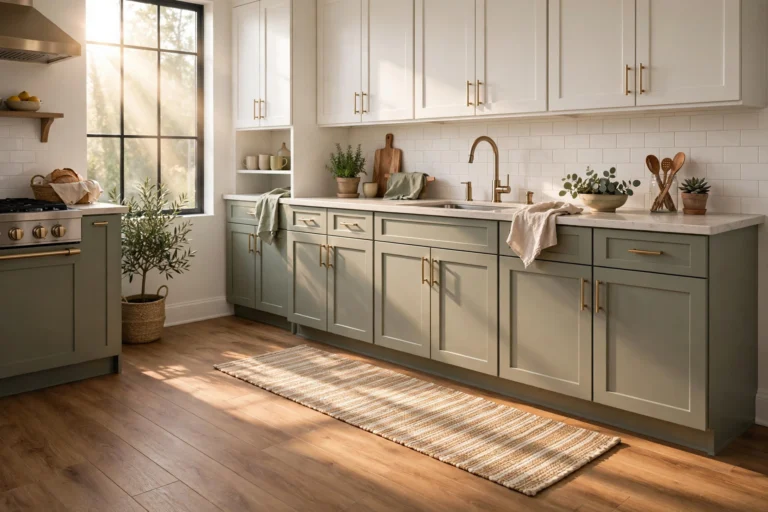
Open shelving is the kitchen idea everyone loves in a photo and half of everyone regrets in real life. The difference is never the shelf — it is the system on it. Shelves that hold closed, matching, everyday things stay tidy almost by themselves. Shelves that become a display case for occasional things collect dust and visual noise. These 14 ideas are built for the first kind: real kitchens, real dishes, shelves you can wipe down in minutes and restyle in one pass.
The One Rule That Makes It Work
Style by category, not by object. One shelf (or one clear section of a shelf) gets one job: everyday dishes, or dry goods in jars, or glasses, or cookbooks and a plant. Mixed shelves look cluttered no matter how pretty the individual pieces are; single-job shelves look styled even on a rushed Tuesday. Everything below is a version of that rule.
The Shelves Themselves
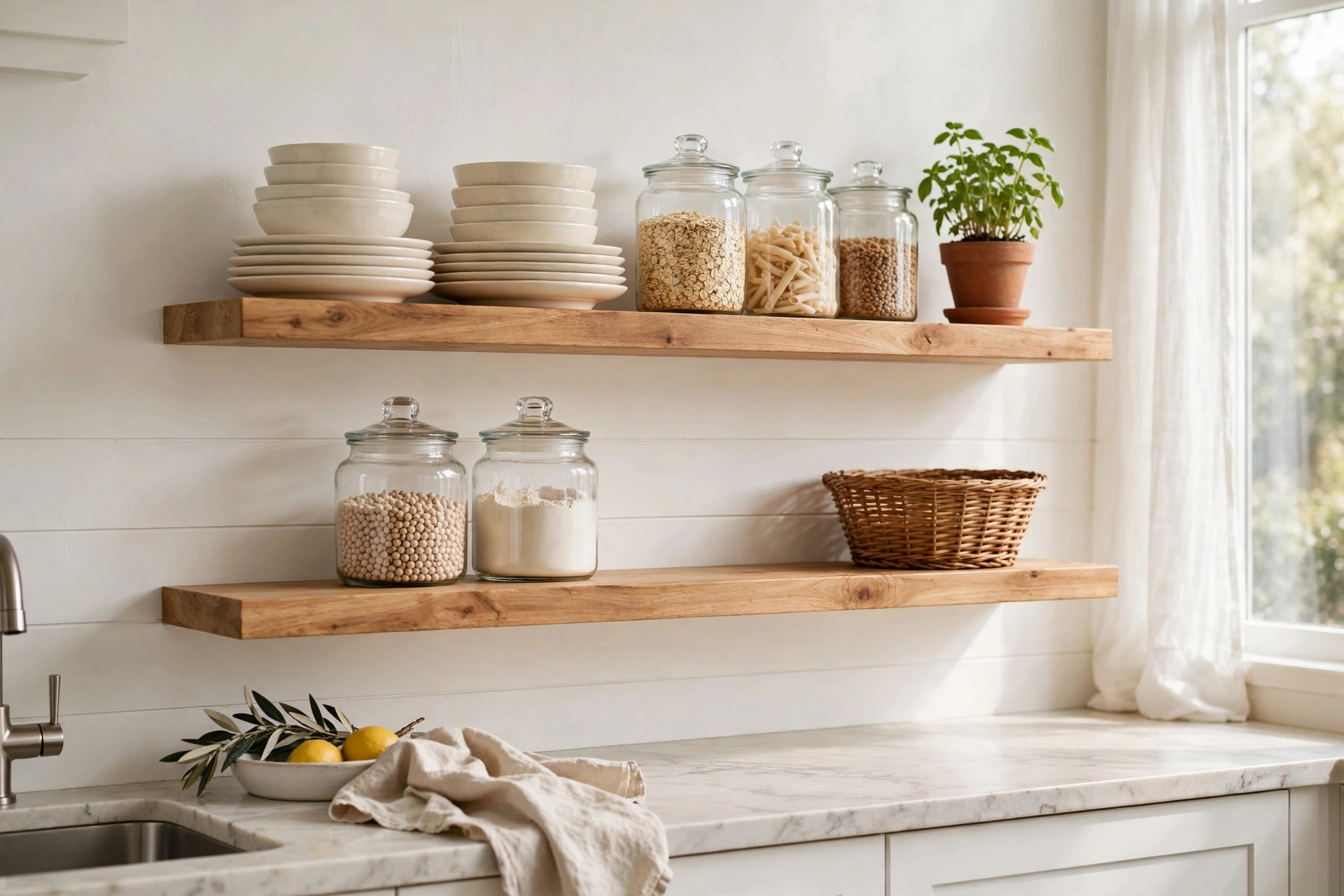
1. Two shelves, not three. Two stacked shelves fill a wall section with room to breathe. A third shelf near the ceiling becomes a dust ledge for things nobody reaches — the fastest route to the “regret” version of open shelving.
2. Thick wood, simple brackets. A shelf with some visual weight — solid wood or a good wood-look board — reads as furniture. Thin boards sag visually (and literally) under stacked plates. Black or brass brackets disappear against most walls; chunky wood brackets suit farmhouse kitchens.
3. Keep the shelf depth honest. Everyday dishes need about 28–30 cm of depth. Deeper shelves invite double rows, and double rows are where open shelving goes to die — the back row is invisible and unreachable.
What Goes On Them
4. Everyday dishes, stacked by type. Plates in one stack, bowls in one stack, in a tight family of whites, creams or one colour. This is the workhorse arrangement from our farmhouse kitchen decor ideas: things you use daily never sit long enough to gather dust.
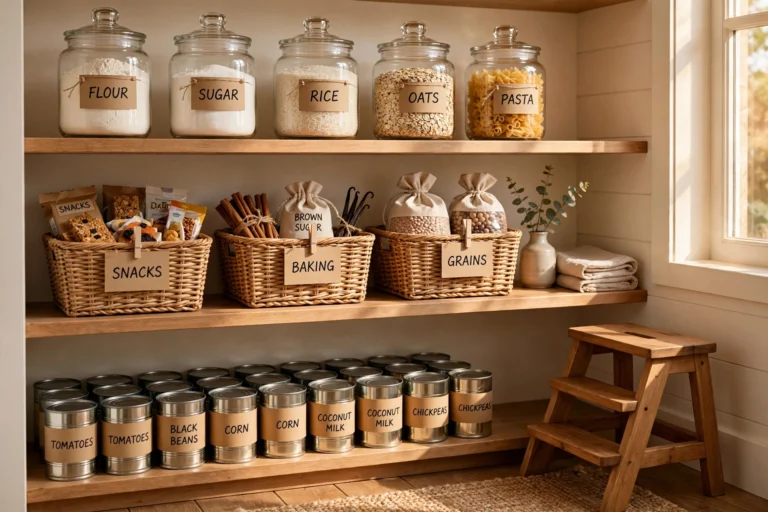
5. Dry goods in matching jars. Flour, pasta, rice and lentils decanted into clear jars with the same lid style turn a pantry overflow into the best-looking shelf in the room — and you can see at a glance what needs buying.
6. One closed basket per shelf. Every open shelf needs one place where the unsightly things go: packets, clips, the odd charger, rubber bands. A woven or lidded basket keeps the shelf’s clean lines and gives the clutter a legal home — the same landing-zone trick from our small kitchen storage ideas.
7. Glasses in one row, upside down. A single row of everyday glasses, stored rim-down, reads as a calm line and stays dust-free inside where it matters. Stemware does not belong on an open shelf in a busy kitchen — it belongs behind a door.
8. A rail under the lowest shelf. A simple bar with hooks beneath the bottom shelf takes mugs, utensils or a hanging herb pot, using the dead space under the shelf and freeing the shelf surface itself. More rail ideas in our kitchen wall decor ideas.
9. Cookbooks stood upright, one small stack flat. Two or three cookbooks you actually open, stood between a bookend or a heavy jar, add colour without chaos. A small flat stack of two more, topped with a plant, is the classic shelf “moment” — one per wall section, never per shelf.
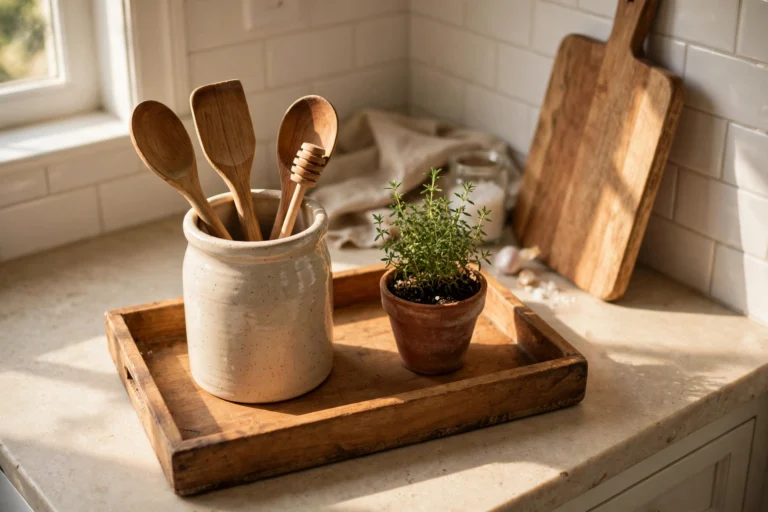
10. One plant, trailing. A single pothos or herb pot softens all the hard edges and proves the shelf is alive, not staged. One plant per section is the limit; a jungle fights with the dishes for attention.
Living With Them
11. The weekly wipe is the whole maintenance plan. Because everything on the shelf is in daily use, nothing sits long enough to get greasy-dusty the way display shelves do. A damp cloth along each shelf once a week, while the kettle boils, is genuinely all it takes.
12. Leave breathing room on purpose. A shelf filled to 80% looks styled; a shelf filled to 100% looks like storage that lost its doors. If everything does not fit, the answer is a cabinet edit, not a third shelf.
13. Restyle by swapping one thing. Open shelves stay interesting because they are easy to change: swap the basket, move the plant, bring in a seasonal bowl of lemons or pinecones. One change refreshes the whole wall without a shopping trip.
14. Renters: one shelf does the job. You do not need a wall of shelving to get the effect. A single well-styled shelf above a counter or beside the stove delivers the look, needs only two bracket holes to fill later, and is the version most rental kitchens can actually have.
The Order to Do Them In
Hang the shelves first and live with them empty for a day — you will immediately see which height you reach for. Load the everyday dishes next, then jars, then the basket, and style the plant-and-books moment last. Photograph it. In three months, when the shelf still looks like the photo, you will know the system — not willpower — is doing the work.
FAQs
Do open shelves get dusty and greasy? Shelves holding everyday items stay clean because the items rotate through the dishwasher constantly. Display-only shelves near a stove do collect grease — keep those for a different wall, or skip display items entirely.
What should never go on open kitchen shelves? Stemware, rarely used appliances, plastic containers without lids, and anything you would be embarrassed to have in a photo. If it is not used weekly and is not beautiful, it belongs behind a door.
How high should the first open shelf be? High enough to clear counter appliances and splashes — roughly 45–55 cm above the worktop is the comfortable range for most kitchens — and low enough that the top shelf’s dishes are reachable without a step stool for daily use.