12 Kitchen Runner Rug Ideas That Make Hard Floors Feel Warm
If a kitchen feels cold, it is usually the floor talking. Cabinets get the attention and the budget, but the long hard strip between the worktop and the island — or along a galley wall — is where your feet actually live. A runner rug fixes that in an afternoon: warmth underfoot, colour at the one level kitchens usually leave bare, and a softer landing for dropped glasses and tired legs. These 12 ideas cover choosing, sizing and living with one.
Choosing the Look
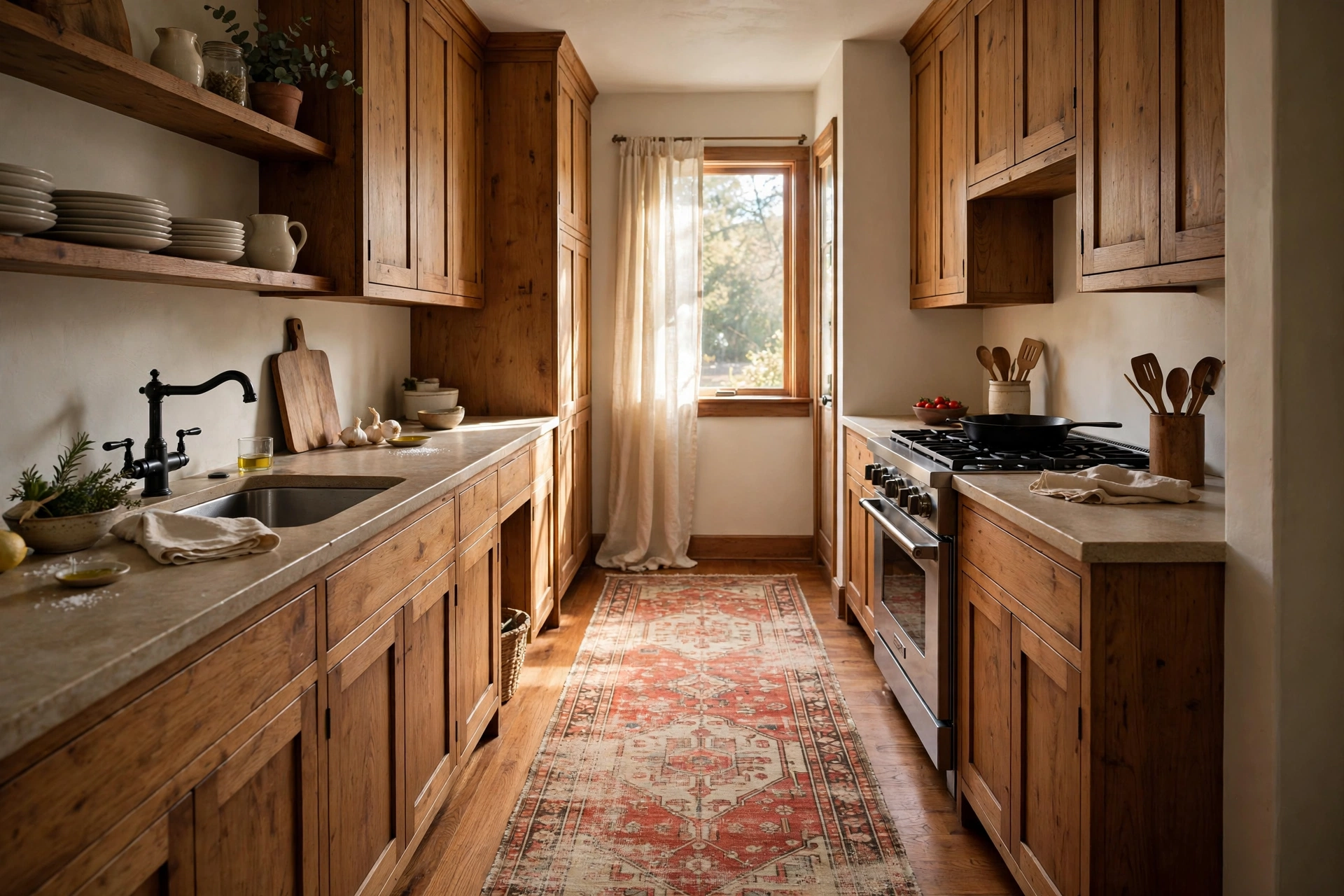
1. Vintage-look runners earn their popularity. Faded Persian-style patterns in rust, cream and indigo hide crumbs and splashes better than any other design, and they sit comfortably in both farmhouse and modern kitchens. “Vintage-look” printed rugs give the pattern without the antique price — or the antique anxiety.
2. Warm neutrals for a calm kitchen. A cream, oat and soft-grey runner in a subtle pattern is the floor version of our warm neutral kitchen ideas: it lightens a dark floor and never fights the cabinet colour.
3. Jute and natural weave for texture, not softness. Woven jute and sisal-look runners add the texture rustic and coastal kitchens run on. They are firmer underfoot and shrug off dry mess well, but they dislike soaking — keep them away from the sink run if your household splashes.
4. One bold runner in a plain kitchen. If your cabinets and walls are quiet, the runner can be the single loud thing: deep green, brick red, a strong stripe. One confident colour at floor level makes a simple kitchen look designed, not unfinished — the same collected-over-time spirit as our farmhouse kitchen ideas.
Sizing and Placing It Right
5. Leave a border of floor on both sides. A runner should sit roughly 10–15 cm narrower than the walkway on each side. Wall-to-wall rug reads as carpet; a visible floor border reads as intention.
6. Run it along the work, not the room. The classic placement is the worktop run — sink to hob — where you actually stand and walk. In an island kitchen, that is usually the gap between island and main counter; measure that gap, not the whole floor.
7. Standard lengths, honest measuring. Most kitchen runners come in roughly 60×180 cm and 75×240 cm. Measure your run, subtract the border, and buy the closest size down — a too-long runner bunched at a door is worse than a shorter one placed well.
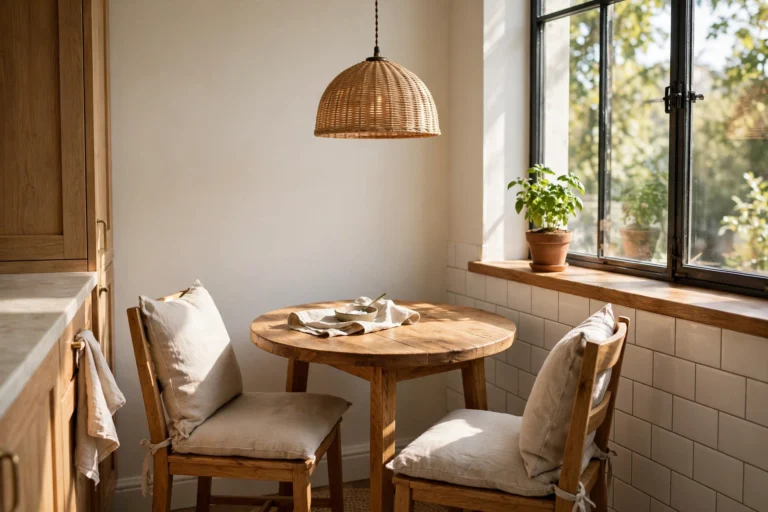
8. Under the nook counts too. A runner can also define a seating strip — under a bench and table edge it does the anchoring job described in our kitchen breakfast nook ideas. Flat-weave only, so chairs slide.
Living With It (the Practical Half)
9. Washable is not a luxury, it is the point. Kitchen runners live under cooking. A machine-washable flat-weave runner you can wash monthly will out-look a precious rug within a year. Check the care label before the pattern seduces you.
10. Always use a rug pad. A thin non-slip pad stops the runner travelling (a genuine safety issue at the hob), adds the cushion your knees notice during a long cooking session, and makes cheap runners feel twice the price.
11. Low pile or flat weave, no exceptions. High pile traps crumbs, blocks cabinet doors and dishwasher plinths, and drinks spills. Flat weave shakes out in seconds and slides under every door swing.
12. Rotate and shake weekly. A 30-second shake outside once a week and a half-turn every few months evens out the fading and the traffic wear — runners fade in sunlight exactly where you walk, and rotation is the whole cure.
A runner will not renovate your kitchen. It will do something more useful: make the floor you stand on every morning feel like part of the home instead of part of the building. Choose washable, size it with a border, pad it properly — then enjoy the quiet miracle of warm feet at the kettle.