13 Kitchen Breakfast Nook Ideas for Slow Mornings in Any Size Kitchen
Every kitchen has a corner that does nothing. It collects the mail, the bags, the chair nobody sits on. A breakfast nook is what that corner wants to be: a small, soft place to sit with coffee before the day starts. It does not need a renovation or a big footprint — the best nooks fit in about a square metre — it needs a seat, a surface, light, and a reason to linger. These 13 ideas build one in kitchens of every size, rented or owned.
Start With the Seat
1. A banquette makes a small corner seat four. Built-in bench seating along one or two walls fits more people in less space than freestanding chairs, because nobody needs pull-out room on the wall side. Add a hinged top and the bench doubles as storage for table linens and rarely used appliances.
2. No build? A bench against the wall does 80% of the job. A simple wooden or upholstered bench pushed to the wall, with two chairs opposite, gives the same tucked-in feeling with zero construction — and it moves out again when you do.
3. A window seat is the nook everyone fights for. If your corner has a window, put the seating under it. Morning light is the whole point of a breakfast nook; a low seat beneath the sill, deep enough for a cushion and a throw, becomes the house’s favourite spot within a week. It is the same light-first thinking behind our small cozy kitchen ideas.
The Table
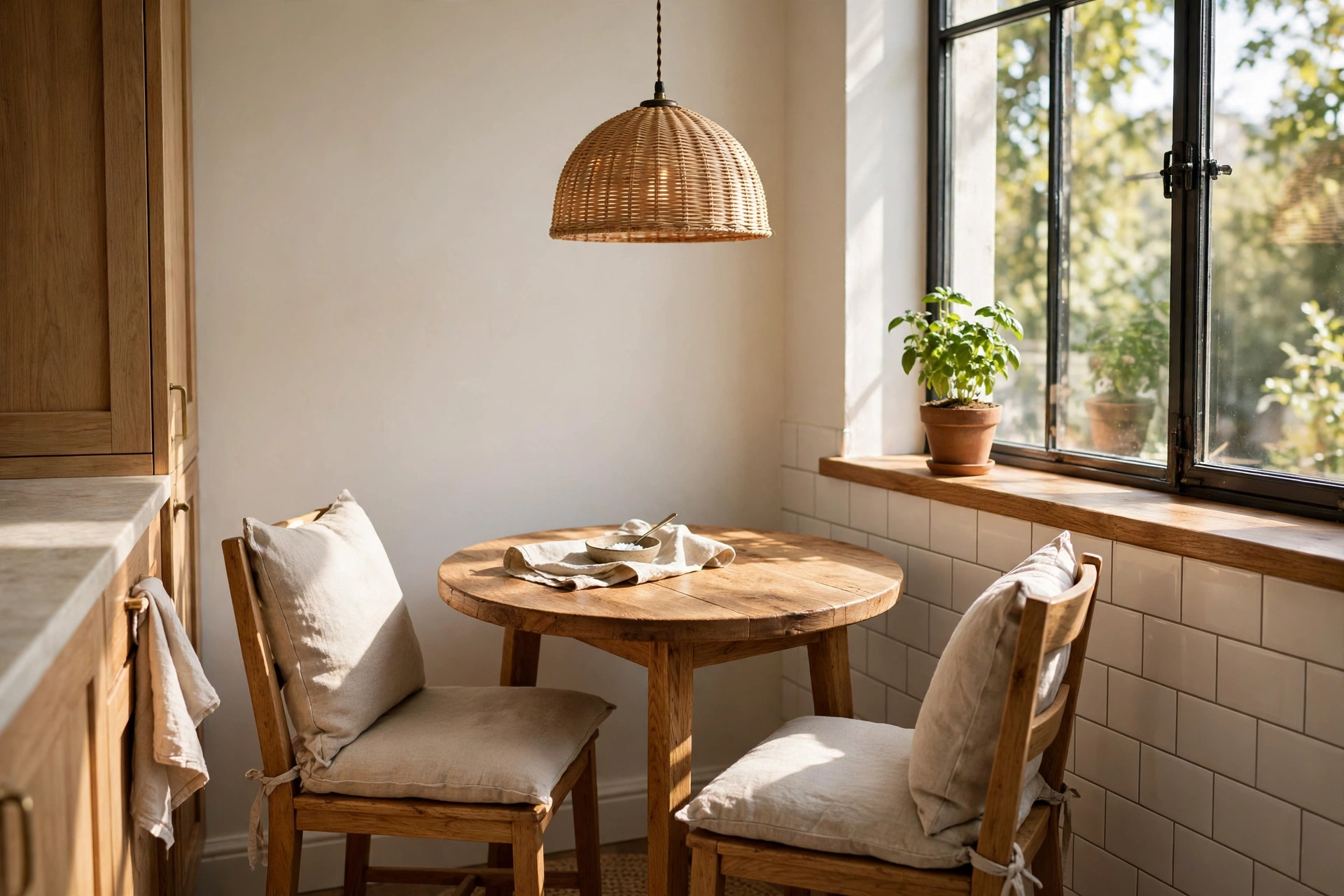
4. Round tables suit nooks best. No corners to catch hips in a tight space, and everyone can squeeze in one more chair. A pedestal base matters more than the top: four legs fight with feet and bench bases, a single central leg lets everyone slide in.
5. Drop-leaf and fold-down tables for the smallest kitchens. A wall-mounted fold-down table with two stools gives a two-person nook in a kitchen that seemingly has no spare centimetre — and folds flat when you need the floor. Size it honestly: about 60 × 80 cm is a comfortable breakfast for two.
6. Leave walking room, not just sitting room. The measurements that make a nook comfortable: roughly 60 cm of table edge per person, about 45 cm of knee depth under the table, and — the one people forget — at least 90 cm behind a chair if someone needs to walk past while others are seated.
Light, Warmth and Texture
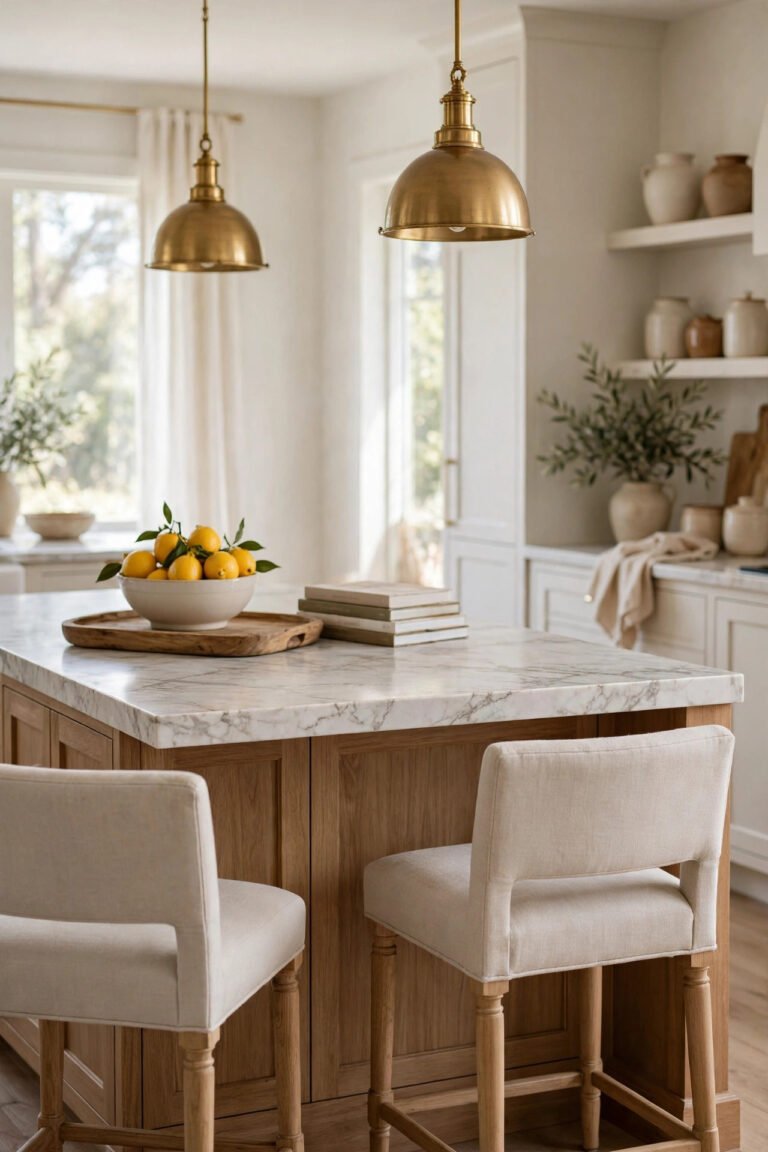
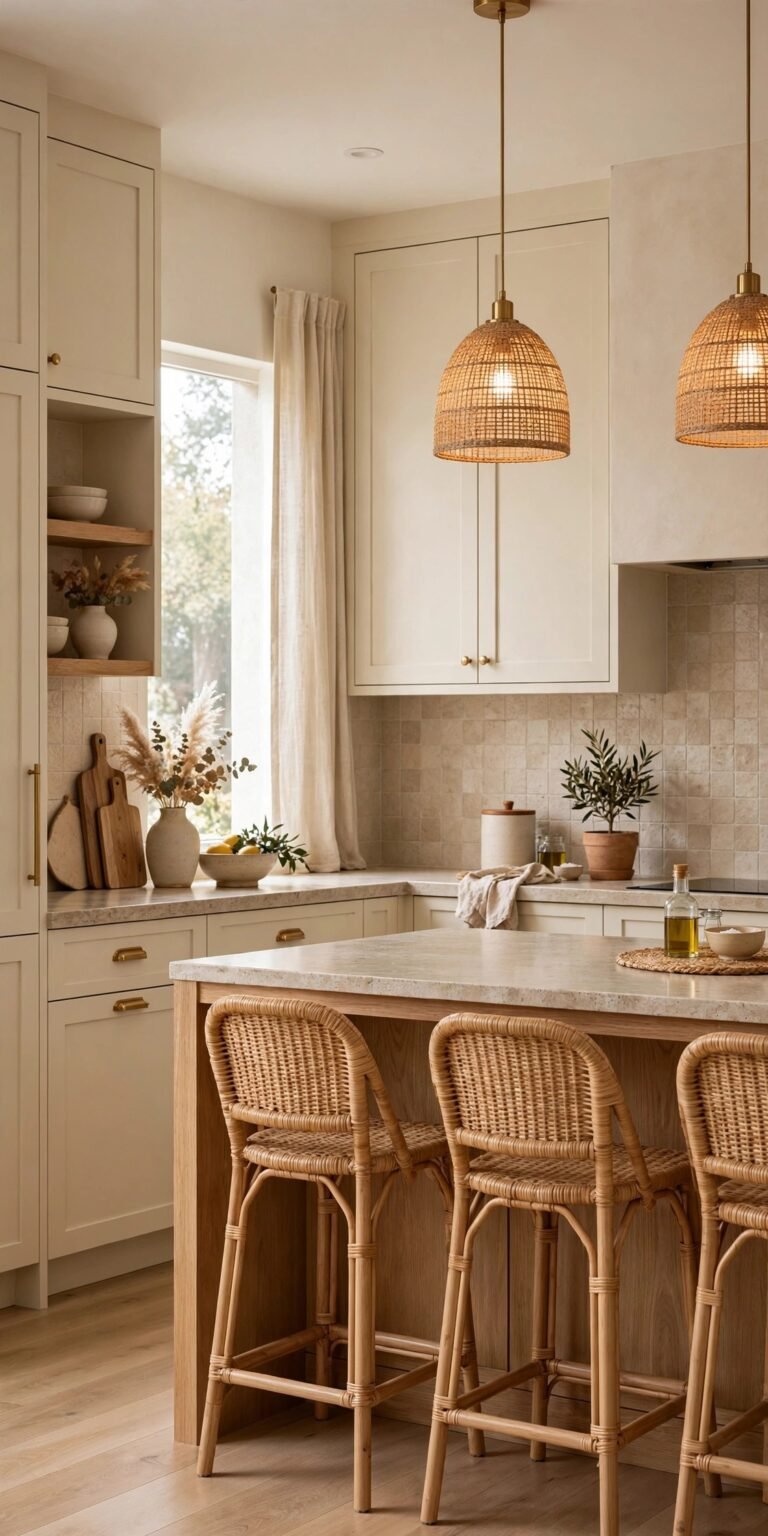
7. Hang one pendant low over the table. A single pendant centred on the table, hung so the shade sits roughly 75 cm above the tabletop, pools warm light exactly where people sit and tells the eye “this is a place, not a passage”. It is the nook version of the layered lighting in our other kitchen guides.
8. Cushions are not decoration — they are the difference between 5 minutes and 30. Bare wood and metal chairs end breakfasts early. Seat cushions on every seat, one back cushion or throw per person, in washable natural fabrics. Farmhouse and cozy styles live on exactly this layering.
9. A small rug under the nook anchors it. A flat-weave, washable rug slightly larger than the table-and-chairs footprint separates the nook from the working kitchen visually and softens the sound and feel underfoot on cold mornings.
10. Style the wall, keep the table clear. The nook wall can carry the personality — one framed print, a small shelf, a rail with mugs — the same approach as our kitchen wall decor ideas. The table itself stays almost empty: a small tray with the coffee things, a tiny plant, nothing that has to be moved before someone can sit down.
Use It All Day, Not Just at Breakfast
11. Give the nook a second job. Laptop at ten, homework at four, board games at eight — a nook that works all day earns its footprint in a small home. One closed basket on the bench (the landing-zone trick from our kitchen open shelving ideas) swallows chargers, notebooks and the day’s clutter in seconds.
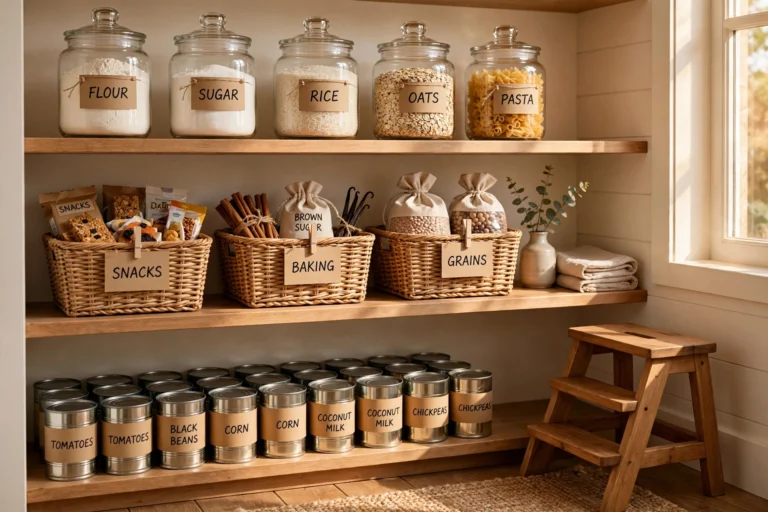
12. Keep a “morning kit” within arm’s reach. The ritual is the retention strategy: mugs, tea and coffee, a small jar of biscuits, kept in the nook itself or the nearest cabinet. If making coffee means crossing the kitchen six times, the nook becomes a shelf. If everything is one reach away, it becomes a habit.
13. Renters: build the whole nook from furniture. Bench, round pedestal table, two chairs, a plug-in pendant or a small table lamp, cushions, rug. Nothing fixed, nothing drilled, everything packable — and the corner still reads as a designed nook in photos and in daily life.
The Order to Do Them In
Seat first, table second, light third, soft things last. Live with it for a week before buying anything decorative: you will learn which seat gets the morning sun, where feet actually go, and whether the second job is laptop or homework. Then style the wall. A nook is finished not when it looks right, but when somebody chooses it over the sofa for the first coffee of the day.
FAQs
How small can a breakfast nook be? A two-person nook fits in roughly 90 × 120 cm: a fold-down or small round table, a bench or two compact chairs, and cushions. The tightest comfortable version is a wall bench plus a 70 cm round pedestal table.
What is the best table shape for a breakfast nook? Round pedestal tables work best in most nooks — no sharp corners in tight circulation space, flexible seating, and no legs colliding with bench bases or feet. Rectangular tables suit long wall banquettes better.
How do I make a breakfast nook feel cozy, not just functional? Three layers: soft seating (cushions and a throw), warm pooled light (a low pendant or lamp), and one personal ritual kept within reach (the coffee kit). Skip any one of the three and the nook stays a table in a corner.