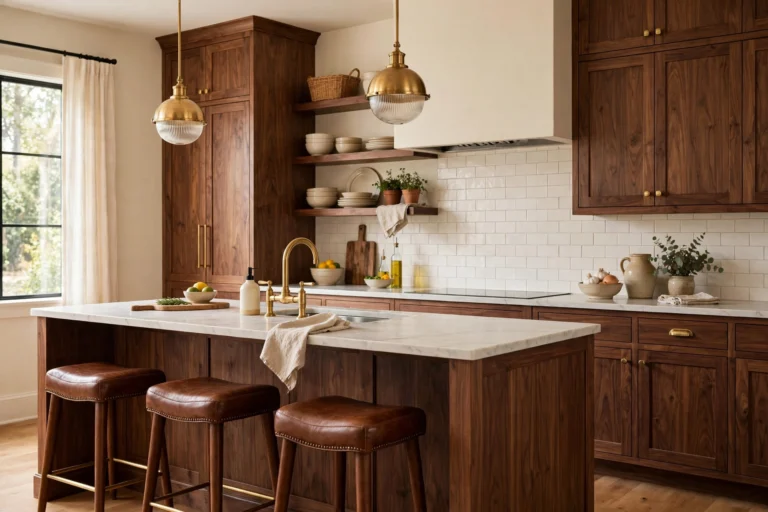
12 Mediterranean Kitchen Ideas — Sun-Warm Colour, Honest Materials, No Theme-Park Clichés
The Mediterranean kitchen everyone wants is a feeling — sun on plaster, lunch that lasts two hours, materials that age with grace. The one nobody wants is a theme: novelty tiles, fake distressing and a Tuscan sign from a gift shop. The difference is restraint and real materials. These 12 ideas stay firmly on the right side of that line.
The Colour and Material Base
1. Warm white walls, never brilliant white. The base of this style is plaster-toned — chalky, slightly creamy whites that take sunlight warmly instead of bouncing it blue. It is the backdrop that lets every other material look sunlit, and it pairs with the earthy end of the palettes in our kitchen colour ideas.
2. Terracotta underfoot — or its porcelain double. Real terracotta is porous, needs sealing and marks its age in the surface; modern porcelain terracotta-look tiles give the same baked-earth colour with none of the upkeep. Either way, that floor is the style’s anchor — the options and trade-offs sit in our kitchen flooring ideas.
3. One saturated colour, used once. Olive green, deep Mediterranean blue or ochre — choose one and spend it in a single place: the lower cabinets, the island, or the range. Everywhere else stays plaster, wood and stone. One strong colour reads as confidence; three read as souvenir shop.
4. Handmade-look tile with real variation. Zellige-style tiles — glossy, uneven, each one slightly different — catch light the way flat metro tiles never will. Use them on the splashback or a full hob wall, keep the grout close in tone, and let the irregularity do the decorating.

The Shapes That Signal the Style
5. An arch, somewhere honest. An arched doorway, an arched niche for the hob, or simply arched-top cabinet doors — one curved line softens a whole kitchen of straight ones. One arch is architecture; five are costume.
6. Open shelves in thick, plain wood. Two chunky timber shelves holding everyday pottery, glasses and oil bottles do more for this style than any accessory. The rule: only what you use daily earns the shelf — display is what turns it themed.

7. A farmhouse sink and unlacquered brass. A deep ceramic sink and taps in brass that will patina over time bring the working, unfussy honesty the style is really about. Matching every metal in the room is a showroom habit; Mediterranean kitchens mix brass, black and steel without apology.
8. Wood that looks like wood. Beams if the ceiling allows them, a scrubbed-pine table, olive or oak cabinet fronts with the grain showing — timber here is a material, not a colour. Paint it only in your one saturated shade, and leave the rest to age naturally.
Living the Mediterranean Way
9. A table in the kitchen, not beside it. This style assumes people gather where food is made. If space forces a choice between a bigger island and a small real table, the table wins — it hosts coffee, homework and two-hour lunches in a way a worktop never quite does.
10. Herbs and produce as the decoration. A terracotta pot of rosemary by the window, a bowl of lemons, braids of garlic near the hob — the traditional finishing touches are all edible, seasonal and free. When they stop looking good, you eat them and start again.
11. Textiles in natural fibres only. Linen curtains, a cotton runner, a woven pendant shade — the soft layer is all natural texture and no pattern louder than a stripe. Synthetics shine wrong in this light and age wrong with these materials.
12. Modern bones underneath. Keep the layout, appliances and storage ruthlessly current — deep drawers, a proper extractor, induction if you like it — and let only the surfaces carry the style. A Mediterranean skin on a modern kitchen is timeless; a fake-old kitchen is a renovation waiting to happen.
Sun-warm colour, honest materials, one arch, one strong colour and a table people actually sit at — build those in, and the kitchen feels Mediterranean in February as surely as in August.