12 Traditional Kitchen Ideas That Never Date
Traditional kitchens are the ones estate agents describe as “timeless” because they are built from proportions and materials that were settled long before trends arrived. The style is not about copying a period house; it is about giving a kitchen the same calm, finished architecture as the rest of a classic home. These 12 ideas keep it settled rather than themed.
THE ARCHITECTURE COMES FIRST
1. Framed, in-frame style cabinets. Doors that sit inside a visible frame are the signature of the traditional kitchen. The frame adds shadow lines and a sense of joinery that flat doors cannot imitate, and it is the detail our shaker kitchen ideas guide builds on in simpler form.
2. A proper range cooker as the centrepiece. One generous cooker with a mantel-style surround or a simple chimney breast above it gives the room its traditional anchor. Everything else arranges itself around it.
3. Cornice, skirting and a framed ceiling line. Traditional rooms finish their edges: a cornice where cabinets meet the ceiling, skirting that matches the house, and cabinet runs taken up to full height. Our kitchen ceiling ideas guide shows how much that top line matters.
4. Symmetry where you can get it. A centred cooker, matched wall cabinets either side, an island aligned with the room’s axis. Traditional design is relaxed about many things, but not about balance.
MATERIALS THAT WERE ALWAYS THERE
5. Stone or stone-look worktops with a profiled edge. A rounded or ogee edge profile on marble-look or granite surfaces is a quiet traditional signal flat modern edges never send. The kitchen worktop ideas comparison covers which surfaces carry the look honestly.
6. Painted wood in deep, settled colours. Cream, putty, sage and deep green have carried traditional kitchens for decades because they sit calmly with stone and wood. Hand-painted finishes, slightly imperfect, suit the style better than sprayed perfection.
7. A wooden table, even in a fitted kitchen. One piece of real furniture — a scrubbed pine or oak table, a dresser, a butcher’s block — stops a fitted kitchen feeling like a showroom and connects it to the room’s older history.
8. Classic flooring: stone flags, checkerboard or wood. Large stone-look tiles, a black-and-white checkerboard in a hallway-sized kitchen, or honest wood boards. Flooring is where traditional kitchens win or lose their nerve.
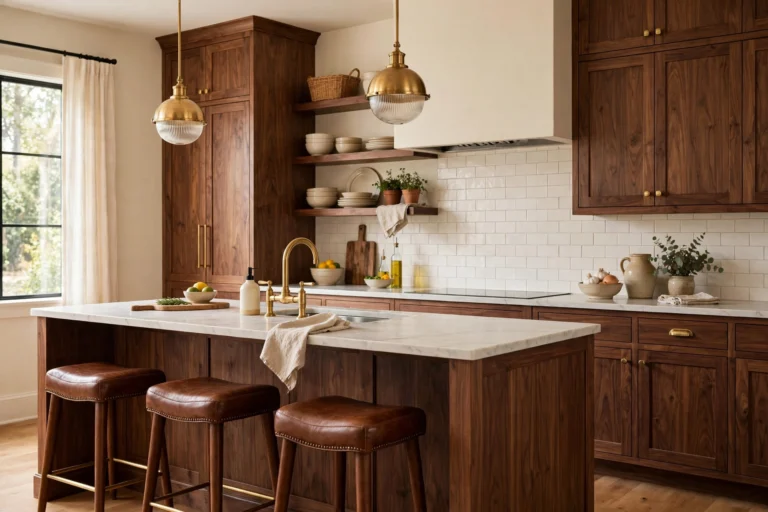
THE DETAILS THAT FINISH IT
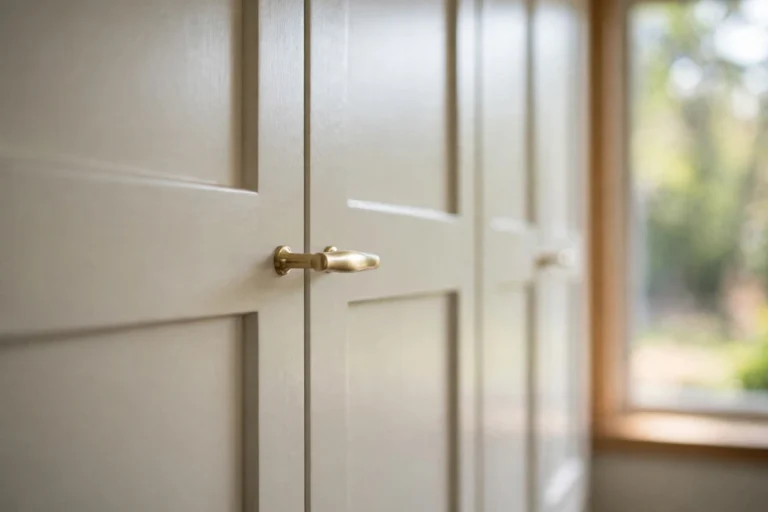
9. Cup handles, knobs and unlacquered metals. Bin pulls and round knobs in brass or pewter that tarnish gently with use. Matching every metal exactly is a modern habit; traditional rooms mix them within one warm family.
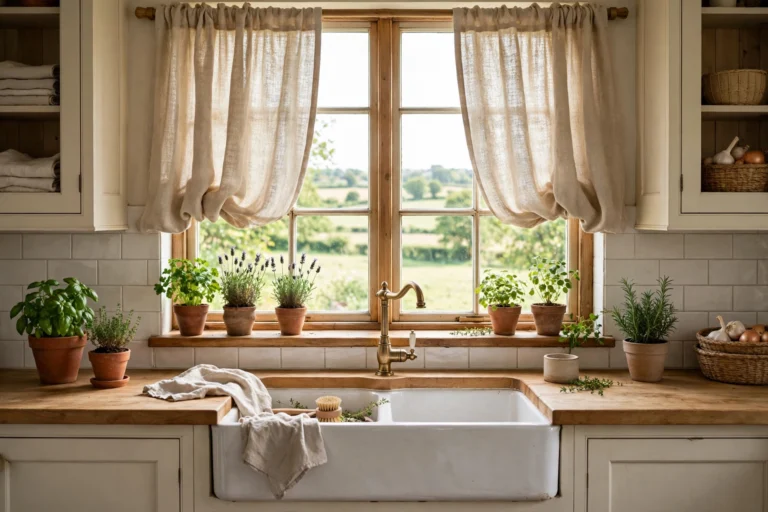
10. A Belfast or apron-front sink under the window. The deep ceramic sink is practical — big pans genuinely fit — and it is the single quickest way to give a run of cabinets a traditional centre.
11. Plate racks, pan rails and open dresser shelving. Traditional storage shows itself: plates slotted on a rack, pans on a rail, glasses on a dresser shelf. It suits the edited everyday display in our kitchen open shelving ideas guide.
12. Warm, layered light. Pendants over the island, a lamp-like glow at the worktop, nothing clinical. Warm white light on painted wood and stone is what makes the whole scheme feel like evening in a house that has always been there.
One honest warning before you start: traditional is the least forgiving style to buy cheaply. Framed cabinets, profiled stone edges and solid brass hardware are the substance of the look, not decoration on top of it, so a room built from flat-pack doors and foil finishes will read as a costume. The better route on a real budget is to do fewer things properly — one well-made run of cabinets, a cooker you will keep for twenty years, hardware that weighs something in the hand — and let the rest stay simple until it can be done at the same standard. Traditional rooms reward patience because they are meant to be added to across years, not installed in a week.
Build the architecture first — frames, balance, finished edges — then let stone, painted wood and one piece of furniture do the talking. A traditional kitchen done this way does not date, because it was never chasing a year in the first place.