12 Terracotta Kitchen Ideas That Feel Earthy, Not Orange
Terracotta is the colour of baked earth, roof tiles and plant pots — warm in a way that feels old and grounded rather than bright. In a kitchen it can be the cosiest decision you make, or an orange mistake you live with for a decade, and the difference is almost never the colour itself. It is the dose, the surface it lands on, and what stands next to it. These 12 ideas keep terracotta earthy: real clay where possible, muted tones, and plenty of cream, wood and green to hold it down.
The Right Terracotta, in the Right Dose
1. Choose muted, dusty terracotta — not saturated orange. Real clay is brown-pink and grey at the edges, never traffic-cone. Hold samples against oak in daylight: the ones that still look earthy at noon are the ones that will stay calm at scale.
2. Start with the floor if the room is big, the wall if it is small. Terracotta floor tiles ground a large kitchen beautifully and wear their age well; in a small kitchen the same coverage closes in, so the colour belongs on one wall or the backsplash instead. Floor material trade-offs sit in our kitchen flooring ideas guide.
3. The one-third rule. Terracotta over roughly a third of the visible surfaces warms a room; over half, it becomes the room. Cabinets, walls, floor, textiles — count them honestly before adding the next terracotta thing.
4. Vary the tone deliberately. Clay is never one flat colour. Mixing two or three neighbouring tones — in tiles especially — gives the handmade depth that flat orange paint cannot. Uniformity is what makes terracotta look like plastic.
What to Put Next to It
5. Cream, not white, as the partner neutral. Stark white makes terracotta look dirtier and more orange by contrast; warm cream and off-white sit in the same family and soften it. The pairing logic echoes our cream kitchen ideas guide — warm neutrals first, bright whites last.
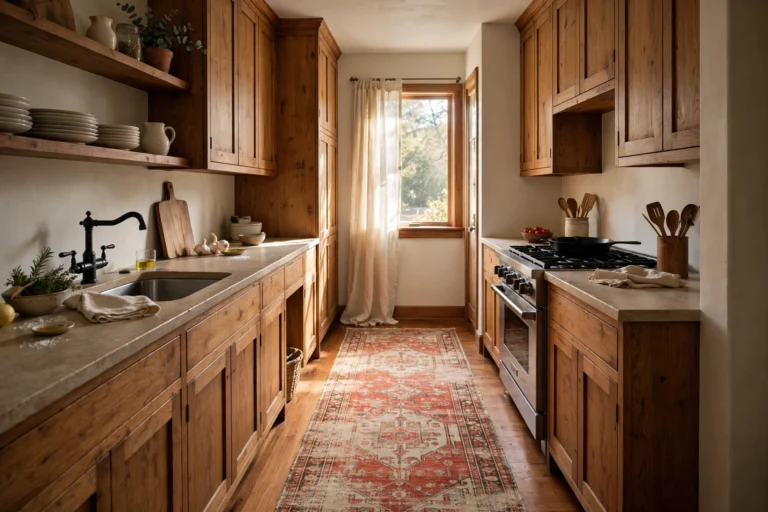
6. Natural wood everywhere you can. Oak, pine and walnut share terracotta’s brown base, so wood worktops, shelves and stools make the colour feel inevitable rather than applied. It is the single easiest grounding move in this palette.
7. Green as the cooling accent. Plants, a sage textile or a green-glazed jug cool terracotta exactly the way foliage cools a clay pot. The dose discipline from our sage green kitchen ideas guide works in reverse here: green as the accent, earth as the base.
8. Black and aged brass in small, hard notes. A black tap, aged brass handles or a dark rail stop the palette drifting into softness. Warm rooms still need edges — a little darkness is what makes the warmth read as designed.
Terracotta by Material
9. Real clay tiles where the budget allows one splurge. Unglazed or lightly sealed quarry and terracotta tiles deepen in colour with age and wear — they are the reference every imitation copies. They need sealing and honest care; in return they never look fake.
10. Paint for the reversible version. A terracotta limewash or clay-paint on one wall gives the colour’s softness with none of tile’s commitment, and its chalky finish is closer to real clay than flat emulsion. Test a full wall section — small swatches of this colour always lie.
11. Textiles and pots for the ten-minute dose. A terracotta runner, linen curtains, clay pots with herbs and earthenware on the shelf: an afternoon’s worth of colour that can be dialled up or down seasonally. It is also the renter-safe route into the whole look.
12. Borrow the Mediterranean structure, not the theme. Terracotta belongs naturally with stone, lime plaster, dark wood and one arch — the structure in our Mediterranean kitchen ideas guide. Take the bones and skip the props: no grape vines, no faux-aged signs, just earth, stone and shade.
Stand back and judge the room the way you would judge a garden wall at the end of the day: terracotta should feel like the earth the kitchen is built from, warmed by sun — never like a colour that was sprayed over it. Dose it to a third, ground it with cream and wood, cool it with green, and let real clay do the talking wherever it can. Do that, and the room stays what terracotta has been for a thousand years: the warmest neutral there is.