12 Kitchen Range Hood Ideas That Earn Their Place
The range hood is the one kitchen appliance you cannot hide in a cupboard and cannot skip: without it, every fried breakfast lives on your cabinets for a week. Yet it is usually chosen last, from whatever the appliance shop had in stock. These 12 ideas treat the hood as what it really is — the largest single object on the cooking wall — and size it, style it and finish it with the same care as the cabinets below it.
Shape First: The Silhouette Decides the Room
1. The plaster chimney hood for calm, built-in looks. A smooth plastered chimney, painted the wall colour, reads as architecture instead of appliance. It suits shaker, traditional and Mediterranean-leaning kitchens and hides the duct inside a shape that looks like it was always there.
2. The tapered wood hood for warmth. A gently sloping hood clad in oak, walnut or painted tongue-and-groove brings the cabinet material up the wall. Keep the taper subtle — steep funnels date quickly, shallow ones just look crafted.
3. The black metal hood as a deliberate edge. Matte black steel gives white and cream kitchens the hard note they need, the same way a black tap does. Echo it once more — handles, a rail, stool legs — so it reads as a decision, not an accident.
4. The hidden hood when the wall should stay quiet. An integrated extractor inside a cabinet or a flush ceiling unit keeps sightlines clean in minimalist and open-plan kitchens. You lose the focal point but gain calm — the right trade in small rooms where the cooking wall is always in view. Ceiling-height decisions belong with our kitchen ceiling ideas guide.
Material and Finish: What It Is Made Of
5. Stainless steel, but brushed and warm. The classic pro look still works if the finish is brushed rather than mirror-polished and the shape is simple. Pair it with a practical splashback — our kitchen backsplash ideas guide covers the grease-proof options.
6. A stone-clad hood for one-material walls. Carrying the backsplash stone up and over the hood makes the whole cooking wall one surface. It is the most expensive option here and the most forgiving: one material, no grout-line arguments, nothing to clash.
7. Copper or aged brass for kitchens with a story. Living metals patina where hands and steam reach them, which suits vintage and farmhouse schemes. Seal them if you want the shine to stay; leave them raw if you would rather the kitchen aged honestly.
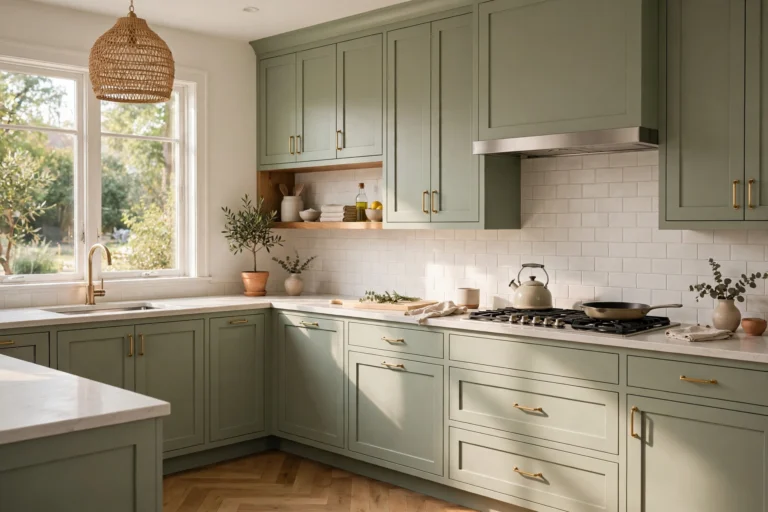
8. Paint the hood the cabinet colour. The cheapest transformation on this list: a standard steel hood, primed and painted to match the cabinets, disappears into the scheme while keeping its shape. It works especially well in strong colours — navy, green, terracotta — where a steel box would shout.
Size and Sense: The Numbers That Matter
9. Wider than the hob, always. The hood should overhang the cooking surface — ideally 75–90cm over a 60cm hob, more over a range cooker. A hood narrower than the hob is decoration; steam and grease simply walk around it.
10. Height is a balance, not a guess. Too low and you crack your head and block the view of the back burners; too high and capture collapses. Most makers specify 65–75cm above the hob — follow their number, not the installer’s habit. Worktop-to-hood planning pairs with our kitchen worktop ideas guide.
11. Duct out if you possibly can. Recirculating hoods filter grease but return moisture and most smells to the room. If there is any route to an outside wall — along a ceiling, through a boxed corner — take it. The plaster chimney in idea 1 exists precisely to hide that duct gracefully.
12. Match the power to how you cook. A household that sears, fries and wok-cooks needs extraction at the top of the domestic range and a hood deep enough to catch front-burner steam. Gentle simmerers can choose quiet over muscle — and should, because a hood you avoid switching on extracts nothing.