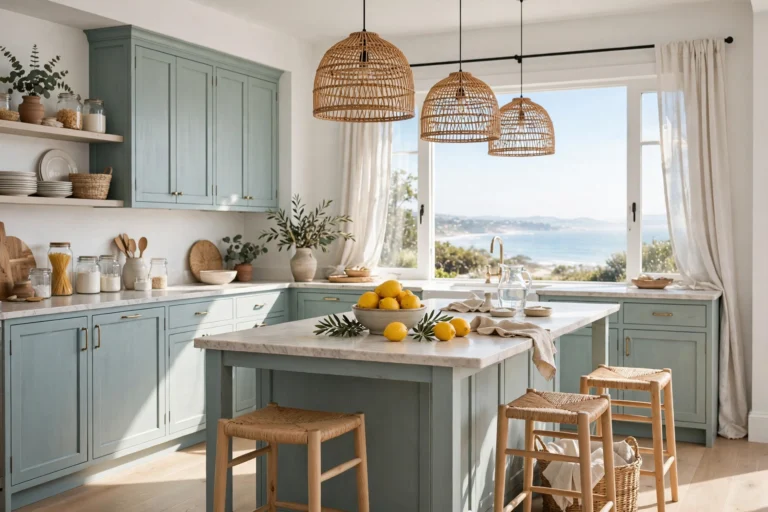
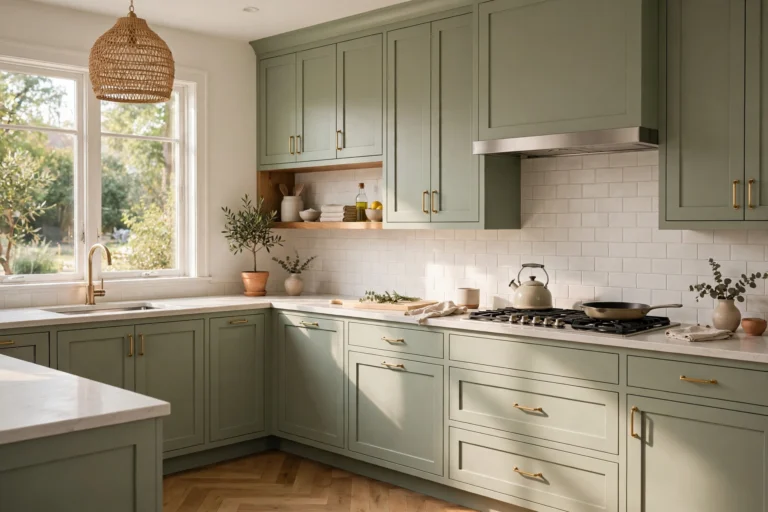
12 Brass Kitchen Ideas That Warm Without Shouting
Brass is the fastest warmth a kitchen can buy: one tap can take a white-and-chrome room from showroom to home. It is also the easiest metal to overdose — brass everything, in three slightly different golds, reads cheaper than no brass at all. These 12 ideas dose it properly: the right touchpoints, the right finish for your household, and the one-supplier rule that keeps the tones honest.
The Touchpoints That Carry It
1. The tap as the single statement. If brass appears nowhere else, a brass tap still works — it is the most-touched, most-seen fitting in the room and the one that reads most clearly as a decision. Tap shapes and finishes are compared in our kitchen faucet ideas guide.
2. A brass rail for the working wall. A rail under the wall cabinets or beside the hob — for utensils, pans, a small herb pot — spreads brass along the room’s working line instead of concentrating it in one spot. It also happens to be genuinely useful storage.
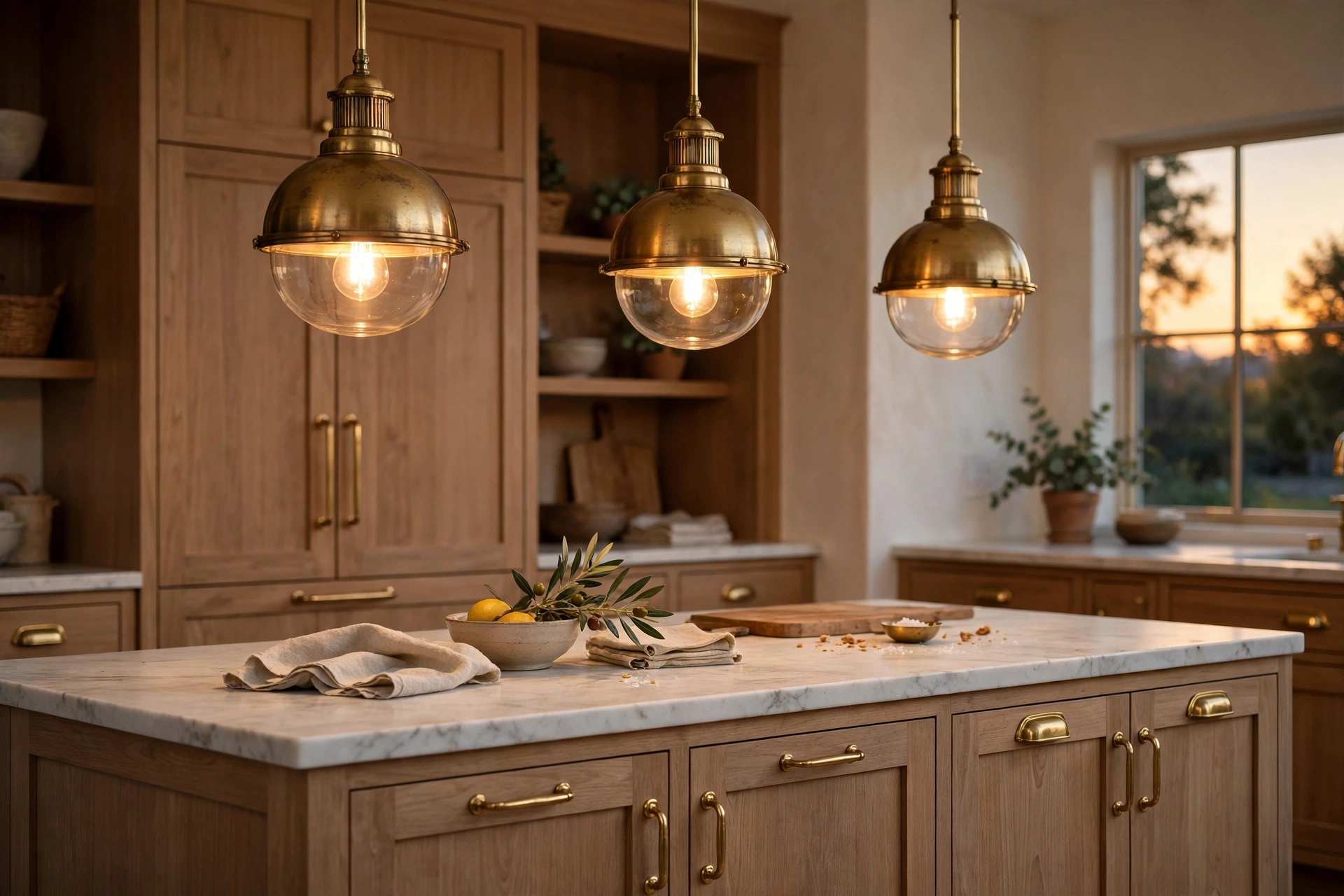
3. Brass pendants to bring the warmth overhead. Metal at eye level and above balances metal at the counter. Two or three brass pendants over an island warm the whole sightline; lighting layouts by zone are planned in our kitchen lighting ideas guide.
4. Handles and knobs, matched exactly. Cabinet hardware is where brass most often goes wrong, because handles are bought last and matched by eye from a screen. Hardware styles in depth live in our kitchen cabinet hardware ideas guide — the brass rule is simple: order physical samples, and buy every piece from one maker in one finish.
Finishes: Pick Your Maintenance Level
5. Unlacquered brass if you love patina. Living brass darkens, shines where hands polish it, and records the kitchen’s life — beautiful in traditional, vintage and farmhouse rooms. It is the wrong choice if fingerprints and water spots will annoy you daily; they are not defects, they are the finish.
6. Lacquered or brushed brass if you want it to stay put. A lacquered or PVD brushed finish keeps its tone and asks only for a wipe. Choose it for modern and minimalist kitchens where the metal should stay a clean line, and for households that want the look without the relationship.
7. Antique brass for instant age. A pre-aged, darker brass suits rooms with history — stone, timber, range cookers — where new-and-shiny would jar. Keep the rest of the palette quiet around it; antique brass plus busy patterns is a fight.
8. Never mix three golds and call it eclectic. Brass, gold-painted and rose-gold pieces side by side read as a mistake, because they are one. Two metals in a kitchen is a scheme (brass plus black, brass plus chrome in separate zones); three warm golds is an accident. Audit what you already own before adding more.
Dosing and Pairing Rules
9. Three touchpoints per sightline, no more. Stand in each doorway: tap plus rail, or pendants plus handles — about three brass moments per view warms the room. Five or more and the eye stops seeing warmth and starts seeing a theme.
10. Brass loves dark and warm cabinets most. Deep green, navy, warm wood and cream all give brass something to glow against. It struggles on cool grey gloss, where its warmth reads as a colour clash — if the cabinets are cool, let brass be tiny (knobs only) or skip it.
11. Repeat it once in the next room in open-plan spaces. A brass lamp base, picture frame or door handle within sight of the kitchen stops the metal feeling like a costume worn by one room. One echo is enough; you are rhyming, not matching.
12. Keep one cleaning rule for the whole room. Whatever finish you chose, clean every brass piece the same way — soft cloth, mild soap, no abrasive or acidic sprays — and tell everyone in the house the rule once. Most brass damage is not wear; it is one enthusiastic clean with the wrong spray.