12 Retro Kitchen Ideas That Feel Fun, Not a Costume
Retro kitchens are back because they are fun — but the line between fun and theme park is thin. A retro kitchen works when you borrow three or four period details and keep everything else modern: the appliances, the storage and the lighting all work like a 2026 kitchen, even if the colours and curves nod to 1975. These 12 ideas keep retro joyful.
Colour Without the Costume
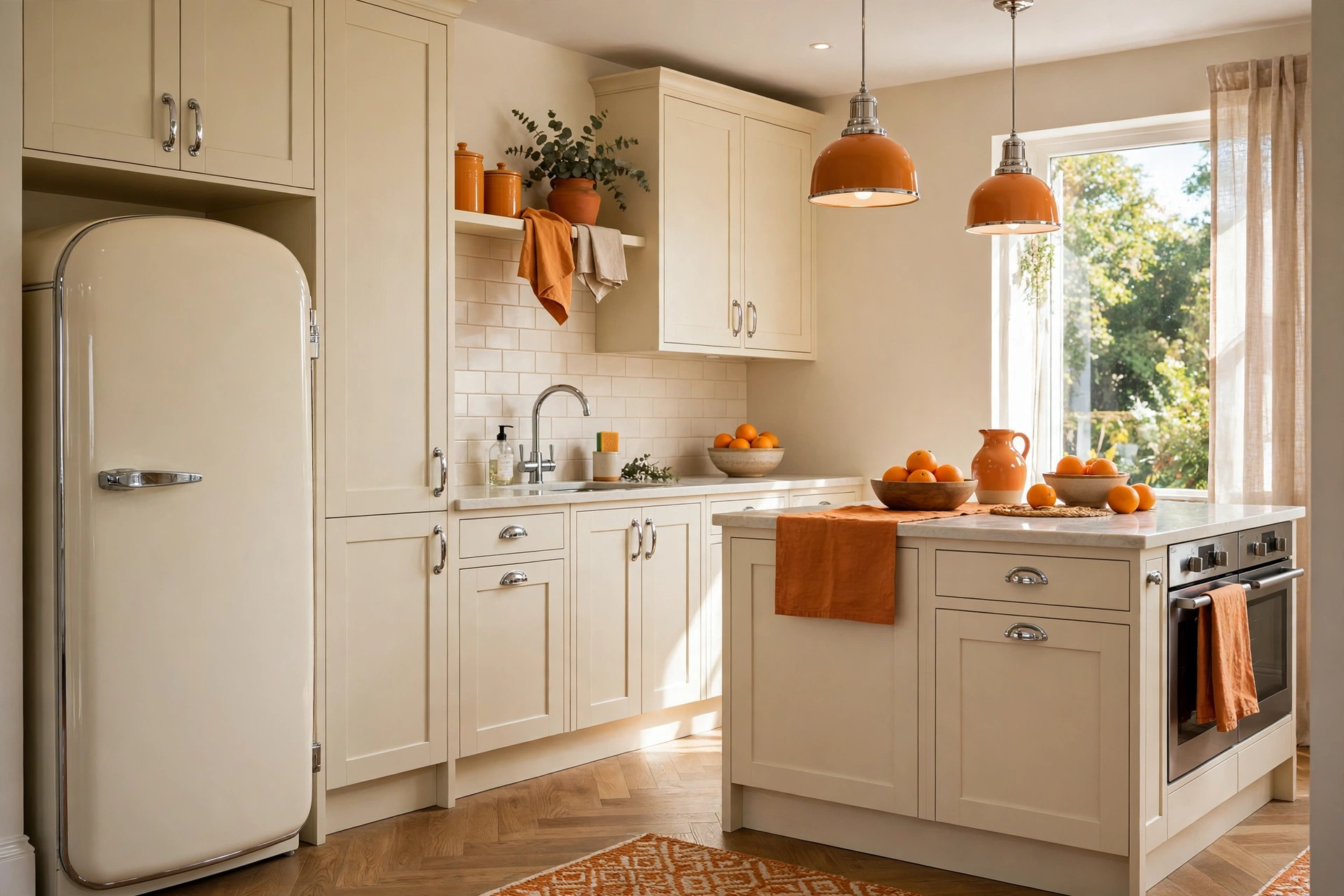
- Pick one retro colour, not the whole palette. Avocado, burnt orange, mustard or teal — choose one, use it on cabinets or one feature wall, and keep the rest cream, white or warm wood. All four together is a museum, not a kitchen.
- Cream is retro’s best friend. Cream cabinets, cream tiles and cream worktops let one bold retro colour shine without shouting. Pure white beside retro colour can look harsh; cream softens it.
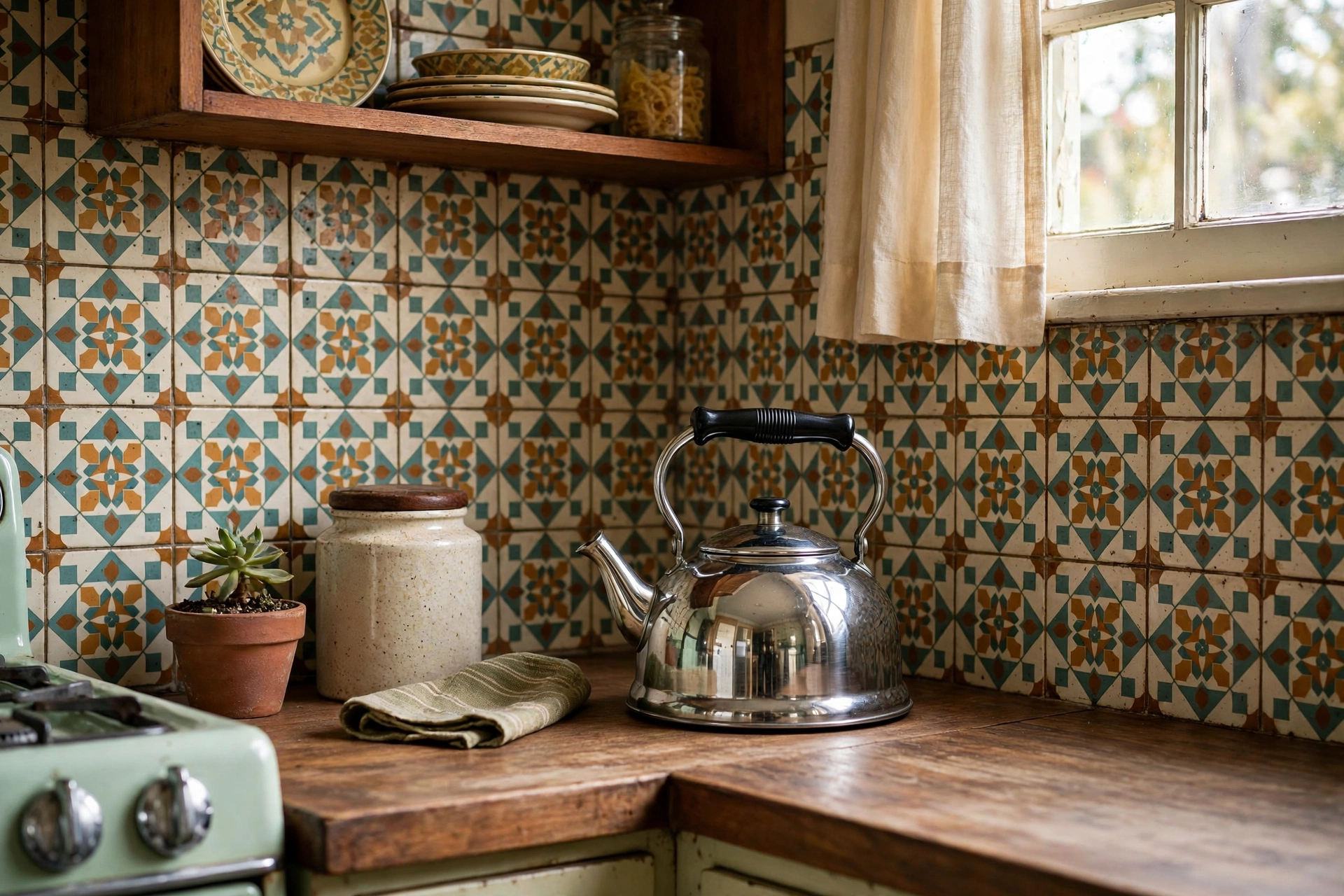
- Patterned tiles, used sparingly. A patterned tile splashback is the fastest retro signal in a kitchen — but keep it to the splashback only. Patterned floors plus patterned walls plus patterned worktops fight each other.
- Warm wood grounds retro colour. Teak, walnut and warm oak were the woods of the retro decades, and they still calm bold colour today. Cold grey stone beside retro orange turns the room chilly.
Curves, Chrome and Details
- Curves beat corners. Rounded cabinet corners, a curved fridge, round bar stools and arched doorways are the shapes of retro kitchens. One or two curves are enough — you do not need to round everything.
- Chrome is the retro metal. Chrome handles, chrome taps and a chrome kettle are the period-correct metals, and they still look clean today. Brass belongs to the older vintage look covered in our vintage kitchen ideas guide, not to retro.
- One hero appliance, modern inside. A retro-look fridge or a colourful range cooker is the classic hero piece — but buy a modern one with retro styling, not an actual 1970s appliance. The look is retro; the energy use and the food safety are not.
- Open shelving shows the retro collection. Coloured glassware, enamelware and patterned plates are the retro kitchen’s decoration. A short run of open shelves, like the ones in our kitchen open shelving ideas guide, displays them without cluttering every surface.
Living With Retro
- Keep storage modern. Retro kitchens of the past had terrible storage. Keep yours modern — deep drawers, pull-outs and a proper pantry — and let only the visible surfaces carry the retro look.
- Lighting must be warm, not fluorescent. The old strip light kills retro colour. Warm pendant lights over the island and under-cabinet strips keep retro colours rich instead of flat.
- Retro art, not retro clutter. One framed period print, one retro clock, or one patterned blind is a nod. Ten retro objects on every surface is a jumble sale.
- Date-proof it with neutrals underneath. If the bold colour ever tires you, cream cabinets and warm wood underneath mean you can change the accents — handles, tiles, bar stools — and the kitchen calms down without a full refit.
A retro kitchen works when the past supplies the colour and the curves, and the present supplies the storage, the lighting and the appliances. Borrow three details, keep the rest modern, and retro stays fun for years instead of a phase.
What a Retro Kitchen Costs
The ranges below are typical US prices, for budgeting only. They change by store and location, so check before you buy.
| Item | Typical US cost |
|---|---|
| Cabinet or wall paint, 1 gallon | $40–$70 |
| Patterned tile splashback, per square foot | $10–$25 |
| Chrome handles or knobs, each | $3–$8 |
| Two open wood shelves | $50–$120 |
| Pendant light | $50–$200 |
| Retro-style fridge, modern inside | $1,500–$3,500 |
Where to Start With Retro
Pick one retro colour, not the whole palette — avocado, burnt orange, mustard or teal — and use it on the cabinets or one feature wall, with cream and warm wood elsewhere. Start cheap: paint, a patterned tile splashback and chrome handles. The splashback is usually about 45–60 cm high, and open shelves work best spaced about 30–45 cm apart. Save the hero piece — a retro-style fridge or colourful cooker — for last, and buy a modern one, not a real 1970s appliance.
Frequently Asked Questions
How much does a retro kitchen cost?
A light retro refresh — paint, tiles, handles and shelves — costs about $300–$800 in materials. A retro-style fridge adds $1,500–$3,500, so do the cheap changes first.
Will a retro kitchen look dated in a few years?
It can, if every surface is bold. Cream cabinets and warm wood are the safety net: change the handles, tiles and bar stools later, and the kitchen calms down without a full refit.
Can renters do a retro kitchen?
Painting and tiling are usually not allowed in a rental, so check the lease first. Renters can still get the look with coloured glassware, a retro kettle and one framed period print.
Does retro work in a small kitchen?
Yes — one colour and one patterned surface. A patterned splashback plus cream cabinets gives the retro feeling.
How do you clean patterned tiles?
Wipe with a soft cloth and mild soap, and dry the grout lines so they do not stain. Gloss tiles wipe clean easily; matt tiles need a soft brush in the grout now and then.