12 Kitchen Dining Table Ideas That Fit Real Family Meals
A kitchen table does three jobs: breakfast in a hurry, homework after school, and the long meal on Sunday. Most tables are bought for the third job and fail the first two. These 12 ideas pick a table by how your family actually eats — the shape, the size and the seating that fit the room you have.
Shape First, Then Size
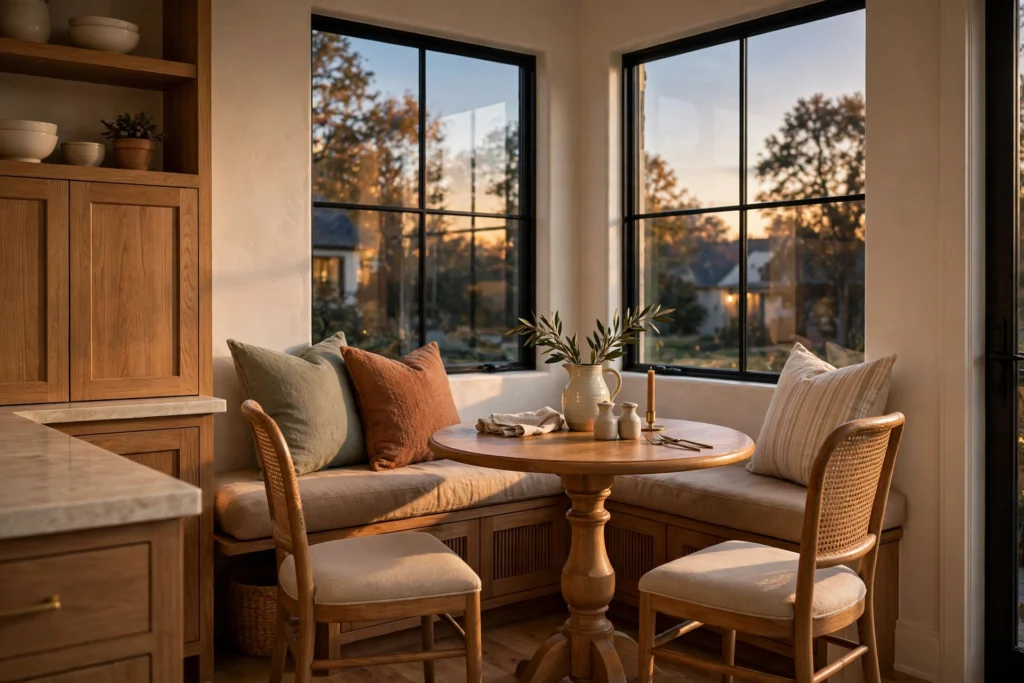
1. Round for small rooms and real conversation. A round table seats four in the footprint of a square one, has no corners to bump into, and lets everyone see everyone else. In a tight kitchen, a pedestal round table is the kindest shape you can buy.
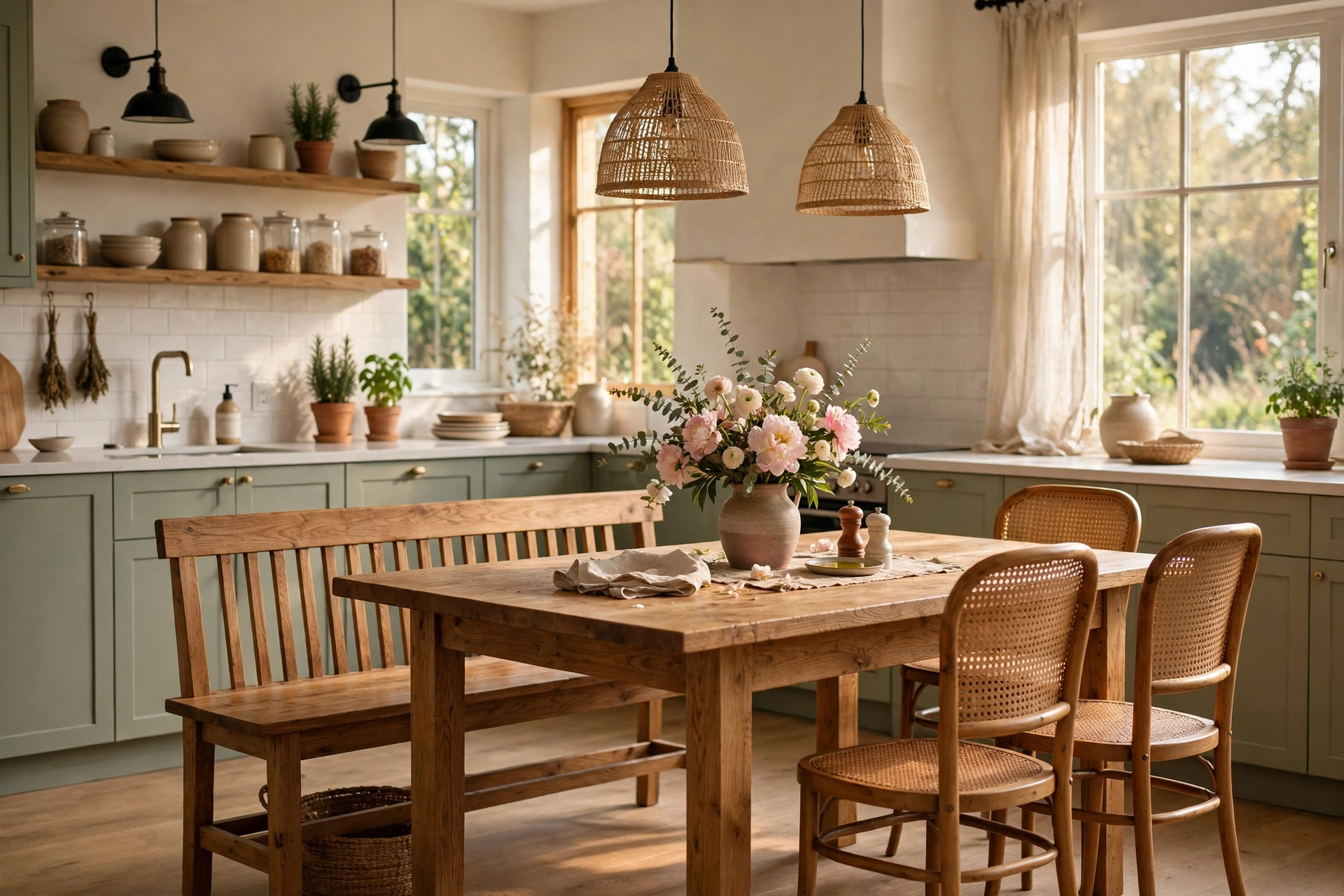
2. Rectangular for long rooms and big Sundays. A long room wants a long table, and a rectangular table extends best — a leaf in the middle turns a daily four-seater into a Sunday eight-seater. Measure the extended length, not just the daily one, before you buy.
3. Oval if you love round but need length. An oval table keeps the no-corner kindness of a round one and adds the length of a rectangle. It suits rooms that are longer than they are wide, and chairs slide in more easily than around a square corner.
4. A bench on one side doubles the seats. A bench tucked under the table seats three children where two chairs would fit, and disappears underneath when not needed. Pair a bench with chairs on the other side, so adults still get a backrest.
Size Rules That Stop Arguments
5. Allow 60cm of table width per person, and 75cm to push back. A place setting needs about 60cm of elbow room, and a chair needs about 75cm behind it to pull out comfortably. Measure both before blaming the table for a cramped room.
6. Keep 90cm of walkway around the table. If the walkway between table and counter or wall drops below 90cm, someone will always be squeezing past with a hot plate. A smaller table with a clear walkway beats a grand table nobody can walk around.
7. The table height rule: 75cm, chairs 45cm. Standard table height is about 75cm, chair seat about 45cm — the 30cm gap is what makes elbows comfortable. Counter-height tables break this rule on purpose, so do not mix counter stools with a dining table, or the other way round.
8. Extendable beats oversized, every time. A table that lives small and grows for guests is used daily and loved on Sundays. A permanently huge table in a normal kitchen is a drying rack with chairs. Dining corners as a whole are covered in our kitchen breakfast nook ideas guide.
Materials and Everyday Life
9. Wood forgives, glass shows, stone endures. A solid wood top can be sanded after a knife slip and ages gracefully; glass shows every fingerprint and crumb; stone shrugs off heat but chips if a pan drops. Pick for your household’s worst day, not its best photo.
10. A wipe-clean finish matters more than a perfect finish. Oiled wood looks beautiful and needs re-oiling; a hardwearing lacquer or a sealed top wipes clean after tomato sauce and homework glue. With children, wipe-clean wins, and you can still love the wood underneath.
11. One centrepiece rule: low, or nothing at all. A tall vase blocks the person opposite you. Keep the centrepiece below eye level when seated, or clear the table entirely between meals — a clear table gets used, a decorated one gets avoided.
12. Let the table do homework and crafts, not just meals. A kitchen table that welcomes laptops, puzzles and painting — with a wipe-clean top and a drawer or basket for supplies nearby — becomes the room’s real centre. The dining corner’s storage is covered in our small kitchen storage ideas guide, and the table itself should be chosen for all three jobs, not just dinner.