15 Japandi Kitchen Ideas — Where Japanese Calm Meets Scandinavian Warmth
Japandi takes Scandinavian warmth and Japanese restraint and keeps only what both agree on: natural materials, low contrast, nothing in the room that is not either useful or beautiful — ideally both. It is minimalism for people who found pure minimalism cold. These 15 ideas build it without turning a working kitchen into a showroom you are afraid to cook in.
The Palette — Low Contrast, Warm Light
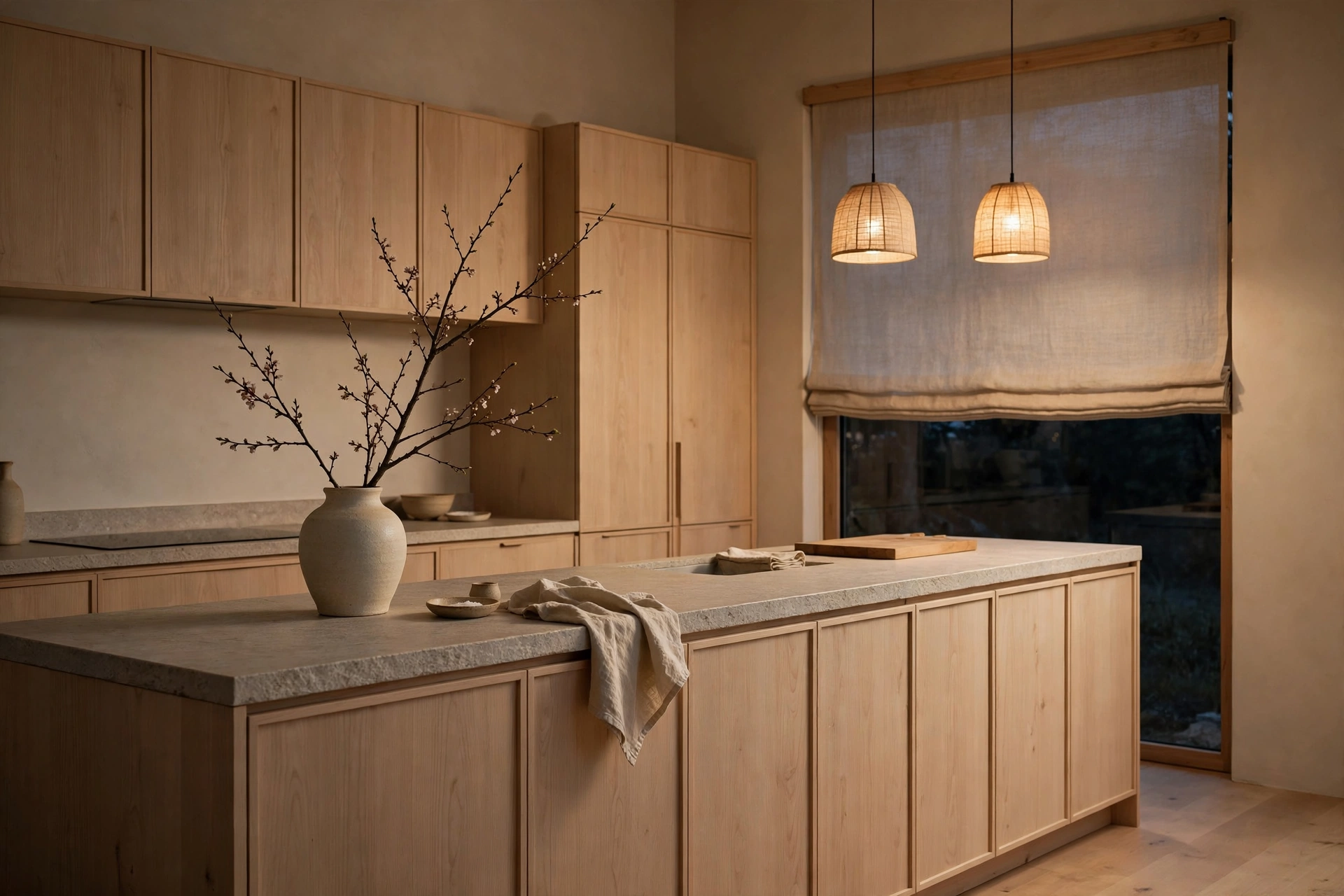
1. Pale wood as the main colour. Oak, ash or beech cabinets in a natural, matt finish carry the whole scheme. The wood IS the colour; everything else supports it — the same warm-base thinking behind our warm neutral kitchen ideas, taken further.
2. Warm off-whites and stone greys around it. Walls and worktops stay inside a narrow band: warm white, pale stone, soft greige. Japandi rooms never use contrast for energy — calm is the energy.
3. Black only as punctuation. A tap, two handles, one light fitting. Black appears the way a full stop appears in a sentence — rarely, and to end a thought.
4. Texture instead of colour. Limewash walls, a woven blind, a rough ceramic bowl, linen rather than cotton. When the palette is this quiet, texture does the decorating.
Cabinets, Surfaces and Honest Materials
5. Flat fronts, no fuss. Slab or slim-framed doors, integrated or minimal handles, no ornate moulding. The craftsmanship shows in the joints and the grain, not in decoration.
6. Stone or stone-look worktops with a matt finish. Honed, not polished. A single material run from worktop to upstand keeps the long horizontal lines Japandi rooms depend on.
7. One handmade thing in every view. A thrown ceramic vase, a wooden board with visible knife history, a woven basket. Wabi-sabi — beauty in imperfection — is what stops the style feeling like a furniture catalogue, and it is the same handmade warmth that anchors our small cozy kitchen ideas.
8. Open shelving, but only a little. One short run of shelves holding daily ceramics and glass — edited hard, restacked often. Japandi shelves are a still life that happens to be useful; the full editing method sits in our open shelving guide, queued earlier in this series.

Storage and the Empty-Counter Rule
9. Hide the machines, keep the tools. Kettles and coffee gear live in a dedicated appliance garage or cupboard. What stays out is what hands reach for daily — a knife block in wood, one chopping board, the oil you actually cook with.
10. Deep drawers over cupboards. Japandi storage is ergonomic before it is aesthetic: wide, deep drawers for pans and crockery mean nothing is stacked behind anything else. Order you can keep is the whole point.
11. A place for the ugly essentials. Bins, cleaning bottles and recycling get a closed home of their own. The style fails kitchens that pretend these things do not exist — it succeeds by housing them quietly.
12. Negative space is a feature. Leave one stretch of worktop completely empty and one wall completely bare, on purpose. The emptiness is not waiting for decor; it is the decor.
Living in It Without Freezing It
13. Plants as sculpture. One branch in a vase, a single bonsai-like tree, a trailing plant on the high shelf. Japandi greenery is chosen like furniture — one good piece, given room.
14. Low, warm light in layers. No single bright ceiling light. Pendants over the island, a small lamp on a shelf, under-cabinet strips on warm settings — light that pools instead of floods.
15. Let it age, visibly. Wood that darkens, linen that softens, ceramics that chip slightly and stay anyway. A Japandi kitchen at year three should look more itself, not less — if a material cannot age in public, it does not belong in one.
Japandi is a discipline, not a shopping list: fewer things, better materials, everything earning its place. Start by clearing one surface completely and living with the emptiness for a week — the style grows from that feeling, not from a delivery of pale-wood furniture.