14 Kitchen Sink Ideas — Choose by How You Wash Up, Not How It Photographs
People choose sinks the way they choose shoes in a shop window — by the look — and then live with the fit for fifteen years. A sink is where trays soak, pans cool, vegetables wash and glasses wait. These 14 ideas start from the washing-up you actually do, then find the sink that makes it easier.
The Mounting Decision Comes First
1. Undermount for a clean wipe-down. Fitted beneath a stone or solid worktop, an undermount sink lets crumbs and spills wipe straight in, with no rim to trap them. It needs a waterproof worktop edge — the reason sink and worktop should always be chosen together.
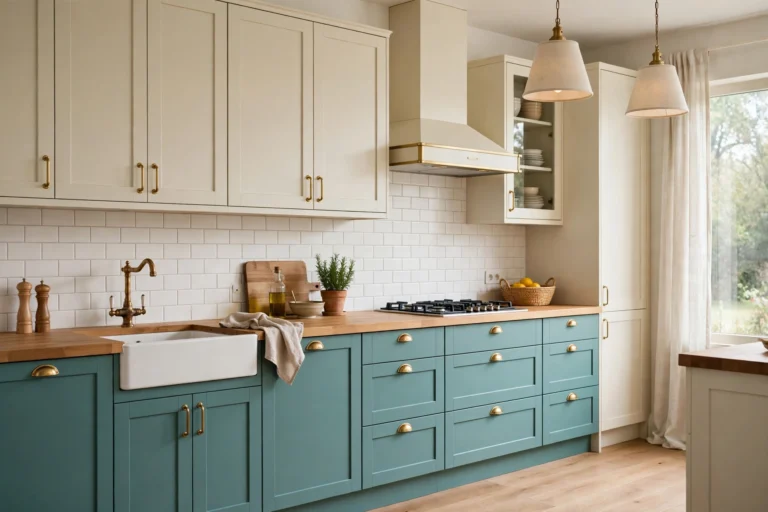
2. Farmhouse / apron-front for the big-pan household. The deep, exposed-front classic swallows roasting trays and stockpots whole and saves your back — you stand closer to the bowl, with no worktop edge digging in. It is the centrepiece sink, so let it be the room’s one statement and keep the styling around it as edited as our kitchen countertop decor ideas suggest.
3. Top-mount / inset for easy fitting and easy budgets. The rim sits on the worktop, the fitting is forgiving, and replacement years later is simple. In a laminate-worktop kitchen this is usually the honest, sensible answer.
4. Belfast vs. modern apron. A traditional deep Belfast suits period and farmhouse rooms; slimmer modern apron fronts in steel or composite give the same capacity in contemporary kitchens. Depth is the feature — the front style is just the frame.
Bowl Layout — The Decision You Live With Daily
5. One large single bowl. Fits everything, including the oven shelf, and never forces the “which side” decision. For households that cook big and wash as they go, this beats any split.
6. Double bowl for wash-and-rinse lives. Two bowls only earn their footprint if each fits your largest pan. Measure the roasting tray before falling for a 50/50 split — many are two sinks that both fail the tray test.
7. The 70/30 compromise. One generous main bowl, one small bowl for rinsing glasses and draining veg. For most family kitchens this is the layout that quietly wins.
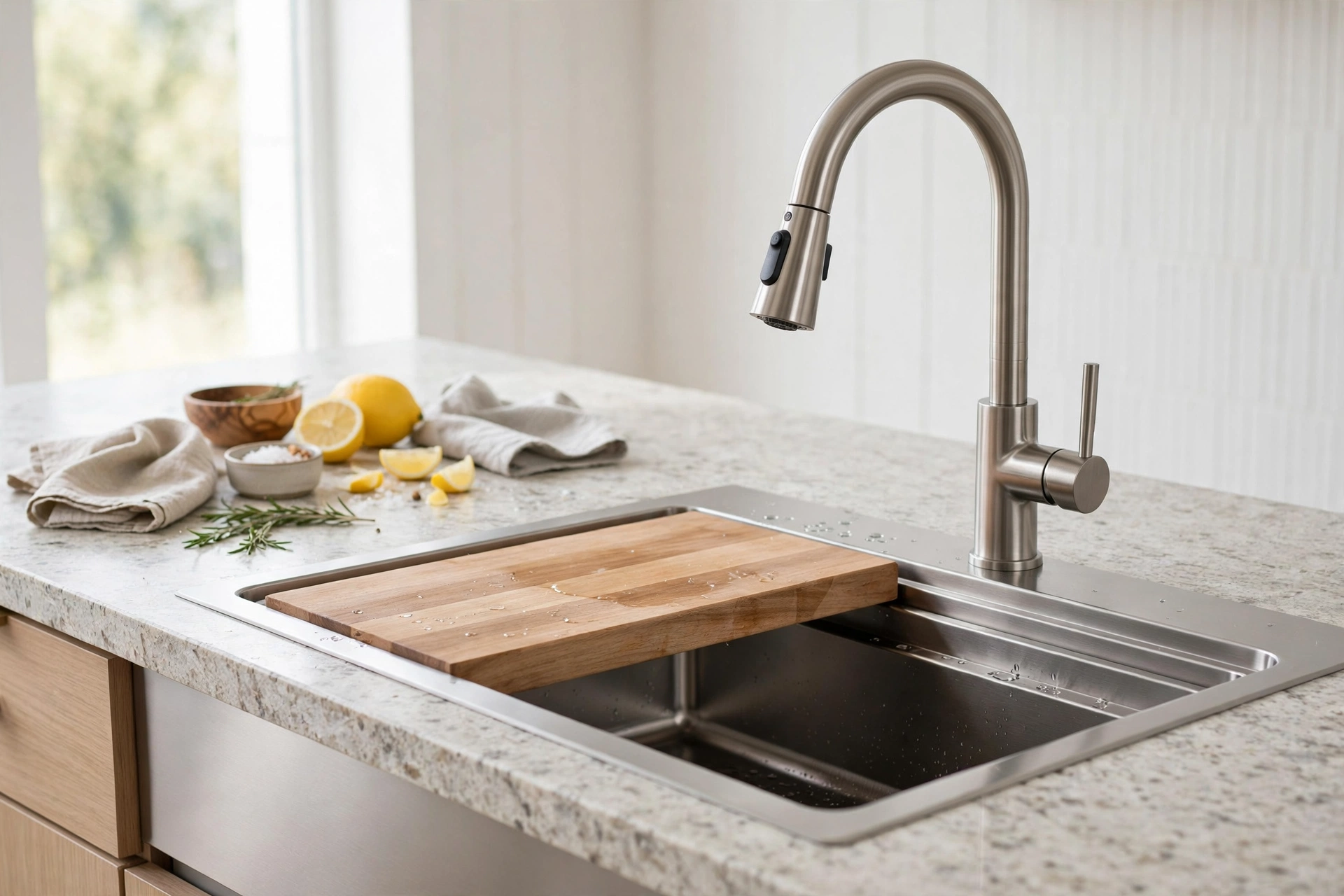
8. A workstation sink, if you prep at the sink. Ledges inside the rim hold boards, colanders and racks over the bowl, turning one metre of worktop into a prep station. In a small or galley kitchen — where every surface is fought over, as our galley guide in this series shows — that reclaimed metre matters.
Materials, Honestly Compared
9. Stainless steel for forgiveness. Light, heat-proof, and it dents rather than chips. Choose a heavier gauge with sound-deadening pads, or every plate sounds like a drum.
10. Fireclay and ceramic for the classic look. Heavy, glossy, beautiful — and they can chip if a cast-iron pan lands badly. Owners who are gentle with pans love them for decades.
11. Granite composite for colour and calm. Matt, coloured to match or contrast the worktop, quieter than steel and tougher than ceramic. It is the modern default for a reason — and its matt tones sit naturally beside the surfaces in our kitchen backsplash ideas.
The Tap and the Details Around It
12. One tap decision that matters: the pull-out spray. A pull-down or pull-out spray rinses a big bowl, fills a bucket on the floor and cleans the corners a fixed tap never reaches. Whatever the style — bridge, mixer, modern — get the spray.
13. Plan the landing zone and the floor in front. Dishes land somewhere: a drained groove, a mat, or a rack zone designed in from the start, not improvised daily. And the floor in front of a sink takes more water than any other square metre in the house — choose accordingly, as our kitchen flooring ideas sets out.
14. Measure your biggest pan before you measure the cupboard. Tray, stockpot, oven shelf — bring the largest one’s dimensions to the showroom. Every sink mistake in history is a beautiful bowl that failed that one measurement.
Choose the sink by your worst washing-up day, not your best photograph. Get the bowl size and the tap right, and the style — farmhouse, steel, stone-matt — will make you happy every single time you fill it.