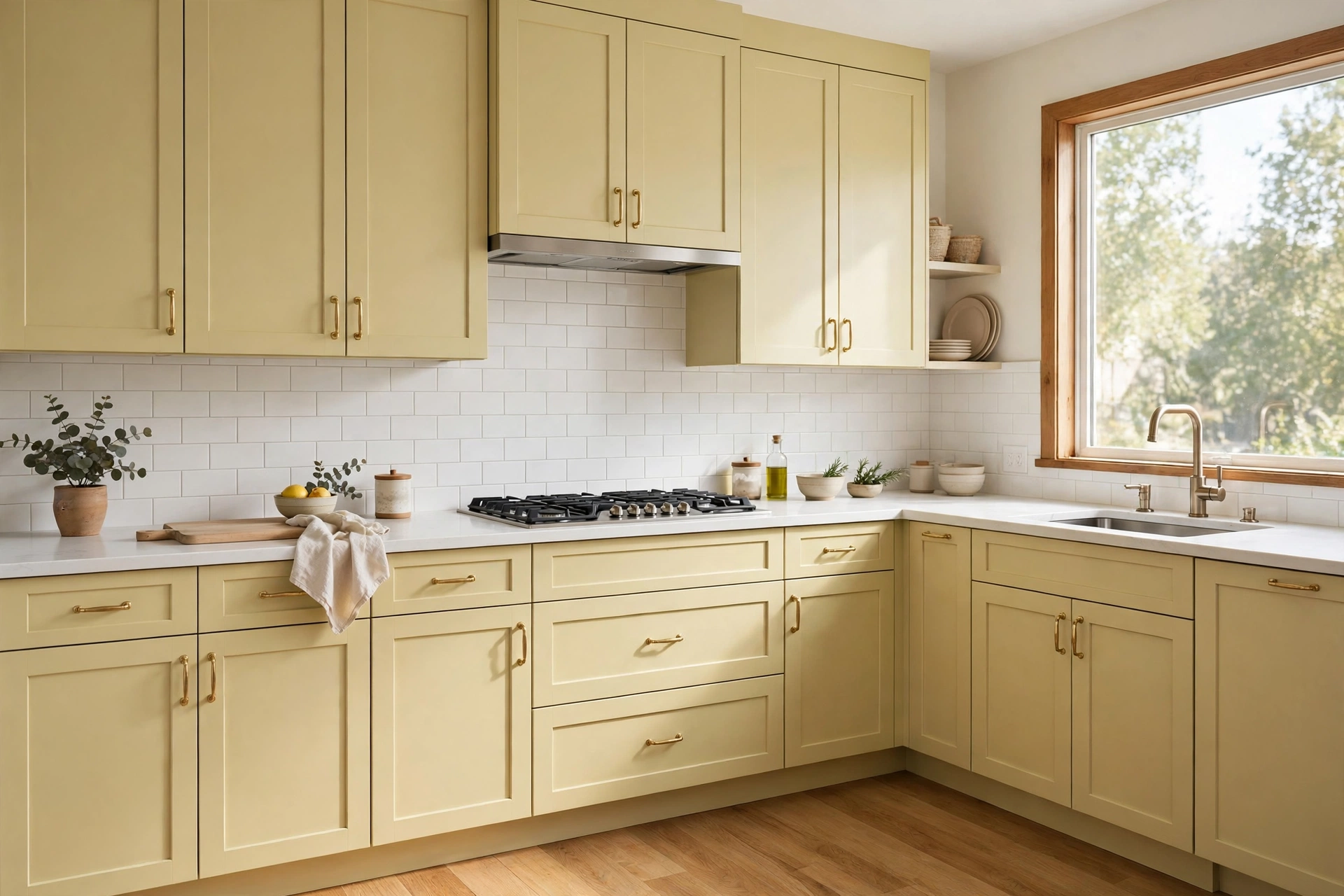
12 Yellow Kitchen Ideas That Stay Sunny, Not Loud
Yellow is the colour people reach for when a kitchen feels dark, but yellow kitchens split into two camps: sunny and welcoming, or loud and tiring. The difference is almost never the yellow itself — it is the depth of yellow, the light in the room, and what sits beside it. Pale yellow needs warmth, mid yellow needs white, and deep mustard needs restraint. These 12 ideas cover all three.
Pale Yellow: Soft and Bright
- Butter yellow is the safest yellow. A soft, buttery yellow beside white and warm wood reads sunny without shouting. It is also the easiest yellow to live with long term, and the easiest to repaint if you change your mind.
- Use pale yellow on walls first. A pale yellow painted wall or pale yellow wall units give the sunny feeling without committing every cabinet to colour. Walls are the cheapest yellow to test, as with the colour rules in our kitchen cabinet color ideas guide.
- Keep pale yellow with warm white, never with cold grey. Grey walls plus pale yellow cabinets turn the room flat and muddy. Warm white or cream walls keep pale yellow fresh and bright.
- Pale yellow suits dark kitchens. North-facing and windowless kitchens, covered in our kitchen window ideas guide, gain the most from pale yellow — it reads as daylight even when the real light is thin.
Mid Yellow: Warm and Cheerful
- Mid yellow is the most cheerful yellow. A warm ochre or honey yellow suits both modern and traditional kitchens, and pairs with almost everything. If you cannot decide, start here — but use it on one run of cabinets, not the whole room.
- Pair mid yellow with white worktops. White quartz or pale marble is the classic partner for mid yellow: it keeps the room bright and stops the yellow turning heavy.
- Wood warms mid yellow; chrome cools it. Oak floors and butcher block worktops make mid yellow feel farmhouse-warm. Chrome and white keep it cleaner and more modern. Pick one direction, not both.
- Mid yellow loves natural textures. Wicker, rattan, linen and unlacquered brass all sit happily beside mid yellow, which is why it works in the rooms covered in our farmhouse kitchen ideas guide.

Deep Mustard: Bold, in Small Doses
- Mustard works best as an accent, not a room. One mustard island, one mustard pantry wall, or mustard bar stools give the bold hit without the room feeling like a warning sign.
- Mustard needs dark partners. Deep green, navy or charcoal beside mustard make it look expensive; white beside mustard can make it look garish. Pair bold with bold, in small amounts.
- Mustard suits small kitchens in doses. A mustard splashback or a mustard kettle and toaster bring warmth to a small kitchen without shrinking it, unlike a full mustard room.
- Test yellow in your own light before committing. Yellow shifts more than any colour between shop light and home light. Paint a large board, move it around the room through the day, and only then commit — the same test the white kitchen cabinets guide recommends for whites.
A good yellow kitchen is not the brightest yellow the shop sells — it is the yellow your light, your wood and your white can carry. Start pale, use mid yellow on one run, and save mustard for accents, and the room stays sunny all year.