12 Kitchen Window Ideas for Light, Air and Privacy
The kitchen window does more jobs than any other window in the house. It is the light source you chop by, the vent that clears cooking steam, the view that makes washing up bearable and — over the sink — the most splashed, steamed and sun-bleached surface in the room. Treating it as an afterthought wastes all four jobs. These 12 ideas plan the window like the working part of the kitchen it is.
Position and Size First
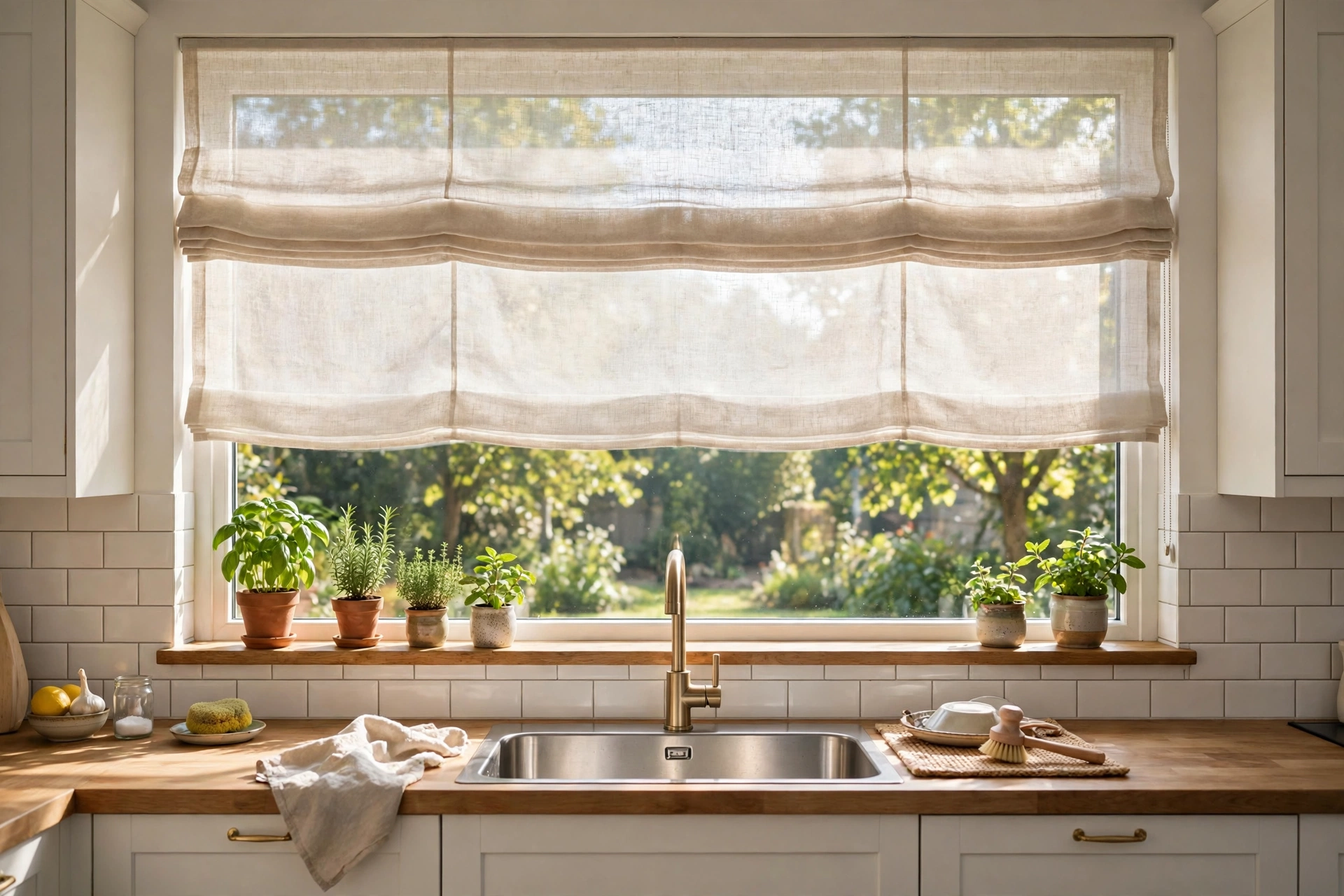
- Centre the sink under the window — or stop pretending. The classic layout works because daylight falls on the washing up and the view rewards the chore. If your sink cannot sit under the window, put the prep counter there instead; light matters most where knives are.
- Widen before you heighten. A wider window spreads light across the worktop run; a taller one mostly lights the ceiling. When a replacement is planned, width usually buys more useful light than height.
- Drop the sill to worktop level. A window that runs down to the worktop behind the sink removes the dark upstand strip, makes cleaning one flat wipe and lets the view start where your hands are.
- Borrow light with a glazed door beside it. In a galley or single-aspect kitchen, one glazed back door can double the window’s daylight — the layout trade-offs are in our galley kitchen ideas guide.
Glass, Opening and Steam
- Openings you can reach over the sink. Top-hung or tilt openings you can work with one wet hand beat a beautiful casement you need to climb to close. Test the reach before ordering, at the real counter depth.
- Obscure only the part that needs it. Privacy film or reeded glass on the lower portion keeps a neighbour’s view out while the upper glass stays clear for sky and light — full obscure glass in a kitchen reads as a bathroom window.
- Ventilation built into the window plan. Steam that cannot leave will find the coldest surface and run down it. A window that opens near the cooker, plus the extraction logic in our kitchen ceiling ideas guide, keeps glass and paint clear.
- Frames that forgive water. The over-sink window lives in splashes. uPVC, aluminium or properly sealed painted timber survive it; untreated softwood sills rot quietly behind the tap within a few winters.
Dressing It Without Fighting the Room
- Treatments that survive steam. Kitchen cloth lives hard — steam, grease and sun in one place. Short, washable and off the sill is the rule; our kitchen curtain ideas guide covers the fabrics that hold up.
- A blind inside the reveal, not over the wall. Fitting the blind within the window reveal keeps it clear of the tap’s splash arc, clears the sill for use and makes a small window look its full size.
- Make the sill a working shelf, shallow and honest. Herbs that get used, a soap dish, nothing else — the sill plan in our kitchen herb garden ideas guide keeps it green without turning it into storage. Anything deeper collects clutter at eye level.
- Dress the view, not just the glass. A window seat of planting outside — one pot group or a small hedge at the right height — gives the eye somewhere to land and adds privacy without touching the glass at all.
What Kitchen Window Dressing Costs
Prices per window, in US dollars (2026 figures):
| Treatment | Typical cost per window |
|---|---|
| Ready-made blind | $20 to $100 |
| Custom roller blind | $80 to $250 |
| Roman shade | $65 to $400 |
| Motorized blind | $250 to $900+ |
| Installation labor (if you hire it) | $15 to $50 per window |
Materials alone run about $40 to $120 per window for a standard window, and the national average to install blinds on eight windows is about $758. A single over-sink window dressed well costs far less than a whole house — start with the window you look through most.
Kitchen Window FAQ
Where should the kitchen sink go?
Under the window, if you can. Daylight falls on the washing up and the view rewards the chore. If the sink cannot sit under the window, put the prep counter there instead — light matters most where knives are.
What blind survives a steamy kitchen?
A roller blind in a wipe-clean fabric, or a blind fitted inside the reveal, clear of the tap’s splash arc. Short, washable treatments beat long curtains, which collect steam and grease.
How do I get privacy without losing light?
Obscure only the part that needs it — privacy film or reeded glass on the lower portion keeps a neighbour’s view out while the upper glass stays clear for sky. Full obscure glass reads as a bathroom window.
Should the window be wide or tall?
Wider before taller. A wider window spreads light across the worktop run; a taller one mostly lights the ceiling.
How much does dressing a kitchen window cost?
A ready-made blind costs $20 to $100 per window; a custom roller blind $80 to $250; a Roman shade $65 to $400. Fitting adds $15 to $50 per window if you hire it.
One measurement decides more window happiness than any style choice: stand at the sink and check where your eye actually rests. Most people look slightly down and straight ahead, which means the middle third of the glass is the picture and the top third is mostly light. Spend the budget accordingly — the clearest glass, the best view and the opening light in the middle, privacy and treatment at the edges. Kitchens that feel bright rarely have the biggest windows; they have windows whose light lands on the work, and everything else follows from that.
Plan the position for the work, the opening for wet hands and the dressing for steam, and the kitchen window stops being a hole in the wall. It becomes the room’s best tool.