12 Cottagecore Kitchen Ideas for a Slow, Cosy Room
Cottagecore is not a decorating trend so much as a mood: slow mornings, things made by hand, herbs drying by the window, and a kitchen that looks like it has been loved for a hundred years. It suits small and old kitchens especially well, because it celebrates imperfection instead of hiding it.
A cottage kitchen is not a size, it is a temperature. Small rooms do it naturally, but any kitchen can borrow the recipe: painted wood instead of gloss, things on show instead of hidden, pattern and cloth where modern kitchens put steel. This post is the merged hub for both ideas — cottage and cottagecore — because they were the same recipe in two posts, and one good post is better than two thin ones. If you are reading this after the merge, the old /cottage-kitchen-ideas/ post now points here, and its best ideas are in the sections below.
The Cottagecore Foundations
Open shelves instead of upper cabinets. Cottagecore kitchens show their things: stoneware bowls, mismatched mugs, glass jars of flour and beans. Replace a run of upper cabinets with wood shelves and let the everyday objects become the decoration. Two wooden shelves carrying the everyday china, glasses and jars open the room up and make it feel half as heavy. Shelf styling that stays tidy is covered in our kitchen open shelving ideas guide: https://homeventra.com/kitchen-open-shelving-ideas/ Keep the shelves edited: if a shelf is crowded, it looks like storage. If it has space between the objects, it looks like a display.
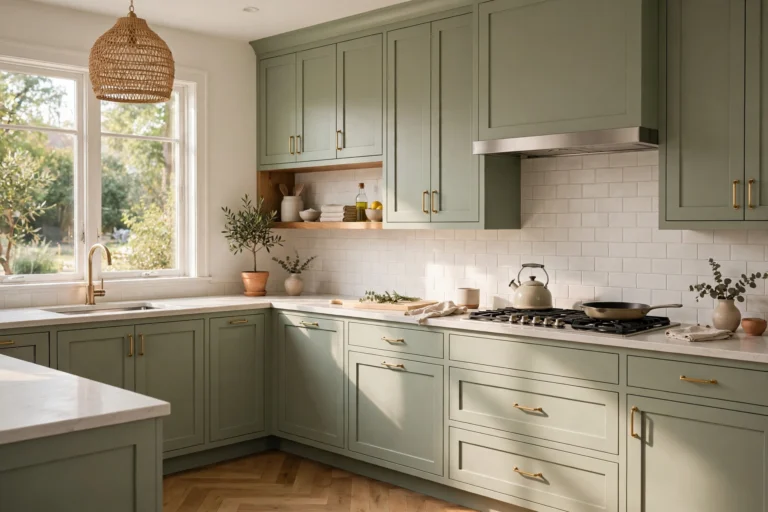
Cream, sage and butter yellow — never bright white. Cottagecore colors are soft and slightly faded, like sun-washed linen. Cream cabinets, sage walls, and butter-yellow accents feel old and gentle. Stark white feels too new for this look. Painted wood cabinets in a gentle color — soft white, pale sage, powder blue, or a warm cream — suit this room best. The paint should look brushable and changeable. Cottage color is never precious, and repainting in a weekend is part of the tradition.
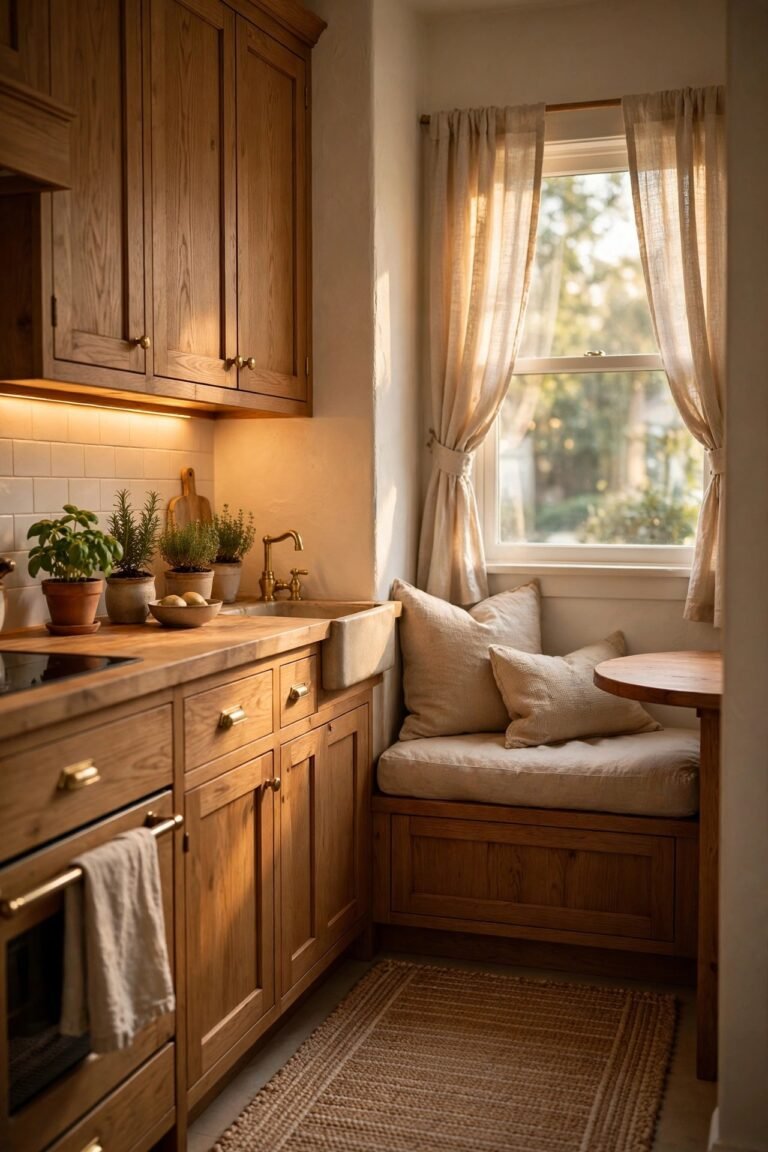
Wood everywhere, and none of it perfect. A scrubbed pine table, a worn chopping board, a wooden spoon jar — cottagecore loves wood with marks and grain. New, glossy wood looks wrong here. Second-hand and well-used wood looks right. Wood worktops, worn in honestly, suit cottage rooms far better than pristine stone. Timber tops take a few knife marks and get oiled a couple of times a year. The care rhythm is covered in our kitchen worktop ideas comparison: https://homeventra.com/kitchen-worktop-ideas/
A curtain under the sink instead of a door. A gingham or linen curtain under the sink, or over a low shelf, is the single most cottagecore detail there is. It hides cleaning supplies softly, costs almost nothing, and changes the whole feeling of the room at once. A gathered cloth skirt on a wire or rod beneath the sink is the oldest cottage storage trick there is — soft, cheap, and instantly un-modern in the best way. Use a washable fabric, and keep a spare curtain so you can wash one while the other is up.
Pattern, Cloth and China
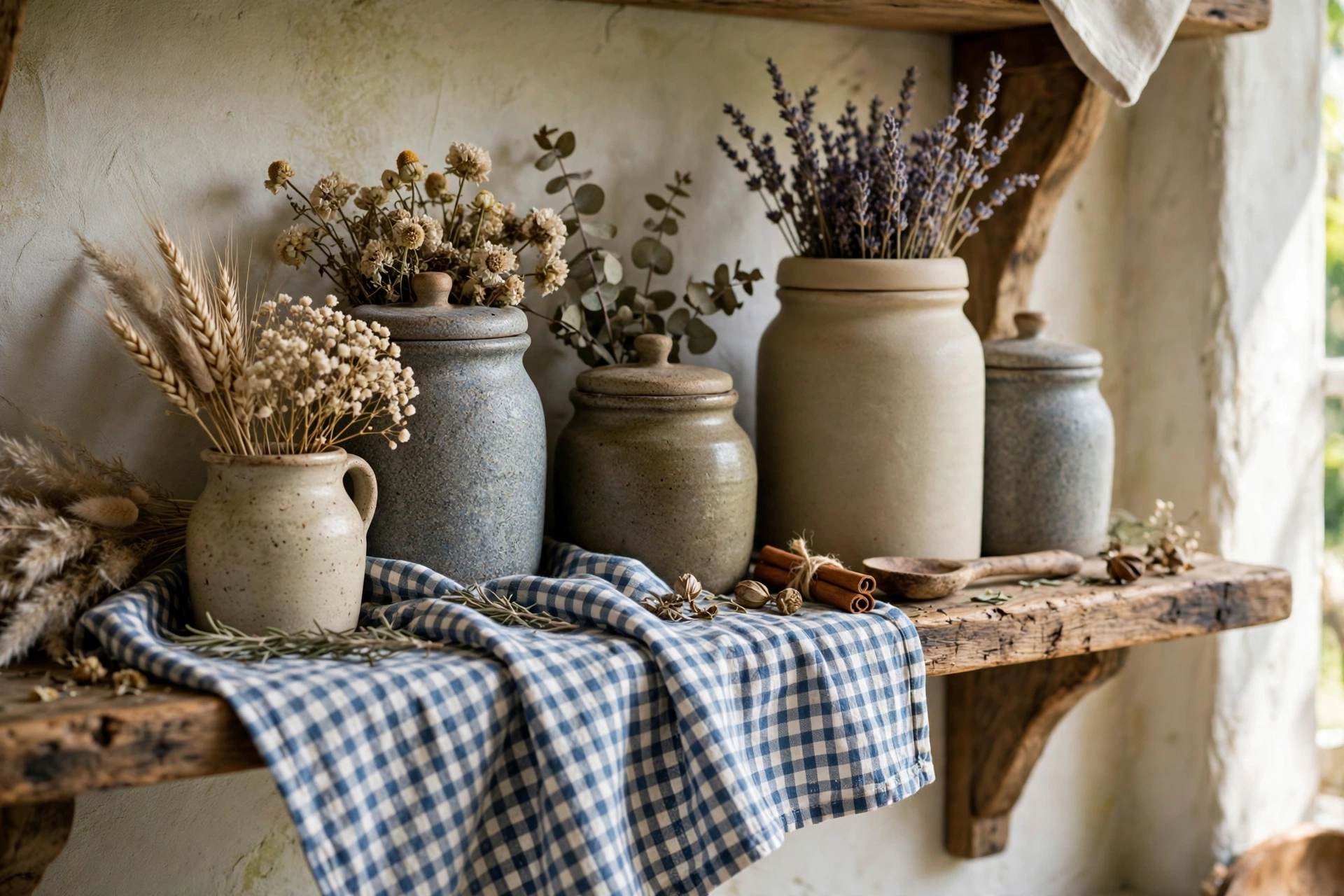
One pattern, repeated quietly. Gingham, a small floral, or a simple stripe — on the curtain, the seat pads, and the tea towels, not on everything at once. Repetition is what makes pattern feel like a scheme instead of a jumble. Keep the prints small and the colors muted. One pattern family, repeated quietly, not a jumble.
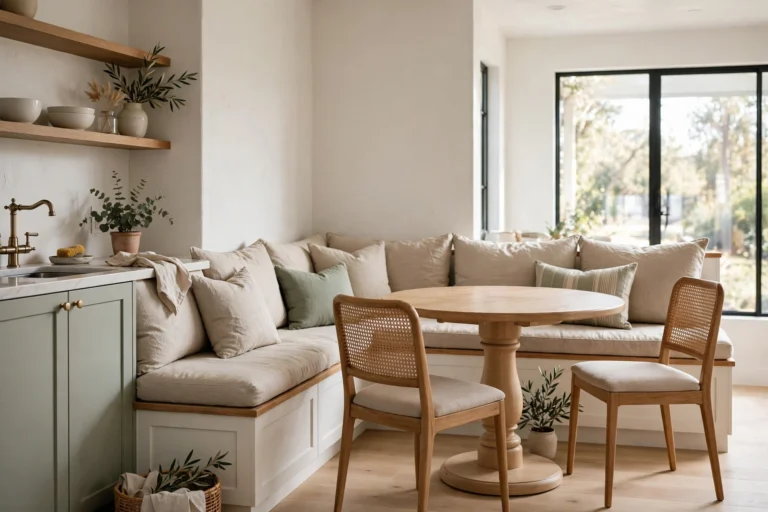
China and jars on show. Mismatched mugs on hooks, plates in a rack, flour and sugar in glass jars on the shelf. Cottage storage is display by another name. The rules in our kitchen countertop decor ideas guide keep worktops charming rather than crowded: https://homeventra.com/kitchen-countertop-decor-ideas/ A small wooden table that earns its place is part of the same idea: ideally one that seats two for tea and four at a push, doubles as extra worktop, and has a drawer for the string and scissors. In a cottage kitchen, the table is the island.
A rug or runner with a worn look. A flat-weave runner in front of the sink run softens stone or tile underfoot and adds the pattern layer at ground level. The placement logic from our kitchen runner rug ideas guide applies exactly: https://homeventra.com/kitchen-runner-rug-ideas/ Choose a washable, low-pile runner in one calm color. A busy pattern will shrink a small room.
Baskets for the unlovely things. Potatoes, onions, recycling, the dog’s towel — woven baskets turn necessary clutter into texture, and they move where they are needed. A basket on the floor by the door, a basket on top of the fridge, a basket under the table: each one hides something that would otherwise look like mess.
Nature, Inside the Kitchen
Dry herbs where you can see them. Bunches of rosemary, thyme, and lavender hung by the window or over the stove are decoration, scent, and cooking ingredients all at once. They cost nothing if you grow them, and they make the kitchen smell like a cottage garden. Hang them where they will not get splashed, and replace them when they fade.
Put a plant on every surface that allows it. Trailing pothos on a shelf, basil on the sill, a jar of wildflowers on the table — cottagecore kitchens are half garden. If a plant dies, replace it with a hardier one. The look is abundance, not perfection. A shelf for cookbooks and one for plants is the cottage rule: herbs on the sill, a trailing plant off the top shelf, cookbooks wedged where they are actually cooked from.
Forage for decoration, not just food. A jug of branches, a bowl of pinecones, dried orange slices on a string — free, seasonal decoration that changes through the year. It keeps the kitchen feeling alive in a way shop-bought decor never does. Forage only where it is allowed, and do not bring in anything you cannot identify.
Grow something edible, even on a windowsill. A pot of mint, a tray of sprouts, or a single tomato plant connects the kitchen to the garden it celebrates. Herb-growing basics are in our kitchen herb garden ideas guide: https://homeventra.com/kitchen-herb-garden-ideas/ Mint is the easiest start, because it is hard to kill and useful in cooking and tea.
The Small, Romantic Details
Gingham, linen and faded florals in the textiles. Tea towels, curtains, a tablecloth, and a cushion in gingham or faded floral prints soften every hard surface. Keep the prints small and the colors muted.
Stoneware and enamel instead of matching sets. Cottagecore tableware is collected, not bought as a set: a stoneware jug here, an enamel mug there, a chipped plate that still gets used. Charity shops and thrift stores are the right shops for this kitchen. A second-hand solid wood dining set typically asks $150 to $400 in 2026 moving sales, and a simple table on its own is often less. That is the honest price range for the kind of table this kitchen wants, not a new flat-pack set.
Bake, and leave the evidence out. A cooling loaf, a jar of jam, a cake under a glass dome — cottagecore kitchens look lived in because they are used for slow cooking. Display the baking, not just the tools for it.
One storybook corner, and the rest practical. A reading chair by the window, a stack of old cookbooks, a candle on the sill — one corner for daydreaming is enough. The rest of the kitchen should stay practical, or the romance turns into clutter. Leave one thing old: an inherited stool, a chipped jug holding spoons, a clock that has always ticked in a kitchen. One genuinely aged piece anchors the whole room and gives the new paint something to be descended from.
Warm, low light. A single pendant with a fabric or enamel shade over the table, and nothing brighter than warm white anywhere. Cottage charm dies under clinic lighting faster than any other style. Use warm bulbs in the 2700K to 3000K range, and keep the light low in the evening.
Cottagecore Through the Seasons
Cottagecore is not a single look you buy once. It changes through the year, and that change is part of the point. Use this table as a starting point, and swap one or two details each season instead of redecorating.
| Season | What to add | What to take away | Cost |
|---|---|---|---|
| Spring | Wildflowers in a jar, fresh herbs on the sill, a light linen curtain | Heavy winter textiles, dried winter branches | Free to $20 |
| Summer | A bowl of fruit on the table, a jug of garden flowers, an open window | Closed curtains, heavy rugs | Free to $20 |
| Autumn | Dried orange slices, a bowl of pinecones, a warm runner | Summer flowers, light curtains | Free to $30 |
| Winter | A candle on the sill, a thick runner, a stack of cookbooks by the stove | Trailing plants that will not survive the cold | Free to $30 |
The costs in that table are for the seasonal details only — flowers, fruit, candles, and a runner — not for the furniture or the paint. Most seasonal changes in a cottagecore kitchen cost nothing, because they come from the garden, the market, or a charity shop.
The Honest Costs: What Cottagecore Actually Takes
The practical side deserves one honest paragraph, because cottage charm has real costs. Open shelves mean china that gets dusty and needs a quick rinse before guests. Cloth skirts and runners need washing. Painted wood needs the odd touch-up where hands and chairs catch it. None of it is heavy work, but it is regular work, and the style suits households that enjoy pottering more than households that want a kitchen they can ignore for a month.
Be specific about that work, so you can decide before you commit. Open shelves: dust them once a week, and rinse the china you use least once a month. Curtains under the sink: wash them every two to four weeks, and keep a spare set. Painted wood: touch up chips as soon as you see them, with a small brush and the same paint, because a chip left alone will peel. Runners: shake them outside once a week, and machine-wash them once a month if they are washable. Plants: water them once a week, and replace the ones that die instead of keeping a dead plant for the look.
If that is you, the trade is worth it many times over — the room gives back warmth every single day in exchange for a little gentle upkeep. If it is not you, cottagecore will frustrate you within a month, and a simpler style with closed cabinets and hard surfaces will suit you better. That is not a failure. It is a useful thing to know before you take the cabinet doors off.
What to Buy Second-Hand, and What to Buy New
Buy second-hand: the wooden table, the stoneware and enamel, the baskets, the old cookbooks, the chipped jug, and the inherited stool. These are the things that look better with age, and they are the things charity shops and thrift stores do best. A second-hand solid wood dining set typically asks $150 to $400 in 2026, and a table on its own is often less.
Buy new: the paint, the curtain fabric if you cannot find it second-hand, the runner if you want it washable and non-slip, and the plants if you want them to live. Paint is the one thing you should not buy second-hand, because old paint may have separated, and the color may not match the tin.
Do not buy a whole new cottagecore kitchen. Buy the paint, hang the curtain, open the shelves, and let the rest arrive slowly from charity shops, gardens, and gifts. A cottagecore kitchen that is bought in one weekend looks like a shop display. A cottagecore kitchen that is collected over a year looks like a home.
Cottagecore is not about buying a whole new kitchen. It is about opening the shelves, hanging the herbs, softening the textiles, and letting the room look gently, happily used. Start with the curtain and the herbs, and the rest will follow on its own. Paint the wood, hang the cloth, put the china where you can see it, and keep the light warm. That is the whole cottage recipe — a kitchen that looks loved rather than installed, and gets better every year it is lived in.
Frequently Asked Questions
What is the difference between cottage and cottagecore?
Cottage is the older, broader style: painted wood, open shelves, pattern, and china. Cottagecore is the romantic, nature-led version of it, with dried herbs, foraging, handmade details, and a storybook mood. This post merges the two, because they were the same recipe in two posts. The cottagecore details are the nature and romance. The cottage details are the painted wood, the table, and the honest upkeep.
Is cottagecore expensive?
No, if you do it slowly. Paint, a curtain, and open shelves are the main costs, and most of the rest comes from charity shops, gardens, and things you already own. A second-hand solid wood table typically costs $150 to $400 in 2026. A whole new cottagecore kitchen bought at once is expensive, and it looks it. Collect it over time instead.
How do I keep open shelves from looking messy?
Keep space between the objects, and keep only the things you use on the shelves. Put the mismatched rest in the lower cabinets. Dust the shelves once a week, and rinse the china you use least once a month. If a shelf is crowded, take half the things off and put them away.
Can I do cottagecore in a rented apartment?
Yes, and it suits rentals well, because most of it is removable: curtains, runners, baskets, plants, and open shelves that sit on top of existing cabinets. Do not take cabinet doors off or paint cabinets without written permission from your landlord. For the full renter checklist, see our apartment kitchen ideas guide: https://homeventra.com/apartment-kitchen-ideas/
What colors work best for a cottagecore kitchen?
Cream, sage, butter yellow, pale blue, and soft white. Avoid bright white, which feels too new, and avoid strong, saturated colors, which fight the soft mood. Keep one pattern family — gingham, small floral, or simple stripe — and repeat it quietly.
How much upkeep does a cottagecore kitchen need?
Regular, light upkeep: dusting shelves weekly, washing curtains and runners monthly, touching up paint chips as they appear, and watering plants weekly. It suits households that enjoy pottering. If you want a kitchen you can ignore for a month, choose closed cabinets and hard surfaces instead.