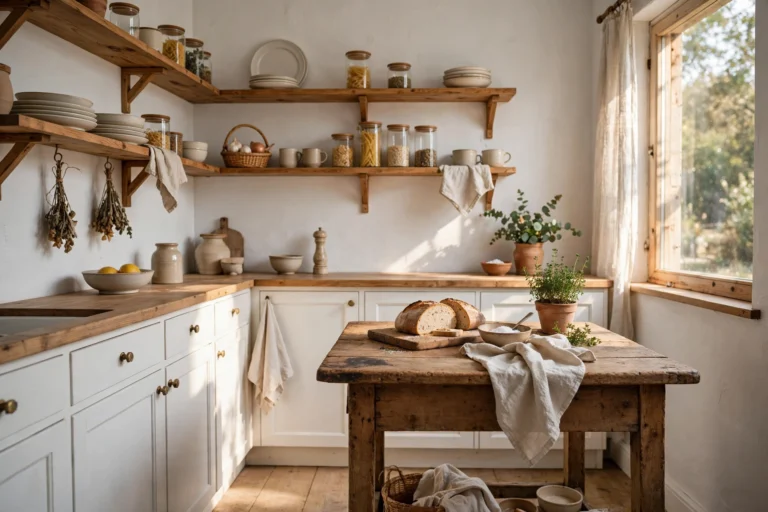
Mason Jar Kitchen Decor: 12 Ideas Storage, Light & Herbs
A mason jar is the hardest-working object in the kitchen. It stores the pasta, holds the flowers, lights the evening and grows the herbs — and it costs a few dollars. The trick is the right size for the right job, and knowing when to stop: jars in the right four places make a kitchen that works, and jars on every surface make a jar shop. These 12 ideas put jars where they earn their place.
Storage That Looks Good
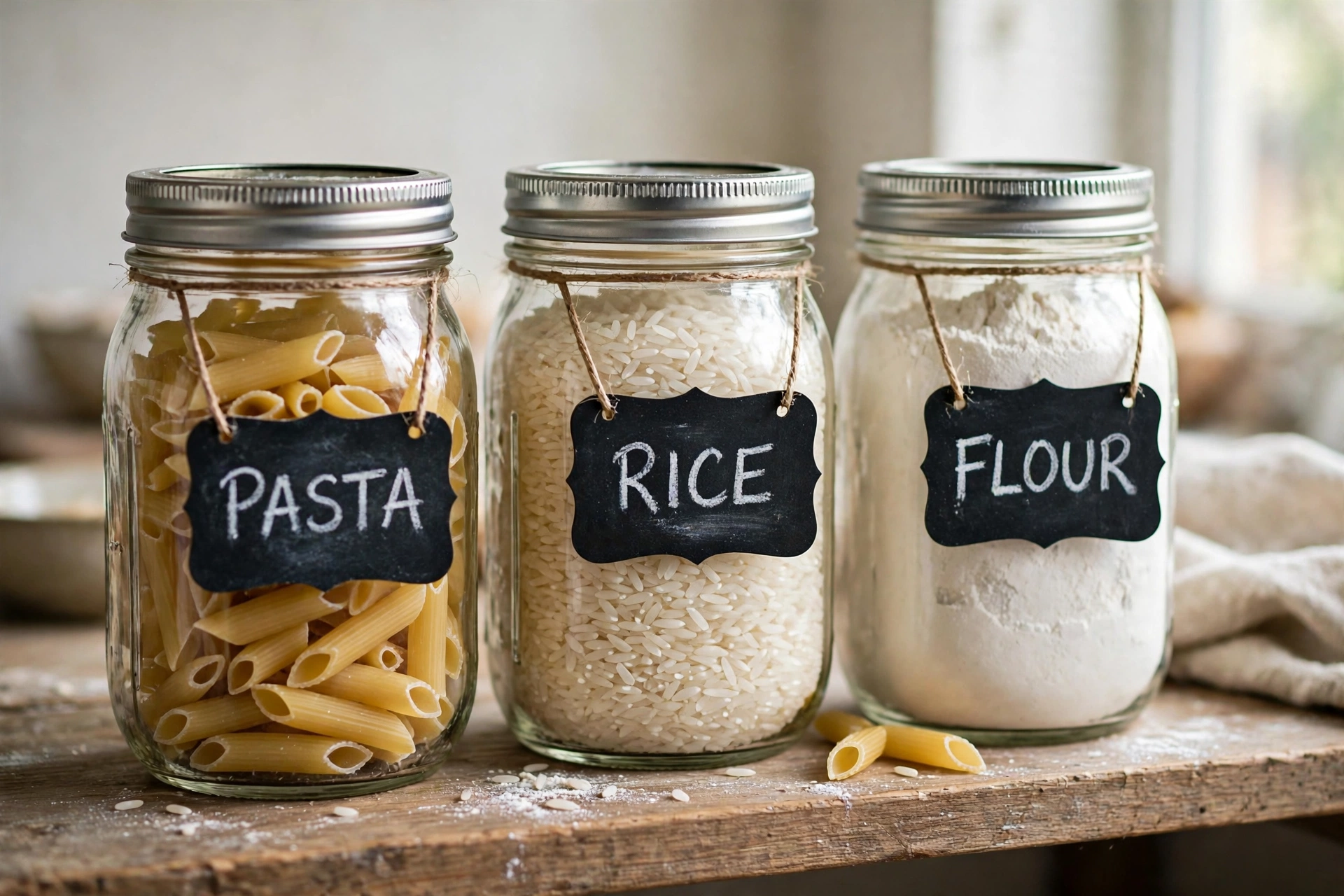
1. Dry goods in large jars. One-litre jars ($3–$6 each) for pasta, rice and flour are the classic mason jar storage — you can see what is inside, you can see when it is running low, and the shelf looks tidy. Our cabinet guide is in kitchen cabinet decor.
2. Spice jars on a rack. Small 250 ml jars ($2–$4 each) for spices, lined up on a rack, are the smallest storage in this list — and the one that saves the most time. Spices you can see are spices you actually use; spices hidden in a drawer are spices you forget.
3. Lids screwed under a shelf. Screw the lids under a wall shelf ($0 extra) and twist the jars on underneath — the jars hang in the air, the shelf above stays free, and the spice rack takes no worktop at all. Use jars under 500 ml for this: a full one-litre jar is too heavy to hang by its lid.
4. Labelled pantry jars with chalk labels. Chalk labels ($5–$10 for a set) on every storage jar turn a row of glass into a pantry you can read at a glance. Write the name and the date you filled it — a jar without a date is a jar you throw away in six months.
Vases and Centrepieces
5. A jar vase on the table. A 500 ml jar ($3–$6) with flowers from the garden ($5) is the table’s centrepiece — and it must stay under 30 cm tall so you can see the person opposite. One jar of flowers, not three — three jars on a small table is a florist’s stall.
6. A jar centrepiece with a candle. A wide-mouth jar with an LED tea light inside ($8–$12 for the jar and light) glows on the table in the evening — the glass softens the light in a way a bare candle never does. LED only, never a real flame inside a jar: glass gets hot, and a hot jar on a wooden table leaves a mark.
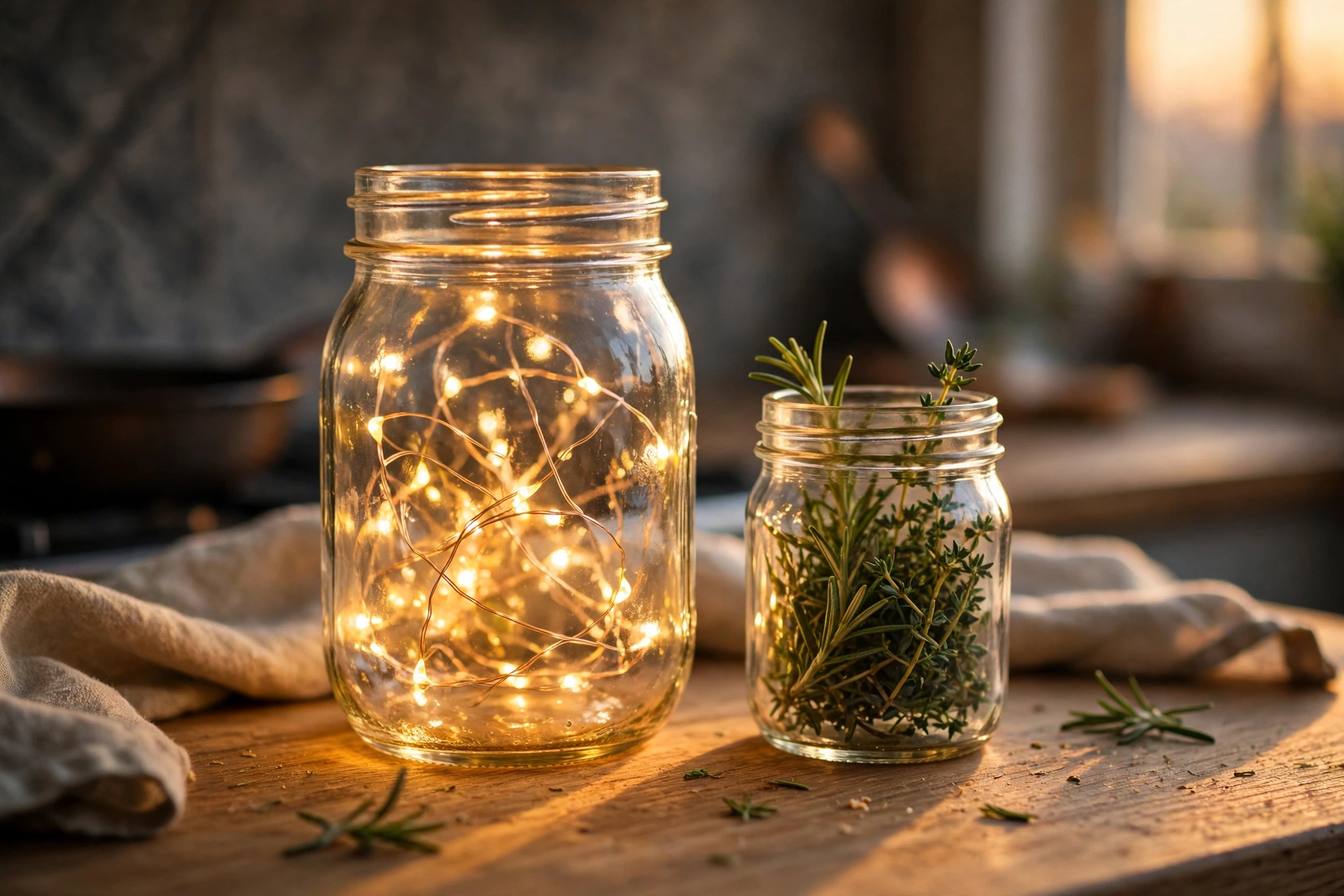
7. Fairy lights in a jar. A string of fairy lights ($5–$10) coiled inside a one-litre jar is the cheapest lamp in the kitchen — it glows on the worktop in the evening and costs less than a candle. Warm white only: cool white fairy lights in a jar look like a laboratory. See our copper kitchen decor for the warm metal that pairs with jar light.
8. A jar lantern by the sink. A jar with a wire handle and a tea light ($5–$10) hanging by the sink or on a hook lights the darkest corner of the kitchen. Hang it where it cannot be knocked — a jar lantern on the edge of the worktop is a jar lantern on the floor by morning.
Light and Living Things
9. Herb planters on the sill. A 500 ml jar ($3–$6) with a basil, mint or parsley plant ($3–$5 each) on the windowsill is the one mason jar idea that pays for itself — fresh herbs at arm’s length, every day.
10. A hanging jar garden. Three small jars hung on twine from hooks under a shelf ($5–$10 for the twine and hooks) hold herbs at eye level, where they are easy to snip.
11. A soap dispenser from a jar. A pump top ($3–$5) screwed onto a 500 ml jar turns it into a soap dispenser by the sink — the cheapest dispenser in the kitchen, and the only one you can refill from a big bottle. One pump, one jar, by the tap: a row of dispensers is a shop display.
12. A jar for utensils on the worktop. A wide one-litre jar ($3–$6) on the worktop holds the wooden spoons, spatulas and whisks where you can grab them. One jar only — a row of utensil jars is a shop display.
The 3 Mason Jar Mistakes That Make It a Jar Shop
Jars on every surface. Jars on the shelves, jars on the sill, jars on the worktop, jars on the table and jars hanging from the ceiling is a jar shop. Four jars in the right places is a kitchen; forty jars is a collection. The wrong size for the job. A 250 ml jar for flour runs out in a day, and a one-litre jar for paprika lasts a year and goes stale. Match the jar to the job: one litre for dry goods, 500 ml for herbs and flowers, 250 ml for spices — and never hang a full one-litre jar by its lid. Rusting lids and jars that are not food-safe. Cheap lids rust in a steamy kitchen. Use proper two-piece mason lids, dry them after washing, and never store food in a jar that was made for decoration — the glass may look the same, but it is not.
Costs at a Glance
| Idea | Typical cost |
|---|---|
| Large jars, 1-litre (4) | $12–$24 |
| Spice jars, 250 ml (6) | $12–$24 |
| Fairy lights (1 string) | $5–$10 |
| Pump tops (2) | $6–$10 |
| Chalk labels (set) | $5–$10 |
| Herb plants (3) | $9–$15 |
A mason jar kitchen starts at about $20 — the large storage jars and the chalk labels are the best value in the list.
FAQ
What size mason jar should I use for flour and rice? One litre. A one-litre jar holds about a week’s flour for most kitchens and still fits on a shelf; a 500 ml jar runs out in two days, and a two-litre jar is too heavy to lift down every morning.
Are mason jars safe for storing food? Yes — the glass is food-safe, and proper two-piece mason lids seal well. Dry the lids after washing so they do not rust.
How do I clean mason jars? In the dishwasher, or in hot soapy water with a bottle brush — then dry the lids straight away. A jar that dries with its lid on smells musty; dry the jar and the lid apart, and store them apart too.
Do mason jars work in a small kitchen? Yes — small kitchens suit jars best, because lids screwed under a shelf store spices without taking a single centimetre of worktop. Skip the utensil jar if the worktop is short; the under-shelf jars and one vase are enough.
For the cabinets these jars sit in, see our kitchen cabinet decor ideas, and for the warm copper that pairs with jar light, our copper kitchen decor. If the room needs a full reset, our kitchen decor ideas hub covers the palette.
A mason jar is not a decoration. It is storage you can see through, light you can carry, herbs you can snip and soap you can refill — all for a few dollars a jar. Start with the dry goods and the labels, and the rest follows.