15 Outdoor Kitchen Ideas for Every Budget — From a Grill Corner to a Full Cook’s Courtyard
An outdoor kitchen does not have to mean a contractor, a gas line and a five-figure budget. At its heart it is just a place outside where cooking is easy: somewhere to prep, somewhere to cook, somewhere to put things down, and somewhere for people to gather while it happens. Everything else — the stonework, the pizza oven, the fridge — is a layer you add when the basics prove themselves.
That is the smart way to build one: in stages, starting with the layout decisions that are expensive to undo and leaving the appliances for later. These 15 outdoor kitchen ideas are ordered that way, from the ground up, with an honest note on what each stage costs in effort.
Start With the Ground and the Layout
1. Choose the spot by the back door, not the far corner. Every plate, pan and forgotten ingredient travels between the indoor and outdoor kitchen hundreds of times a season. The closer your cooking spot is to the back door, the more you will actually use it. Far-corner kitchens photograph beautifully and get cooked in twice a summer.
2. Give it a floor. A defined surface — pavers, decking, gravel with stepping stones, or a simple concrete pad — is what turns “grilling on the lawn” into a room. It keeps feet dry, furniture level and the whole setup looking intentional, and it is the one element worth doing properly first.
3. Plan the triangle: prep, cook, serve. Even outdoors, you need a landing surface beside the grill (never balance a raw-chicken platter on the ground), a prep stretch, and a serving spot that guests can reach without crossing the cook’s working side. A single straight run of counter with the grill in the middle satisfies all three.
4. Face the cook toward the party. Indoor cooks face a wall; outdoor cooks should face the people. Angling the grill station so the cook looks out at the seating — not at a fence — is the layout choice guests will feel most and nobody ever regrets.
The Cooking Core
5. One great grill beats three mediocre appliances. Spend on the cooker you will use weekly. A quality gas or charcoal grill with a side burner covers 95% of outdoor cooking. Pizza ovens, smokers and griddles are wonderful second acts once the habit is established — not starting points.
6. Add a prep counter that is not the grill shelf. A weatherproof counter, a stainless work table, or even a sturdy potting bench beside the grill doubles your competence outside. Sixty centimeters of clear surface is the minimum; ninety is comfortable.
7. Storage that stays outside. A deck box or weatherproof cabinet holding tools, trays, foil, oil and cleaning supplies ends the endless indoor-outdoor carrying. If it cannot survive rain and live outside permanently, it does not belong in the plan.
8. Water, even simple water. A plumbed sink is a luxury; a garden tap with a bucket-and-basin setup, or a large drinks dispenser for hand-rinsing, is not. Some way to wash hands and rinse a board outdoors is the difference between a kitchen and a campsite. If a tap is nearby, a short hose with a spray head covers most needs.
Comfort: Shade, Light and Warmth
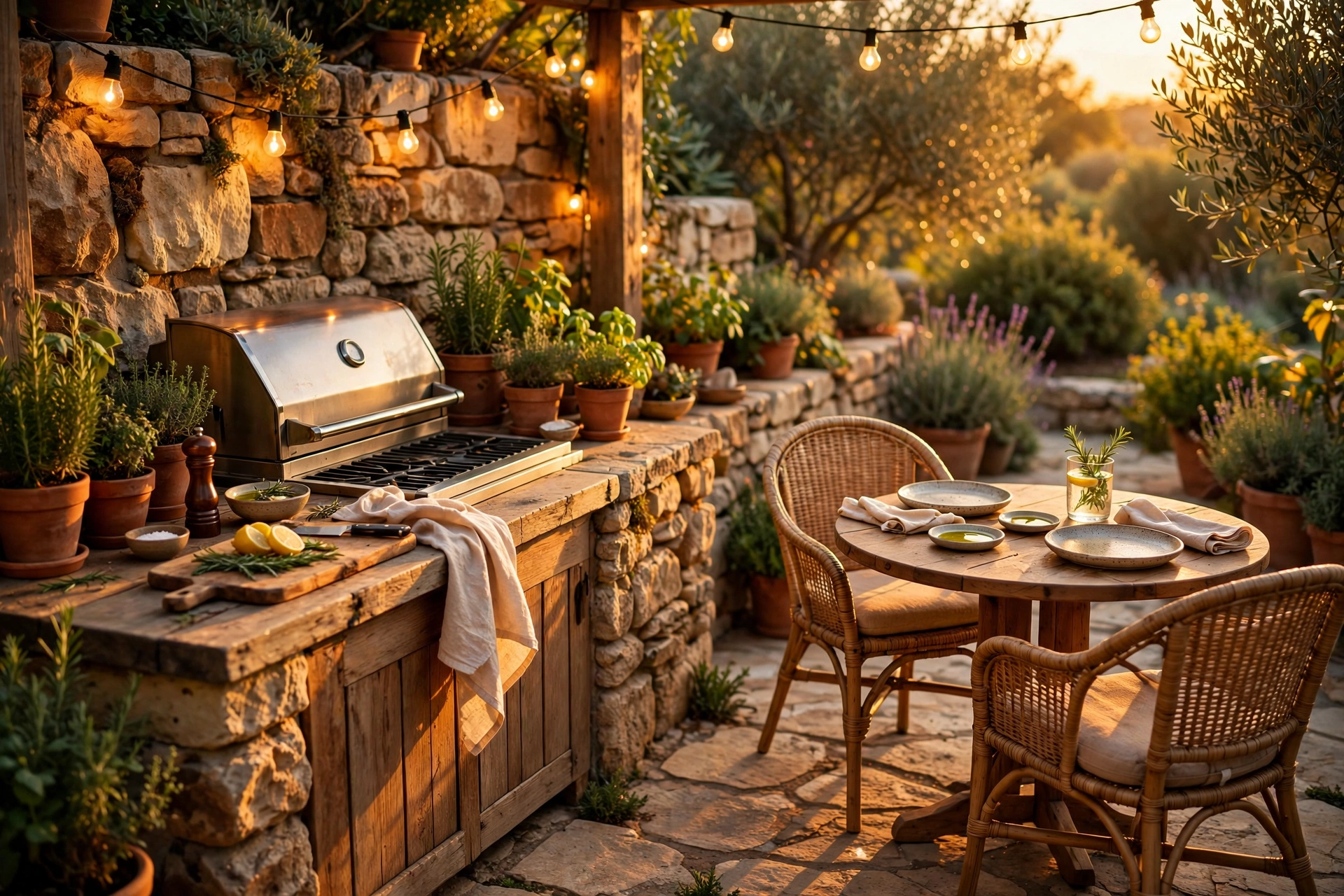
9. Shade you can cook under. A pergola, a large cantilever umbrella or a shade sail over the cooking zone protects the cook at midday and keeps surfaces touchable. Retractable or adjustable shade is worth the premium — you want sun in April and none in August.
10. Layer the lighting for after dark. Most outdoor cooking happens at dusk. You need one bright, focused light over the grill (so you can judge color), plus soft ambient light — string lights, lanterns, solar path lights — for the eating area. The layered approach from our kitchen lighting ideas works exactly the same outside: task light where you work, warm light where people sit.
11. A heat source extends the season by months. A fire pit, a patio heater or even a chiminea near the seating turns a May-to-September kitchen into a March-to-November one. Place it where people gather, not where the cook stands.
12. Seating that invites lingering. A table that seats your real guest count, chairs with cushions people can sit in for two hours, and a low surface for drinks. Uncomfortable seating is why guests drift back indoors with their plates.
Style It Like a Kitchen, Not a Campsite
13. Borrow your indoor kitchen’s materials. If your indoor kitchen leans warm and natural, carry the same language out: similar wood tones, the same cream-and-natural palette as our warm neutral kitchen ideas, matching black hardware accents. One continuous style makes the outdoor room feel like part of the house.
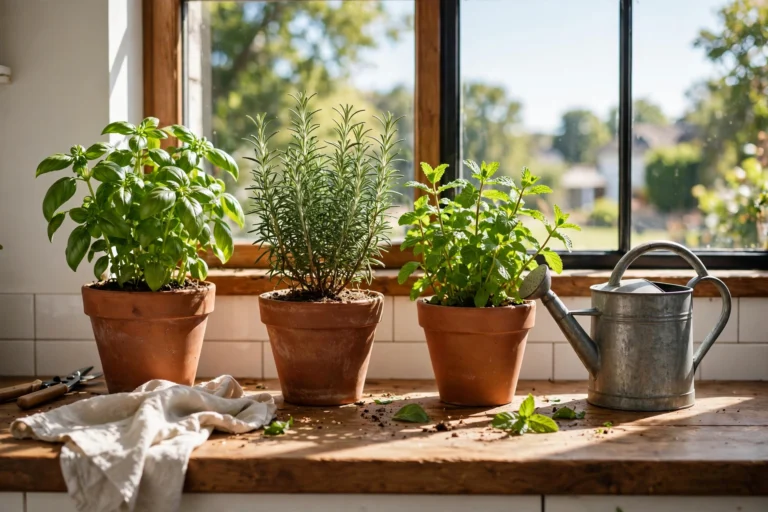
14. Plant the kitchen garden where you cook. Pots of rosemary, thyme, basil and mint beside the prep counter are decor you snip. Large terracotta pots also do the softening work textiles do indoors — the same trick used in our farmhouse kitchen decor ideas, just weatherproof.
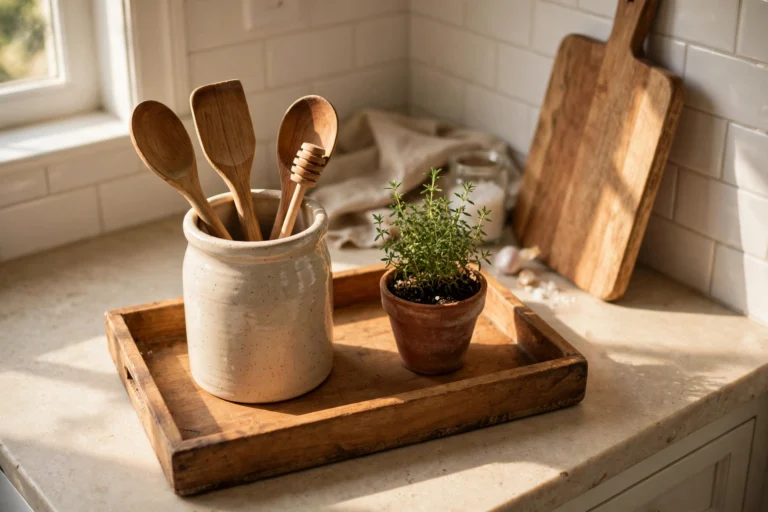
15. One styled surface, kept clear. A tray with the evening’s essentials, a bowl of lemons, a lantern — the grouping rule from our kitchen island decor ideas applies to the serving table too. Keep one surface styled and everything else ruthlessly functional.
Three Budgets, Three Honest Builds
The grill corner (lowest cost): grill on a defined pad near the door, one prep table, a deck box, string lights, herb pots. A weekend and a modest spend; this is where everyone should start.
The cook’s station (mid-range): add a built or modular counter run, a proper shade structure, task lighting, a tap-fed basin and real seating. This is the point most families use three or four nights a week in season.
The full courtyard kitchen (investment): plumbed sink, fridge, second cooker (pizza oven or smoker), pergola with lighting and heating. Worth it only when stage two has proved, over a full season, that you truly cook outside.
Outdoor Kitchen FAQs
What is the minimum an outdoor kitchen needs? A cooker, a clear prep surface beside it, storage that lives outside, water within a few steps, and light for after dark. Everything else is an upgrade.
Gas or charcoal for an outdoor kitchen? Gas for weeknight convenience, charcoal for flavor and ritual. If you will cook outside twice a week, choose the one that removes friction for you — the best outdoor kitchen is the one that gets used.
How do I protect an outdoor kitchen in winter? Covers on all appliances and counters, cushions stored dry, water lines drained if plumbed, and wood surfaces oiled before the cold. Choose materials for your climate first and style second.
Can a small patio hold an outdoor kitchen? Yes — a straight run against one wall: grill, 60–90 cm of counter, a slim storage box, and a folding table. Small outdoor kitchens follow the same rules as small indoor ones in our small cozy kitchen ideas: edit hard, layer warmth, keep surfaces clear.
Build the corner first, cook in it for a season, and let real use — not brochures — tell you what to add next. That is how outdoor kitchens grow into the best room of the house.