Quartz vs Granite: 12 Differences That Decide It
Quartz and granite look similar in a showroom, cost a similar amount, and both survive a busy kitchen. But they are different materials with different weaknesses, and the right choice depends on how you actually cook — not on which sample looks prettiest under shop lights. These 12 differences decide it honestly, without a sales pitch for either side.
What They Are, and How They Look
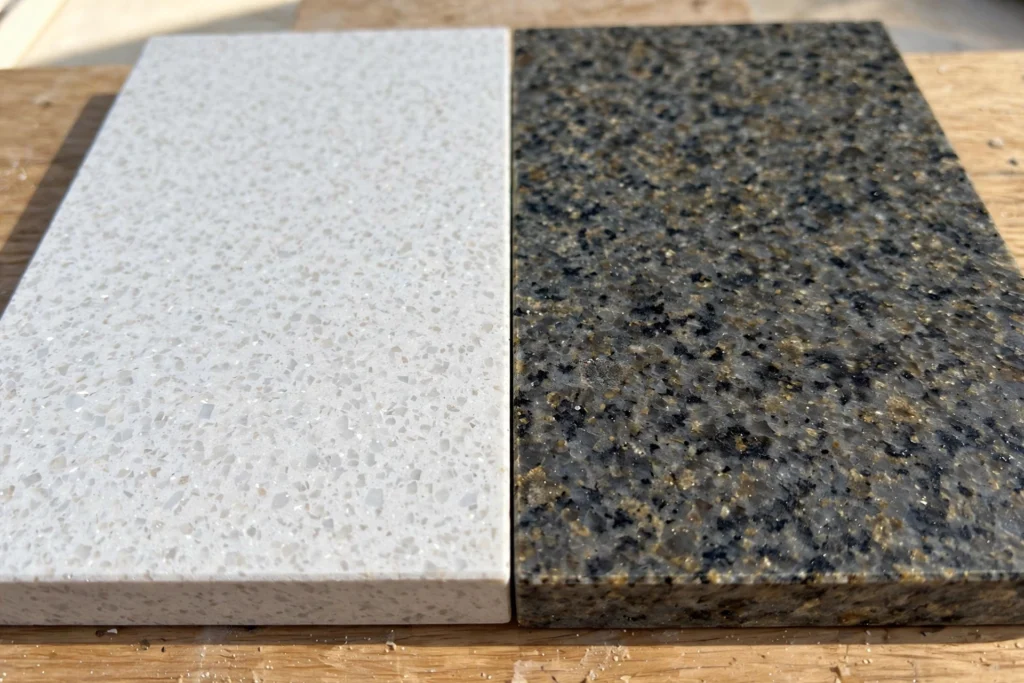
1. Granite is natural stone; quartz is engineered stone. Granite is cut from the earth, so every slab is one of a kind. Quartz is crushed stone mixed with resin, so it is made to a pattern — consistent, repeatable, and never exactly natural.
2. Granite wins on uniqueness; quartz wins on consistency. If you want a worktop nobody else has, granite’s natural veining and mineral flecks deliver that. If you want the sample you saw to match the slab that arrives, quartz is the safer bet — what you see is what you get.
3. Quartz offers more colors; granite offers more character. Quartz comes in whites, greys and bold colors that natural stone rarely produces. Granite comes in earthy, speckled and dramatic patterns that no factory pattern quite copies. Choose consistency or character first, and half the decision is made.
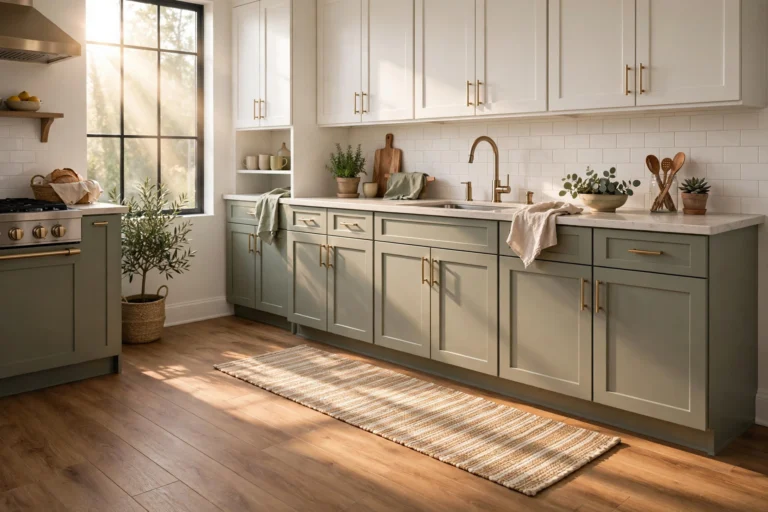
4. Both suit most kitchens — but check them against your cabinets. A busy granite pattern needs quiet cabinets; a plain quartz needs a little contrast somewhere else. How cabinet color changes a room is covered in our kitchen cabinet color ideas guide.
Daily Life: Stains, Heat and Scratches
5. Quartz resists stains without sealing; granite needs sealing. Quartz is non-porous, so red wine, coffee and curry sit on the surface and wipe off. Granite is porous, so it must be sealed — and resealed regularly — or it will stain. In a kitchen that cooks daily, that sealing chore matters.
6. Granite handles heat better than quartz. A hot pan straight from the hob can scorch quartz, because its resin binder does not love high heat. Granite takes heat far better. Neither should be abused with a roasting tray straight from the oven, but granite forgives more.
7. Quartz resists scratches; granite resists chips differently. Quartz’s hard, even surface shrugs off knife marks, while granite’s natural grain can chip at an edge if something heavy drops on it. Use a board on both — neither is a chopping board, whatever the showroom says.
8. Cleaning is easier on quartz, simpler on granite. Quartz needs only soap and water, every day, no special products. Granite needs the same daily clean plus periodic sealing, and acidic cleaners can dull its seal. If low maintenance wins your vote, quartz is ahead on this point alone.
Cost, Fitting and the Long View
9. Prices overlap — the slab and the edge decide the bill. Both materials sit in a similar price range for a standard kitchen; the final bill depends more on the slab grade, the thickness and the edge profile than on quartz versus granite. Get quotes for both in the same edge and thickness, or you are not comparing like with like.
10. Seams show more on quartz patterns than on granite. Quartz patterns repeat, so a seam in a patterned quartz can be visible where the pattern breaks. Granite’s natural randomness hides seams better. If your kitchen needs a long run with joins, ask to see a seamed sample of each before you order.
11. Both last decades — with different care. A sealed granite worktop and a well-treated quartz worktop both outlive the kitchen around them. Granite’s care is periodic sealing; quartz’s care is avoiding extreme heat and harsh chemicals. Neither is a short-life choice, so pick the care routine you will actually keep.
12. The deciding question is how you cook, not how it looks. Cook daily with strong colors and spices, and hate maintenance? Quartz. Love natural stone, use trivets without thinking, and do not mind sealing? Granite. Answer that one question honestly and the showroom argument ends.
What Quartz and Granite Cost (November 2026)
Prices checked November 2026, installed per square foot in the United States — installed means the slab, fabrication and standard installation, before extras:
| Tier | Quartz | Granite |
| Entry / builder grade | $50 to $60 per sq ft | $40 to $55 per sq ft |
| Mid-range | $75 to $95 per sq ft | $55 to $75 per sq ft |
| Premium / designer | $95 to $120+ per sq ft | $75 to $100+ per sq ft |
| Typical 40 sq ft kitchen | $2,400 to $4,800 | $1,800 to $4,000 |
At mid-range colors the two cost about the same installed — the slab grade, the edge profile and the layout decide the bill more than quartz versus granite. Not included in those prices: removing old countertops (about $200 to $500) and plumbing disconnect and reconnect (about $150 to $400). Prices vary by region and by the slab you pick, so get quotes for both in the same edge and thickness before you compare.
Quartz vs Granite FAQ
Which is cheaper, quartz or granite?
At entry level, granite is cheaper — about $40 to $55 per square foot installed against $50 to $60 for quartz. At mid-range colors they cost about the same.
Which is better for a busy family kitchen?
Quartz, if you cook daily with strong colors and spices and hate maintenance — it resists stains without sealing and cleans with soap and water. Granite, if you love natural stone, use trivets, and do not mind sealing.
Does granite really need sealing?
Yes. Granite is porous and must be sealed, then resealed regularly, or it will stain. Quartz needs no sealing at all.
Can I put a hot pan straight on quartz?
No — a hot pan straight from the hob can scorch quartz because its resin binder does not love high heat. Granite takes heat far better, but neither should be abused with a roasting tray straight from the oven. Use a trivet on both.
Which adds more to a home’s resale value?
Neither one clearly wins — buyers like both, and the value is in a good stone, well fitted, rather than in the name. Pick the one whose weakness you can live with.
Quartz and granite are both excellent worktops — that is why the argument never ends. Quartz wins on stains and easy care, granite wins on heat and natural character, and both cost about the same. Pick the one whose weakness you can live with, not the one whose strength impresses you most in the shop, and your worktop will still feel like the right choice in ten years.