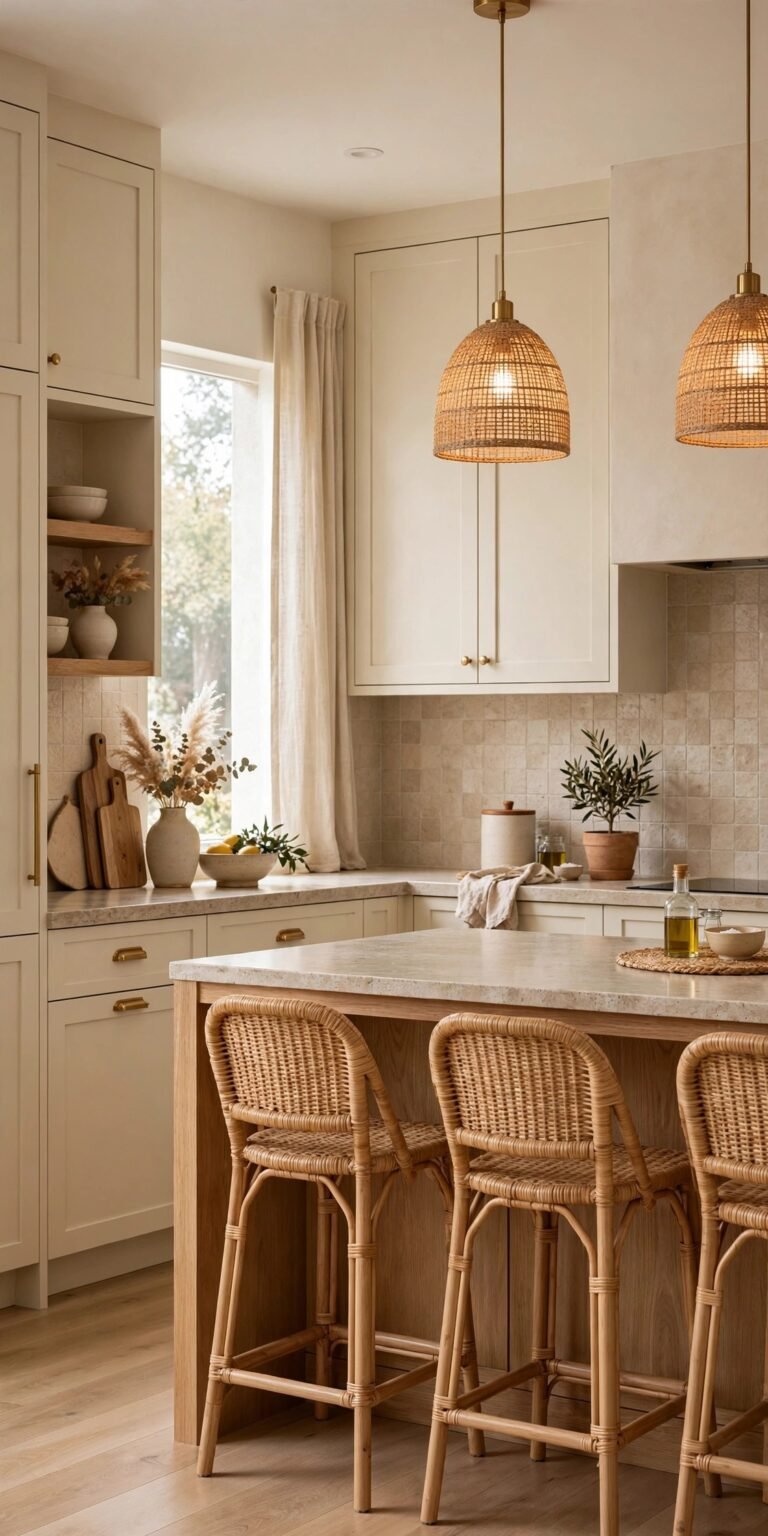
13 Kitchen Worktop Ideas — Materials Compared by How You Actually Cook
Every worktop material is excellent at something and quietly bad at something else, and brochures only print the first half. The right choice depends on how you cook: the pans you land hot, the turmeric you spill, the maintenance you will honestly do. These 13 ideas compare the real trade-offs — and end with the trick that gets you the best of two materials at once.
The Stone and Stone-Look Family
1. Quartz for the cook who wants to stop thinking about it. Engineered quartz resists stains, needs no sealing and shrugs off daily abuse. Its honest weakness is heat: a pan straight off the hob can mark it, permanently. If you land hot pans without thinking, use trivets — or choose differently.
2. Granite for heat confidence and natural variation. Granite takes hot pans, resists scratches and every slab is unique — which is also its risk, since the sample in the showroom is not your slab. Ask to see the actual piece. It wants resealing roughly yearly; that is a cloth-and-spray hour, not a project.
3. Marble only for bakers and realists. Nothing stays cool like marble for pastry, and nothing etches like it either — lemon, wine and tomato leave their autographs. Choose it with your eyes open and it ages beautifully; choose it expecting quartz behaviour and you will resent it within a month.
4. Dekton and sintered stone for the heavy-use family kitchen. Extremely hard, heat-proof, UV-stable and thin enough for a modern edge. The trade-offs are price and edges that can chip under a dropped cast-iron pan — repairable, but not by you.
Wood, Laminate and Metal
5. Butcher block where you want warmth — away from the sink. Solid wood is kind to knives, quiet under plates and can be sanded back to new. Around the sink it is a maintenance promise: oil it, dry standing water, every time. Put wood on the island or baking run and a tougher surface at the wet zone, as styled in our kitchen countertop decor ideas.
6. Modern laminate is the budget answer that stopped being embarrassing. High-pressure laminate now mimics stone and wood convincingly, shrugs off stains and costs a fraction of either. It still fears hot pans and knives, and a damaged edge cannot be invisibly repaired — but for a rental, a first home or a style you will change in five years, it is the rational choice.

7. Stainless steel for the serious, slightly industrial cook. Heat-proof, hygienic, indestructible in the ways that matter — and it will scratch, loudly and visibly, from week one. In a working kitchen that patina reads as honest; in a show kitchen it reads as damage. Know which kitchen you are building.
8. Concrete for a custom look with custom caveats. Poured or precast concrete gives a one-off, matte, architectural surface that must be sealed, can stain, and can hairline-crack. Buy it from a maker who shows you five-year-old installations, not just fresh ones.
The Decisions Around the Material
9. Edge profile changes cleaning more than looks. A simple square or slight round-over wipes clean in one pass. Ornate ogee edges hold crumbs and grease in every curve — beautiful in a period kitchen, a daily chore everywhere.
10. Thickness is visual, not structural. Most stone worktops are 20–30mm dressed up with a mitred edge to look 40mm+. Pay for the mitre if you love the chunky look; do not pay for solid thickness nobody can detect.
11. The sink mount belongs in the same conversation. An undermount sink with a stone top gives the wipe-straight-in worktop every cook wants; with laminate or wood, a well-chosen inset sink is safer against water at the cut edge — the pairing logic in our kitchen sink ideas applies here directly.
12. Budget the splashback with the worktop, not after. Offcuts of the same slab are often the cheapest way to get a matching upstand or full-height splashback — but only if you order them in the same job. Deciding later means a new slab minimum and a new templating visit.
The Trick That Settles It
13. Mix two materials by zone instead of compromising on one. Stone at the hob and sink, where heat and water live; wood on the island or breakfast run, where hands, laptops and elbows live. You spend the premium material only where its strengths matter, the room gains a designed contrast, and neither surface is asked to be something it is not.
Choose by your worst habit, not your best intention: the pan you will land, the spill you will leave, the sealing you will skip. The worktop that forgives your real kitchen is the one that still looks good in year five.