12 Rustic Kitchen Ideas — Warmth and Texture Without the Theme-Park Look.
Rustic goes wrong in one predictable way: everything rough, everywhere, all at once — until the kitchen looks like a film set instead of a room someone cooks in. Real rustic kitchens are a contrast: a few genuinely textured, natural elements set against calm, plain ones. These 12 ideas keep that balance.
The Honest Materials
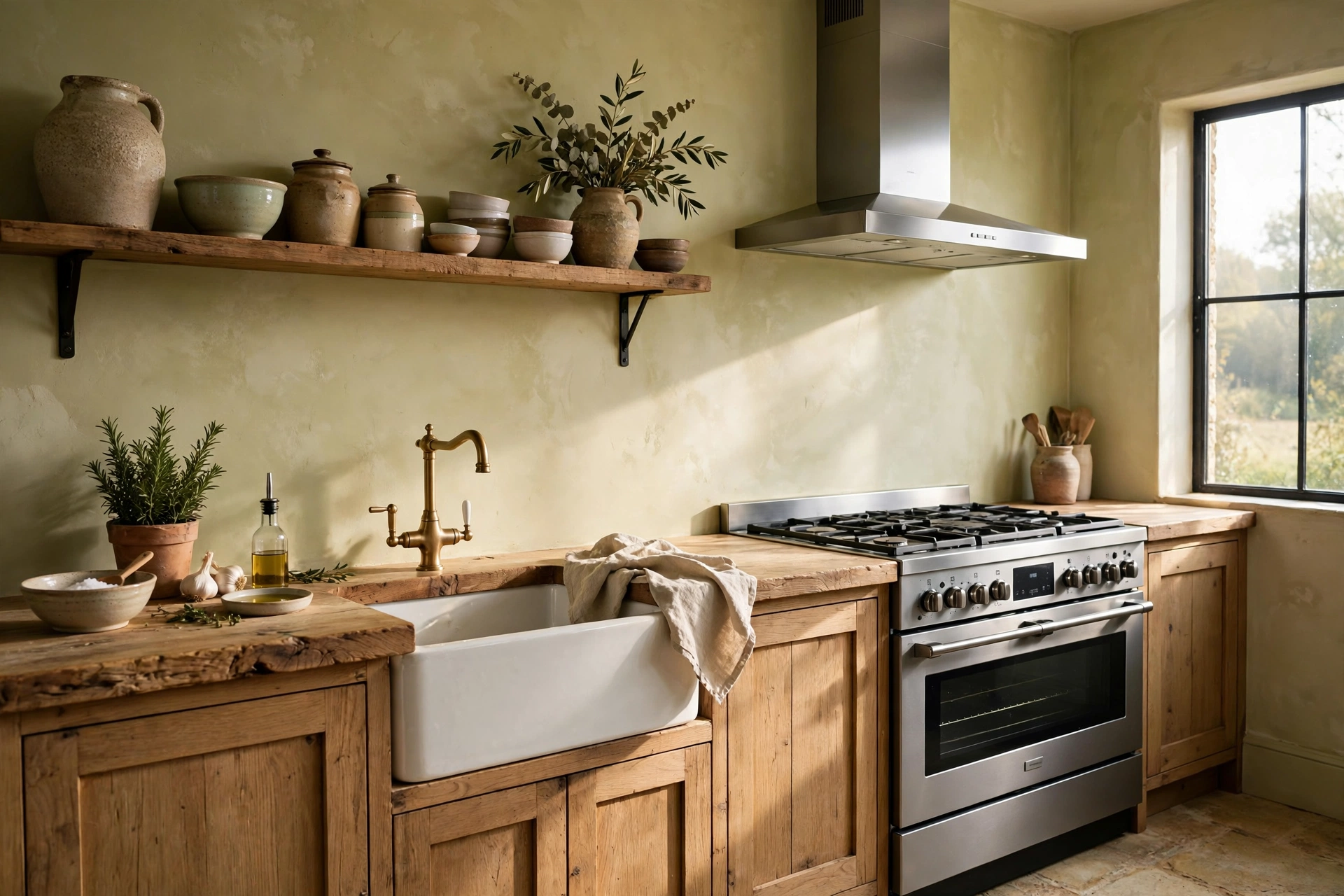
1. One serious piece of wood. A chunky worktop, a reclaimed beam, a farmhouse table that seats six — rustic needs one element with real weight and grain. Surround it with simple painted cabinets and the wood becomes the whole story; add wood everywhere and the story turns to noise.
2. Limewash or clay-look walls. Flat, chalky wall finishes absorb light instead of bouncing it, which is what makes rustic rooms feel calm at any hour. Warm off-whites and pale stone colours keep it bright; the texture does the work, not the colour.
3. Stone — or a convincing stand-in. A stone floor, a rough plaster splashback or even one thick stone shelf brings the cool half of the rustic contrast. If real stone is out of budget, large-format matt porcelain with a tumbled edge gets surprisingly close for a fraction of the upkeep.
Texture, Kept in Check
4. Open shelves, thick and few. Two deep wooden shelves holding everyday pottery beat a wall of thin shelves holding decor. Rustic shelves should look loaded with use, not styled for a photo — the same spirit as our farmhouse kitchen ideas, but rougher and heavier.
5. Metals that age: iron, copper, unlacquered brass. Rustic hardware should be allowed to tarnish honestly. Black iron handles, a copper rail for pans, brass that darkens where hands touch it — the patina is the point, and it forgives a busy kitchen’s knocks.
6. Textiles in natural fibres only. Linen curtains, a wool runner, cotton towels in faded stripes. Synthetics are what quietly break the rustic spell — the eye forgives a chipped mug long before it forgives shiny polyester next to raw wood.
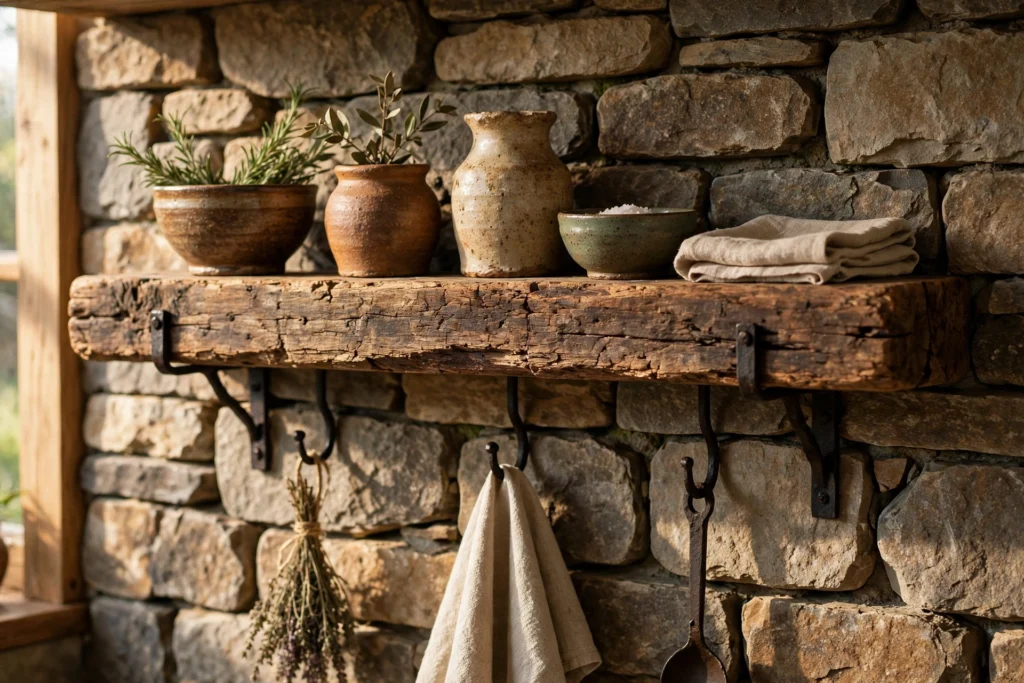
7. One vintage anchor. An old dresser as a pantry, a worn butcher’s block, inherited copper pans on display. A single genuinely old piece gives the room a history that new “rustic-effect” products never quite fake — our vintage kitchen ideas goes deeper on sourcing pieces that earn their place.
Comfort Is Not Cheating
8. Keep the modern cooker. A high-performance range in black or cream sits happily in a rustic kitchen; a fake “heritage” appliance with plastic aged-effect trim does not. Rustic is about materials, not about pretending the dishwasher does not exist — hide that behind a cabinet door instead.
9. Lighting low and warm. Exposed-bulb pendants over the table, a lamp-like glow rather than ceiling glare, nothing blue-white. Rustic rooms are evening rooms; light them for the hour they are loved most.
10. Storage that closes. For every open shelf, give yourself a cupboard with a door. Rustic charm curdles into clutter the moment every packet and appliance is on show — the closed storage is what lets the open parts look good.
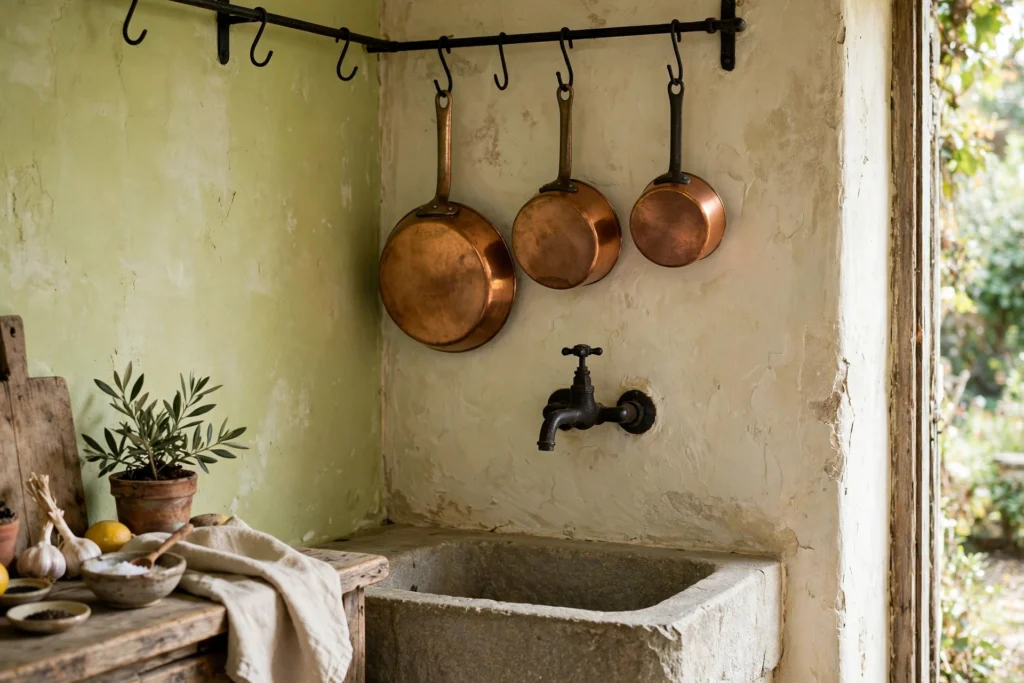
11. A hearth moment, even without a fire. The deep recess where a range sits, a tiled alcove, a mantel shelf over the cooker — rustic kitchens are built around a warm centre. Creating that one framed focal point organises the whole room around it.
12. Let it be imperfect — once. One uneven limewash wall, one genuinely worn tabletop. Perfection everywhere reads as showroom; a single honest flaw is what makes visitors believe the rest.
Rustic Kitchen Decor Costs: What to Spend and What to Skip
Rustic kitchen decor rewards spending on the few things you touch every day and saving on everything else. Typical US prices for the 12 ideas in this guide:
- One serious piece of wood (worktop, beam or farmhouse table): $150–$600; a reclaimed beam is the cheapest way in
- Limewash or clay-look walls: $40–$90 of paint per room
- Stone floor or splashback, or matt porcelain stand-in: $200–$800 real stone, $60–$200 porcelain
- Two thick open shelves: $40–$120
- Iron, copper and unlacquered brass hardware: $30–$100 for a full set of handles and a rail
- Linen, wool and cotton textiles: $20–$80
- One vintage anchor (dresser, butcher’s block, copper pans): $20–$200 thrifted or inherited
- Low warm lighting (pendants or a lamp-like glow): $40–$150
- Closed storage with doors: $0 if you use the cupboards you already have
A full rustic refresh using thrifted pieces, limewash and new hardware typically lands around $150–$400. Spend on the wood and the lighting — those are the two things the room is judged by — and save on the vintage anchor and the textiles, which are better found second-hand. A single genuinely old piece gives the room a history that new rustic-effect products never quite fake, and our vintage kitchen ideas guide goes deeper on sourcing pieces that earn their place. Skip the fake heritage cooker and the matching rustic-effect set entirely; both cost real money and read as a film set.
Rustic Kitchen Decor Mistakes to Avoid
Wood everywhere. One serious piece of wood carries a rustic kitchen; wood on the floor, the ceiling, the shelves and the table turns the story to noise. Surround the wood with simple painted cabinets and let it be the whole story.
Fake distressed finishes. A brand-new cabinet with factory-aged edges, or a plastic aged-effect appliance, never fools anyone. Rustic is about materials that age honestly — iron that tarnishes, brass that darkens where hands touch it — not about pretending.
Matching rustic-effect sets. A whole matching set bought in one trip reads as a showroom. One vintage anchor plus plain, calm pieces around it reads as a kitchen with a history.
Hiding all modern comfort. Keep the modern cooker and hide the dishwasher behind a cabinet door. Rustic is about materials, not about pretending the dishwasher does not exist — the same spirit as our farmhouse kitchen ideas guide, but rougher and heavier.
Over-styling the open shelves. Two deep shelves loaded with use beat a wall of thin shelves holding decor. If a shelf holds nothing you cook with, take it down.
Rustic Kitchen Decor Questions, Answered
What is rustic kitchen decor?
Rustic kitchen decor is a few genuinely textured, natural elements — one serious piece of wood, chalky limewash walls, stone, honest metals that tarnish — set against calm, plain ones. The contrast is the style; everything rough everywhere is the mistake.
How do I make my kitchen look rustic on a budget?
Start with limewash paint ($40–$90), one thrifted vintage piece, and warm low lighting. Add two thick open shelves and swap the hardware to iron or brass. A full budget refresh typically costs $150–$400.
Can a rustic kitchen have modern appliances?
Yes — keep the modern cooker in black or cream and hide the dishwasher behind a cabinet door. Rustic is about materials, not about pretending modern comfort does not exist. Only a fake heritage-style appliance with plastic aged-effect trim breaks the spell.
Choose the one piece of wood, keep the walls chalky and the metals honest, and let modern comfort hide in plain sight. That is a rustic kitchen you can cook a Christmas dinner in — not just photograph in October.