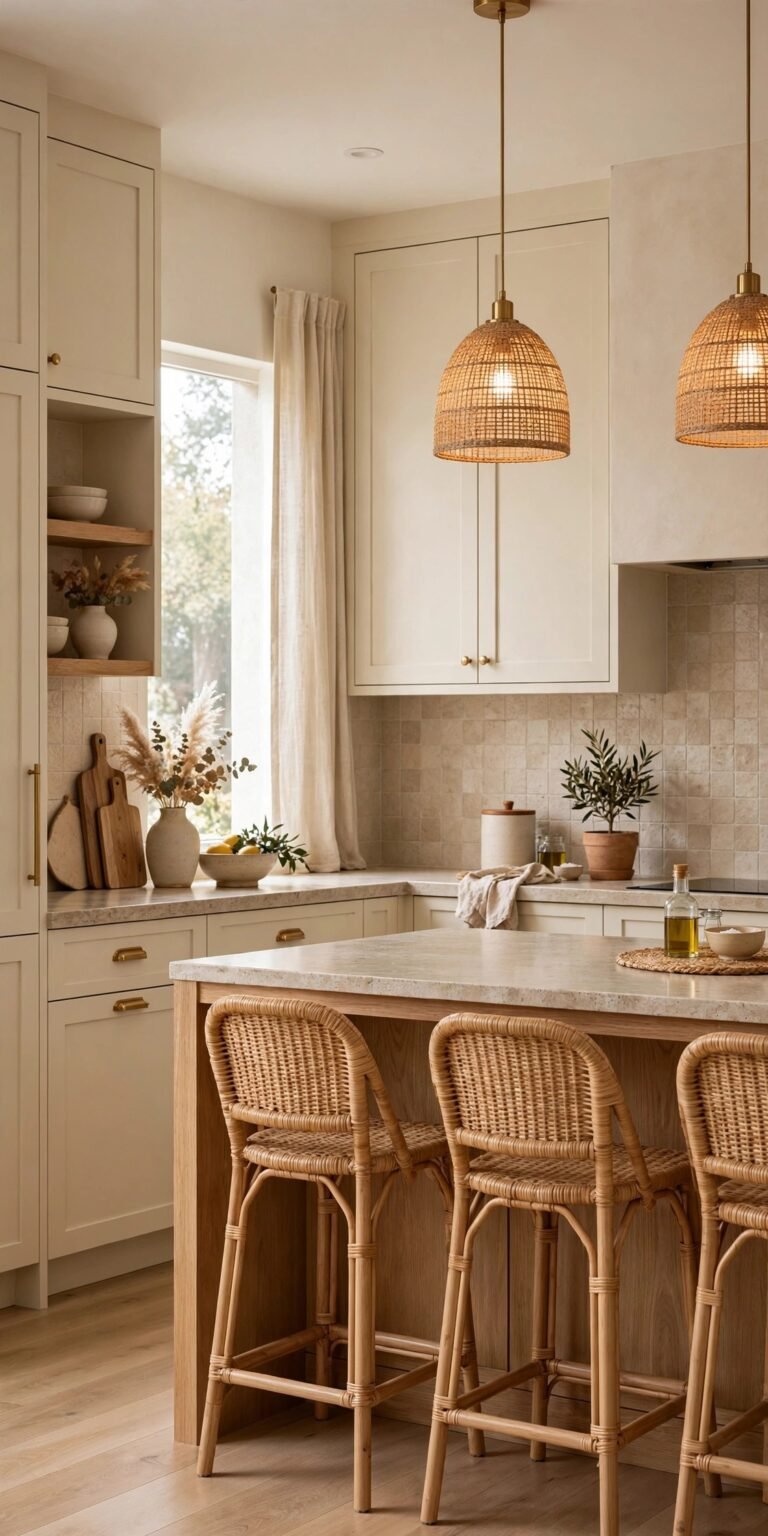
11 Kitchen Pendant Lighting Ideas — The Right Light Over the Island, at the Right Height.
Pendants are the jewellery of the kitchen — and the fitting most often hung at the wrong height, in the wrong number, over the wrong thing. Get four numbers right and almost any style works; get them wrong and even expensive pendants look like a mistake. These 11 ideas start with the numbers, then get to the pretty part.
The Numbers First
1. Hang them 75–90cm above the worktop. Measured from the counter surface to the bottom of the shade, that band keeps the light pooled where you work, keeps sightlines open across the island, and keeps heads out of trouble. Higher feels lost; lower feels like an interrogation.
2. Odd numbers, honestly spaced. Three pendants over a typical island, two over a short one, one statement piece over a small peninsula. Space them evenly along the island’s length with roughly 60–75cm between centres, and keep the outer pendants at least 15cm in from the island’s ends so the light does not spill past the edge.
3. Size the shade to the island, not the room. A useful rule: each shade’s diameter should be roughly a quarter to a third of the island’s width. A row of tiny pendants over a big island reads as an apology; one oversized drum over a small one eats the room.
Choosing the Style
4. Clear glass when the kitchen is small. Glass shades keep the view through the room and let one bulb do the work of a bigger fitting — the pendant is present in the evening and nearly invisible at noon. Our general kitchen lighting ideas guide covers layering pendants with the rest of the room’s light.
5. Metal shades for real task light. An enamel or metal shade throws everything downward — brilliant over a prep-heavy island, less kind for lingering. If the island is where homework, laptops and long dinners happen, a shade that lets some light escape upward is the friendlier choice.
6. Match the metal to the hardware, not the appliances. Pendants read as part of the cabinet story: brass with brass handles, black with black. Stainless appliances are neutral background and do not need matching — chasing them is how kitchens end up cold.
7. One material repeated three times. A row of identical pendants is a rhythm; three different “statement” pieces is an argument. If you love mixed shapes, keep the finish and the bulb colour identical and let the silhouette vary — the discipline is what makes it look deliberate.
Making It Work Every Day
8. Put pendants on their own dimmer. Pendants are task light at 7am and mood light at 9pm, and a dimmer is the only way one fitting does both. It is a small electrician cost at install time and the single upgrade owners praise most a year later — the same layering logic behind our under-cabinet lighting ideas.
9. Warm bulbs, matched colour. Choose bulbs around 2700–3000K for a kitchen you eat in, and buy every bulb in the row at the same time from the same pack family. Mixed colour temperatures in a line of glass shades is the fastest way to make new pendants look second-hand.
10. No island? Pendants still work. Over a peninsula, a sink run in front of a window-less wall, or a dining table in an open-plan kitchen — pendants mark a zone. In open rooms they do the job walls used to do, which is why they pair so well with a breakfast-nook corner.
11. Cleanable beats delicate. Kitchen air carries grease. Smooth glass, metal and ceramic wipe clean in seconds; woven, fabric and intricate shades become a chore you will resent. Beauty that survives a steamy pasta night is the only beauty that lasts in a kitchen.
Measure the heights, space the row evenly, dim them properly — then choose the prettiest shade that fits those rules. Pendants done this way stop being decoration and become the reason the island is everyone’s favourite seat.