12 Above Kitchen Cabinet Decor Ideas That Fill the Gap
The gap above kitchen cabinets is the most ignored space in the kitchen. Leave it empty and the room feels unfinished; fill it wrong and it becomes a dusty shelf of random clutter. The difference is a simple rule and a dozen good choices. These 12 ideas fill the gap so it looks deliberate — and stay easy to keep clean.
The One Height Rule
Before buying anything, measure the gap. Most kitchens have 30–60 cm between the top of the cabinets and the ceiling. The rule: nothing you put up there should be taller than two-thirds of the gap, and leave at least 15 cm of breathing room above the tallest item. A 45 cm gap takes items up to 30 cm tall. Break the rule and the decor looks wedged in; follow it and the gap reads as a designed shelf, not a storage overflow.
Baskets and Woven Texture
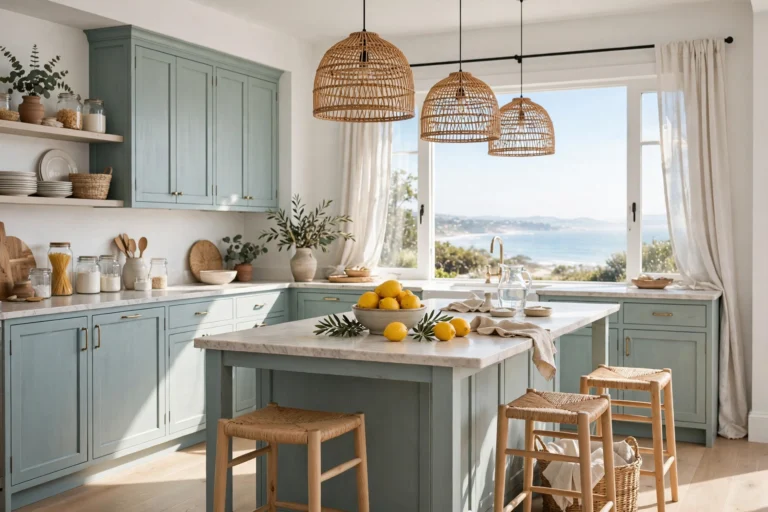
- A row of matching woven baskets. Three or five baskets in the same weave, spaced evenly, is the easiest win in this list. Baskets cost $15–$40 each, hide nothing (they are decoration, not storage), and soften hard cabinet lines. Keep them the same size or step them down toward the ends.
- One large basket as an anchor, smaller ones beside it. If a full row feels too uniform, put one big basket in the centre and two smaller ones flanking it. The centre anchor stops the eye wandering, and the whole run reads as one arrangement instead of a yard sale.
- Woven trays leaned against the wall. Flat woven trays or shallow baskets leaned upright add pattern without height. They suit gaps under 30 cm, where most items are too tall, and they cost $10–$20 each.
Plants and Greenery
- Trailing plants that spill over the edge. Pothos or trailing ivy in a plain pot, with vines spilling over the cabinet front, softens the straight line of the cabinets. Keep the pot small — the vines are the decoration, not the pot. Real plants need a reach: you will water them from a chair or a step, so keep them light.
- Faux olive branches in a tall jug. A faux olive branch costs $12–$25 and never needs watering, dusting or reaching. Put three stems in a plain jug or vase and the gap gets height, colour and texture with no maintenance at all. Our full guide to stems and vases is in olive branch decor ideas.
- A row of small potted herbs — only if you can reach them. Herbs above cabinets look charming and smell good, but they need water and light. If you can reach the top easily, put a row of basil, rosemary and mint in small terracotta pots. If you need a ladder, skip it — dead herbs are worse than none.
Vintage Finds and Collections
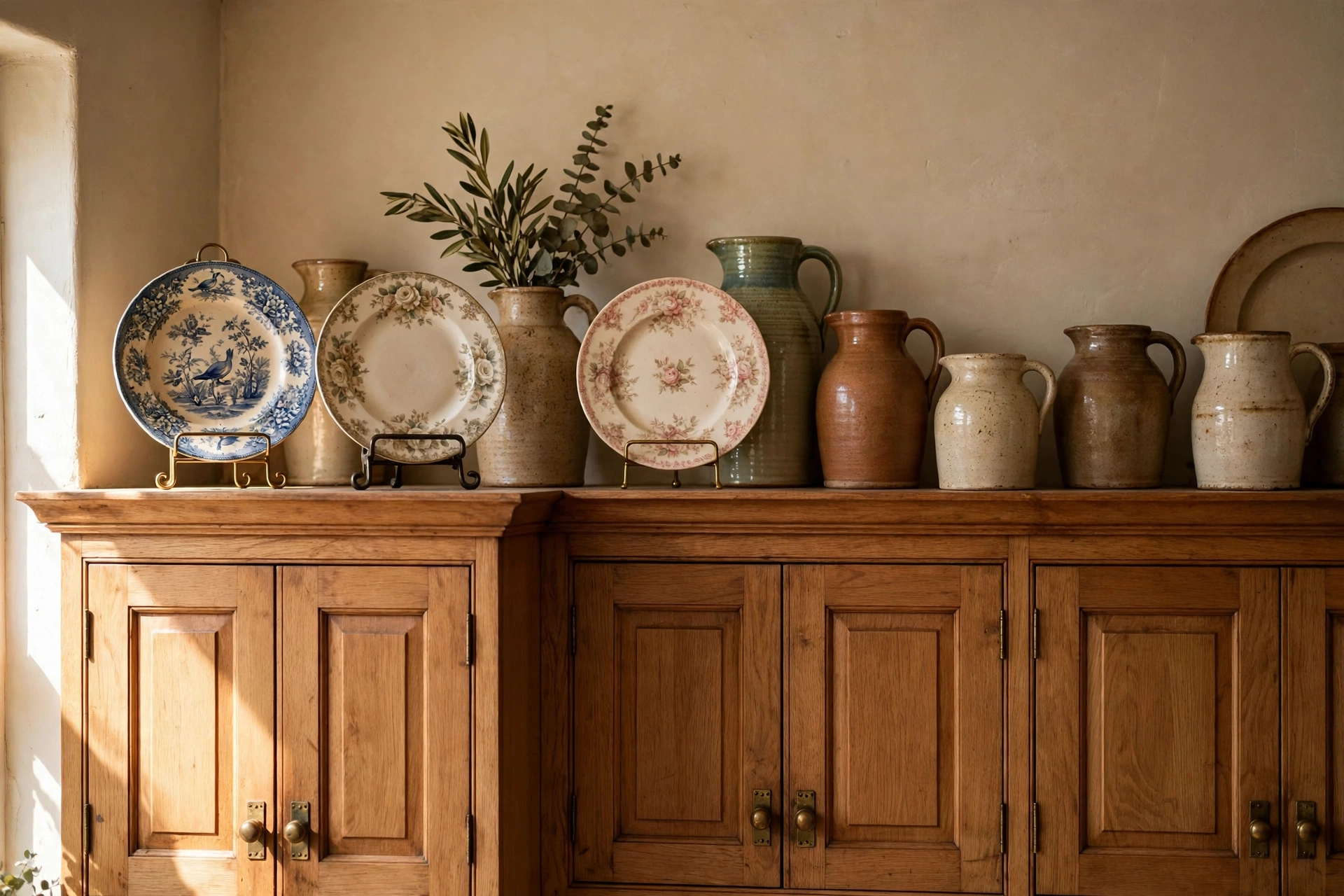
- Vintage plates on stands. Three to five plates on small stands ($8–$15 each) give the gap colour and height without clutter. Old plates are cheap at charity shops, and mismatched patterns look collected rather than careless. Keep them to one colour family.

- A small collection of ceramic jugs or crocks. Old crocks and jugs were made to be seen. Group three in different heights on one side of the gap, leaving the rest empty — a collection needs breathing room around it, or it reads as a yard sale.
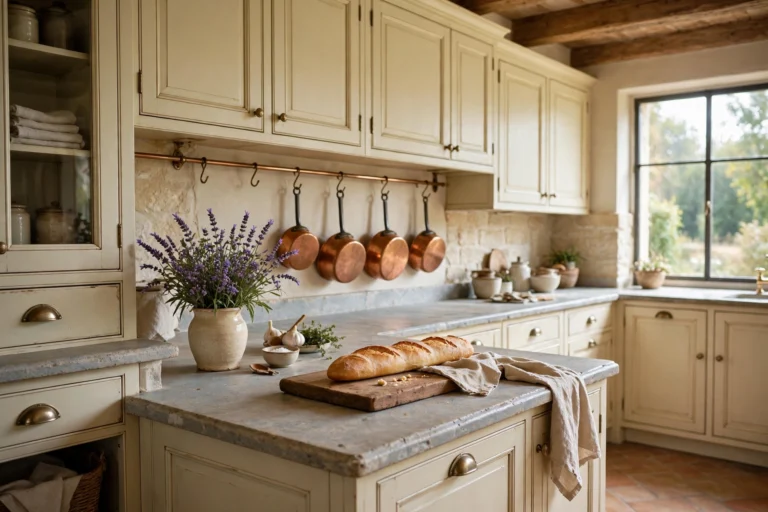
- Copper pots for a warm metallic line. Two or three copper pots hung from small hooks or simply stood on the cabinet tops add warmth and reflect light. Copper darkens over time, which suits a kitchen that is actually used.
Books, Art and Light
- A short stack of cookbooks, spines out. Two or three old cookbooks stacked flat, or stood upright with a bookend, add a lived-in feel. Pick books you actually use — they will get dusty, and you will want a reason to bring them down.
- One framed print leaned against the wall. A single small framed print — a botanical, a market scene, a recipe card — leaned against the wall behind the front edge reads as art, not clutter. One frame only; two becomes a gallery, and a gallery does not belong above the cabinets.
- A low strip of warm LED light behind the front edge. A battery or plug-in LED strip ($10–$20) tucked behind the front edge of the cabinet tops washes the ceiling in warm light and makes the whole display glow. This is the cheapest transformation in the list, and it works even with nothing else up there. See our kitchen strip lighting ideas for the fitting details.
What NOT to Put Up There
Three mistakes ruin more above-cabinet displays than anything else. Too many small items — a dozen little objects reads as clutter from below, so stick to three to five large items. Anything that cannot be dusted from a step — if you will not dust it monthly, it will gather a grey film and look worse than nothing. And anything valuable or fragile you would mind dropping — the top of the cabinets is the most dropped-from surface in the kitchen, so keep the good china in a cupboard.
Top of Kitchen Cabinet Decor: Styling the Cabinet Top Itself
The top of the cabinet is the surface itself — the flat run where your decor actually sits. Three rules decide whether it works. Measure the depth first. Most cabinet tops are 30–35 cm deep; anything deeper than two-thirds of that depth looks like it is about to fall. Keep the tallest item under two-thirds of the gap. In a 45 cm gap, nothing taller than 30 cm — a tall item crammed against the ceiling makes the whole run look squeezed. One colour family, three items. Three large items — baskets, plants or plates — in one colour family, with breathing space between them. Five small items in five colours is clutter; three big ones in one family is styling.
Costs at a Glance
Woven baskets (3): $45–$120. Faux olive branches + jugs (3): $40–$75. Vintage plates + stands (5): $60–$115. LED strip: $10–$20. Crocks (3): $25–$60. Framed print: $15–$30.
FAQ
How do I keep the top of the cabinets dust-free? Line the cabinet tops with a sheet of newspaper or cheap shelf liner first, then place the decor on top. When it is time to clean, lift the decor, bin the liner and lay a fresh sheet — no scrubbing the cabinet tops themselves.
What if my gap is less than 30 cm? Skip tall items entirely. Lean woven trays, lay a low row of plates on stands, or run the LED strip along the front edge. A low, lit display still fills the gap without breaking the height rule.
Can renters decorate above cabinets? Yes — everything here sits on top of the cabinets and needs no fixings. The LED strip is the only item that needs an adhesive, and a battery strip with removable strips leaves no mark.
Should the decor match the rest of the kitchen? It should repeat one thing already in the room — the wood of the floor, the metal of the taps, or one colour from the splashback. That single repeat is what makes it look designed rather than dumped.
What should I put on top of my kitchen cabinets? Three large items in one colour family — baskets, trailing plants or plates — and nothing taller than two-thirds of the gap above them. Dust them monthly; anything you will not dust monthly does not belong up there.
For more cabinet ideas, see our kitchen cabinet organization ideas guide, and for the wall below the gap, our kitchen wall decor ideas. If you are still deciding between open and closed storage, our kitchen open shelving ideas compare the two.
The gap above your cabinets is not a problem to hide. Measure it, follow the two-thirds rule, pick three large things in one colour family — and let the top of the room finish the kitchen instead of fighting it.