12 Dark Wood Kitchen Ideas That Feel Rich, Not Heavy
Dark wood has a reputation problem: people remember the gloomy kitchens of the past, all brown, all closed in. Modern dark wood is different — it is grain you can see, warmth you can feel, and a material that ages better than any painted front. The rule is the same as with black: dark wood in one place, light everywhere else.
Choosing the Timber
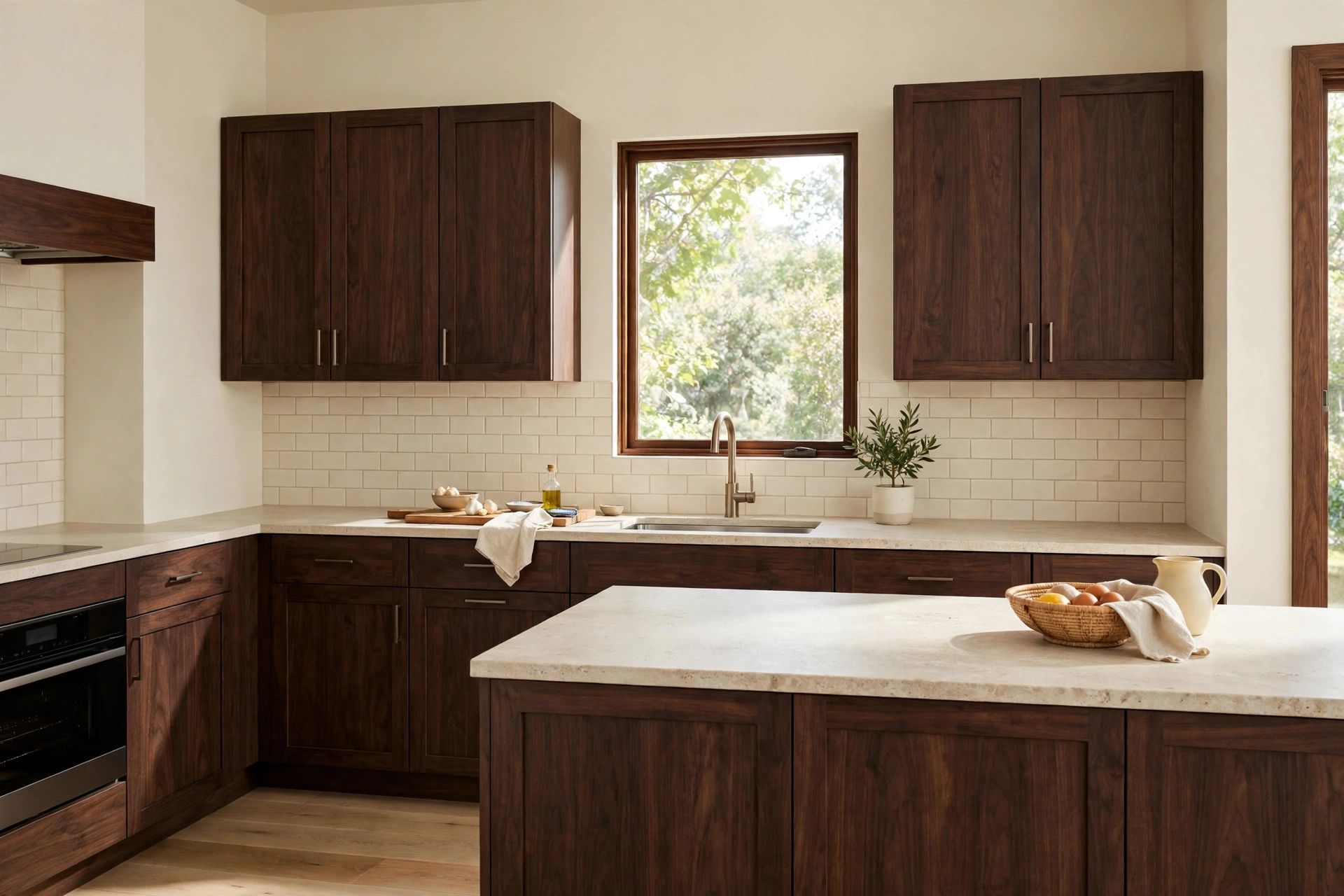
1. Walnut is the luxury default. Walnut’s grain is varied and deep without being busy, and it warms up under daylight. If the budget allows one splurge, spend it on walnut fronts rather than on handles or taps.
2. Stained oak gives the look for less. A dark stain over oak keeps the open grain and the toughness, at a lower price than walnut. Ask to see a stained sample, not a catalogue photo — stains shift a lot between batches.
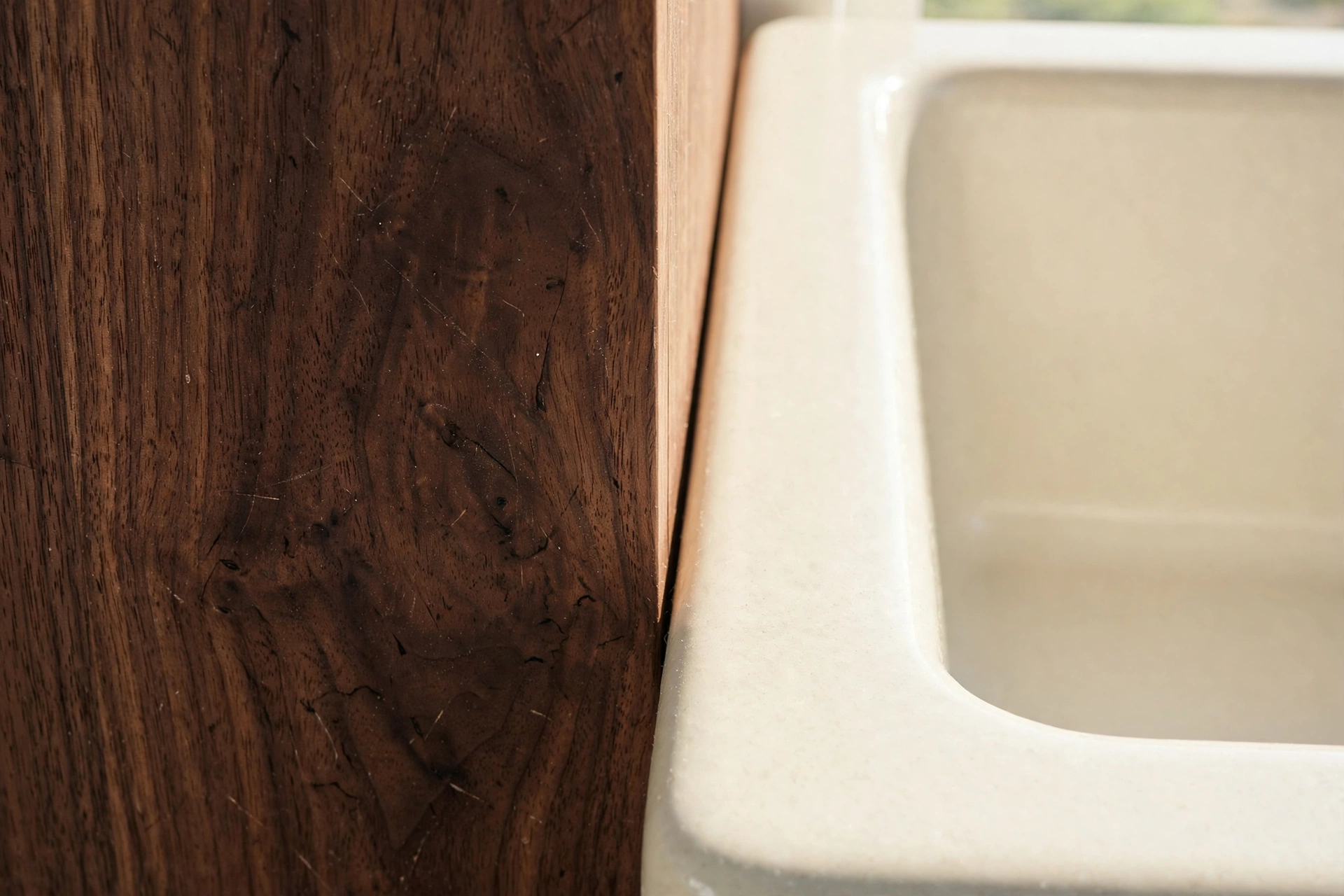
3. Keep the grain visible. Dark wood’s whole point is the grain. Avoid heavy, opaque finishes that turn timber into brown plastic; a satin lacquer or oil lets the wood read as wood. Flat, grainless dark fronts belong to another style entirely.
4. Mix one dark wood, not three. Walnut cabinets, a different dark floor and dark shelves together turn muddy. Pick one dark timber for the cabinets and keep floors and shelves lighter or neutral. Timber pairing is covered in our white and wood kitchen ideas guide.
Light and Contrast
5. Cream walls are dark wood’s best partner. Cream, warm white or pale plaster walls lift dark cabinets instantly and show the grain off. Grey walls with dark wood can work, but they need strong daylight; cream works in every direction the room faces.
6. A light worktop is not optional. Pale stone, light quartz or butcher block on dark base units is what stops the kitchen feeling like a cave. The worktop is also where the contrast looks best — dark below, light above, grain in between.
7. Daylight first, spotlights second. Dark wood drinks light, so a dark-wood kitchen needs more of it: a bigger window, a lighter floor, and under-cabinet strips as backup, not as the main source. If the room is north-facing, keep wall units light and put the dark wood low.
8. Brass and copper warm it further. Dark wood with chrome can feel cold; with brass or copper it feels like a library or an old hotel bar — rich, not chilly. One warm metal, repeated in handles and tap, is enough.
Living With Dark Wood
9. Scratches are kinder to dark wood than to paint. A scratch on painted cabinets shows white underneath at once. On dark wood, a scratch can often be oiled or waxed away, and small marks blend into the grain. This is why dark wood suits busy family kitchens.
10. Let one wall of wood breathe. A full run of dark tall units on every wall is too much. Leave one wall light — open shelves, a window, or painted units — so the dark wood reads as a feature, not a box. Storage that stays open is in our kitchen open shelving ideas guide.
11. Plants love dark wood. Green against dark timber is one of the kitchen’s best colour combinations. Herbs on the sill, a trailing plant on a shelf, a bowl of lemons on the worktop — all of them pop against walnut in a way they never do against white.
12. Clean with oil, not spray polish. Silicone sprays build up and dull dark wood over time. A damp cloth for daily cleaning and an occasional feed with a proper wood oil keeps walnut and dark oak deep and alive for decades. Warm, light kitchens in the same spirit are in our warm neutral kitchen ideas guide.
Dark wood is not the gloomy kitchen of memory. Chosen as walnut or stained oak, kept to one timber, lifted by cream walls and a light worktop, it is the warmest, longest-lasting kitchen material there is.